The Ultimate Water Slide: KAIST Engineers Nanoscale Polymer Coating Delivering 5.5x Boost in Condensation Heat Transfer
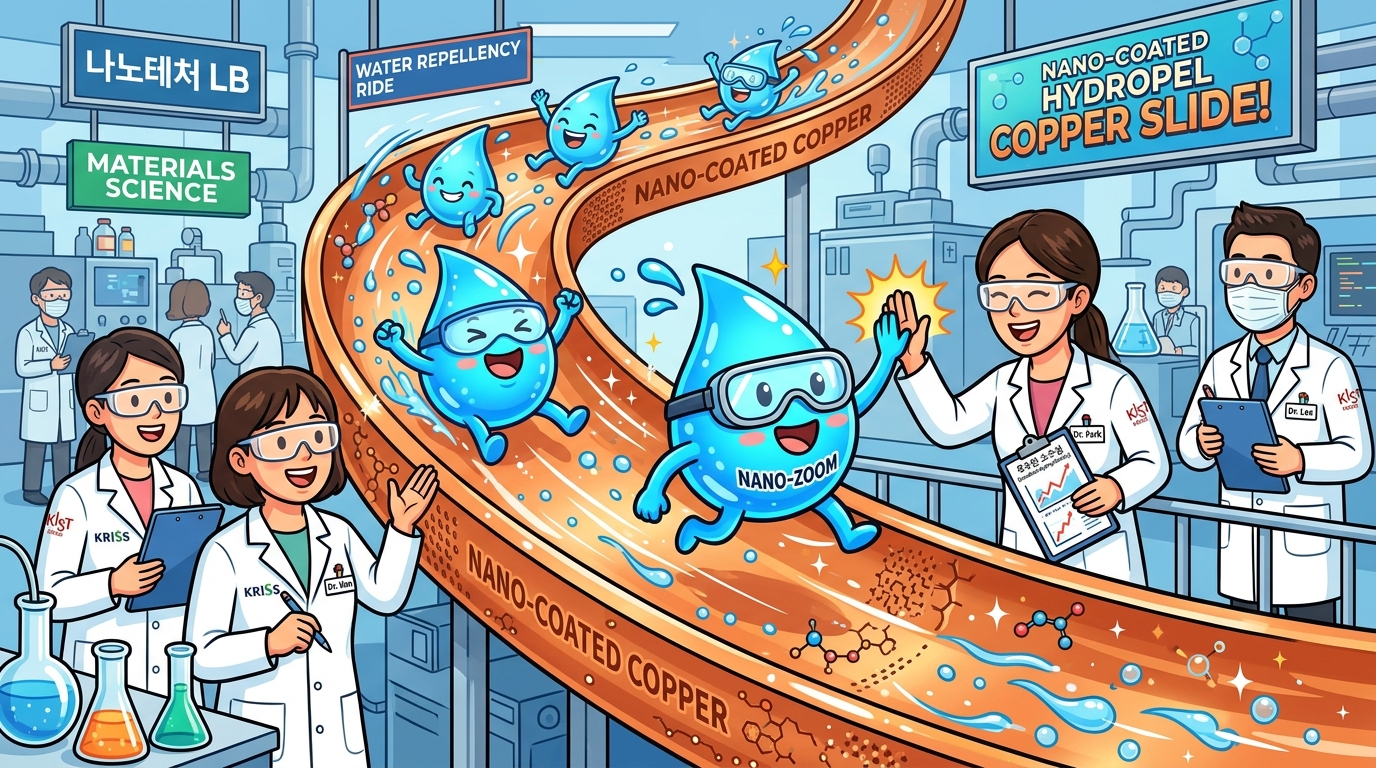
Whether you are running a nuclear power plant, a coastal desalination facility, or a mega-datacenter training AI models, your biggest enemy is heat. And your primary weapon to fight it is condensation: turning scorching hot steam back into liquid water along metal tubes. For decades, thermal engineers faced a maddening Catch-22: rough surfaces create lots of water droplets but hold onto them like glue, while smooth surfaces shed droplets easily but can't condense water fast enough. Now, South Korean engineers have turned manufacturing "flaws" into a cheat code, creating an ultra-slippery nanoscale polymer slide that boosts heat transfer by a staggering 5.5 times!
Published in Nature Communications by research teams led by Professor Youngsuk Nam and Professor Sung Gap Im at the Korea Advanced Institute of Science and Technology (KAIST), the breakthrough relies on initiated chemical vapor deposition (iCVD). Instead of fighting the nanoscale polymer bumps and aggregates that typically form during vapor deposition—long treated by engineers as annoying defects—the team harnessed them as precision nucleation launchpads.
💧 Anatomy of a Microscopic Waterpark
How KAIST resolved condensation engineering's oldest paradox:
- Repurposed Nanoscale Aggregates: The ultrathin polymer film features controlled nanoscale clusters that serve as ideal seeds for steam molecules to instantly condense into liquid droplets.
- Zero-Adhesion Slip-and-Slide: Because the chemical composition is hyper-hydrophobic, the contact line between the water droplet and the copper tube has near-zero friction. The moment a droplet forms, it rolls off at high speed instead of clinging.
- Record Thermal Performance: On test copper tubes, the coating achieved a maximum heat transfer coefficient of 88 kW·m⁻²·K⁻¹—5.5 times greater than bare industrial copper and 50% higher than conventional state-of-the-art hydrophobic coatings.
- Extreme Durability: The chemical vapor bonding creates covalent linkages with the substrate, allowing the nanoscale film to survive continuous high-pressure steam exposure without peeling.
Why does a 550% boost matter so much? In commercial thermal power plants, even a 1% increase in condenser efficiency translates to millions of barrels of fuel saved and gigatons of carbon emissions avoided annually. In arid regions relying on thermal desalination, faster condensation means drastically cheaper freshwater production.
And then there are data centers. As AI hardware racks consume tens of kilowatts per chassis, liquid phase-change cooling is moving from an exotic luxury to an absolute necessity. A coating that can whisk away heat five times faster could prevent servers from throttling during peak computing crunch.
🎢 "Wheeee! Best Heat Exchanger Ever!"
To a water droplet condensing on a standard metal tube, life is a sluggish slog stuck to sticky copper. On KAIST's nano-slide, it's an Olympic bobsled run with frictionless grease. Steam touches down, yells "Wahoo!", and slides straight into the drainage reservoir at Mach speed.
Sometimes the biggest breakthroughs in science don't come from demanding absolute perfection, but from figuring out how to make nature's microscopic imperfections work for you.
You might also like

Quantum Flash Mob: Distant Time Crystals Spontaneously Synchronize Across a Microchip
Physicists at TU Dortmund University watched separate quantum time crystals lock into the exact same ticking tempo across 40 micrometers—over 1,000 times their own size. Bridged by diffusing electron spins, this spontaneous quantum choreography breaks new ground for future quantum processors.
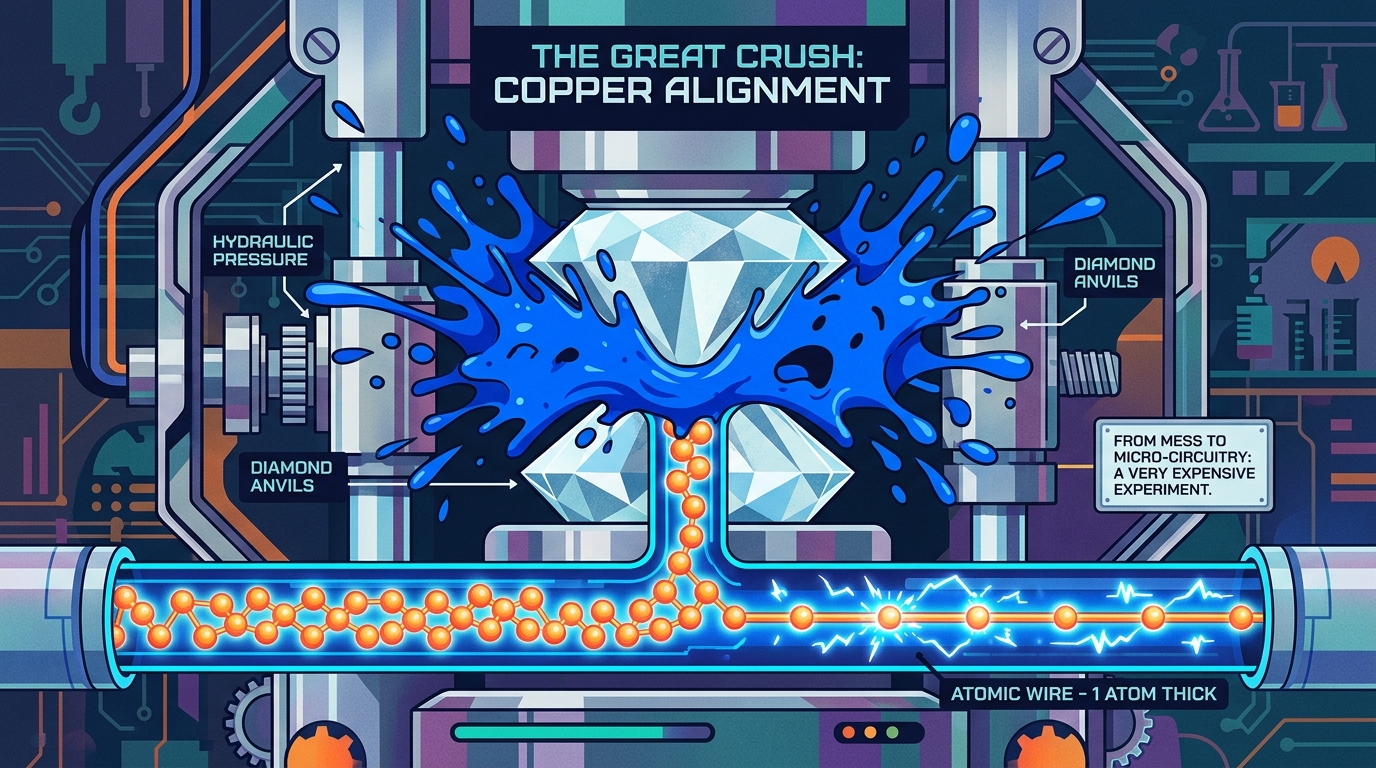
The 4,000-Atom Conga Line: How Crushing Blue Paint at 21 GPa Made the World's Longest Atomic Wire
Materials scientists squeezed everyday blue paint pigment inside diamond anvils with 210,000 atmospheres of pressure, forcing copper atoms into an unprecedented 4,000-atom-long, single-atom electrical wire!
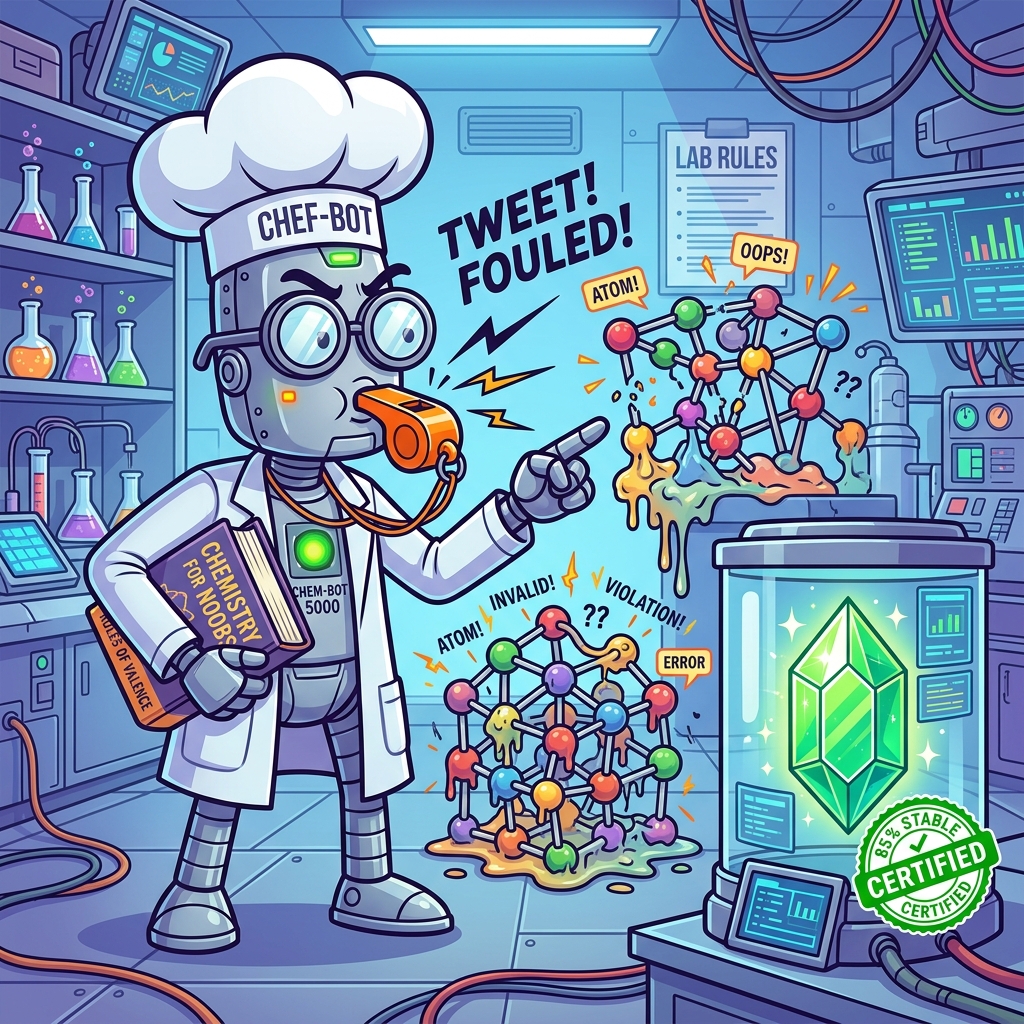
AI Hallucinated Fake Diamonds: MIT's CrysVCD Finally Teaches Generative Models Basic Chemistry
Generative AI was daydreaming millions of physically impossible crystals that instantly collapsed in simulations. MIT's CrysVCD framework acts as a chemistry bouncer, enforcing valence rules and cutting screening waste by 90%.