Fishing for Cosmic Ghosts at the South Pole: How a Giant Ice Cube Won the 2026 Nobel Prize in Physics
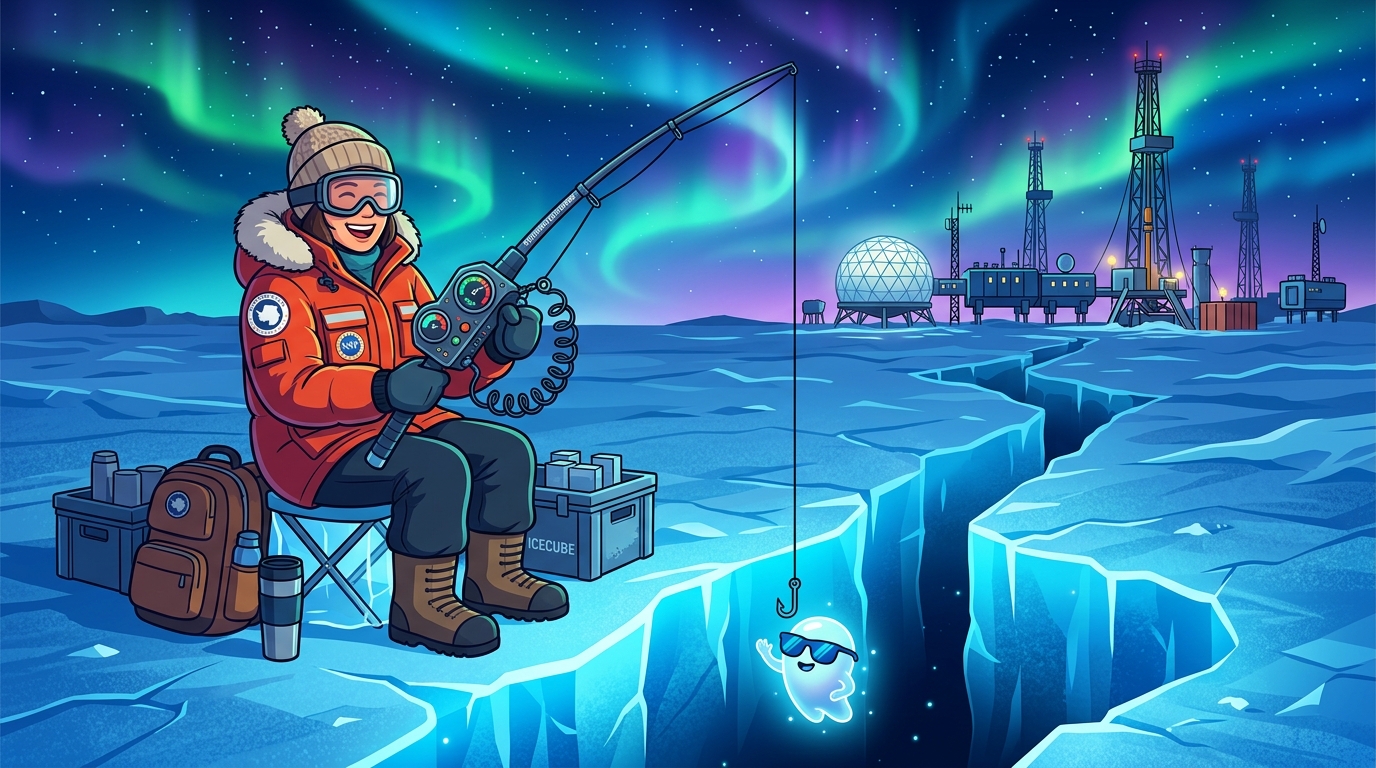
If you ever need proof that theoretical physicists operate on a different cosmic wavelength, consider this pitch from the 1990s: "Give me tens of millions of dollars, a massive water heater, and a one-way ticket to Antarctica so I can drill two miles straight down into a glacier to look for invisible space ghosts."
Most grant committees would have politely shown you the door. But on October 6, 2026, the Royal Swedish Academy of Sciences proved that bold scientific audacity pays off, awarding the 2026 Nobel Prize in Physics solely to Francis Halzen of the University of Wisconsin–Madison. His life's work—the colossal IceCube Neutrino Observatory at the South Pole—has revolutionized how humanity views the extreme universe.
🧊 The Ultimate Cosmic Ghostbusters Setup
Neutrinos are rightfully nicknamed "ghost particles." Trillions of them are zipping straight through your fingernails and the entire planet right this second without touching a single atom. To catch them, Halzen didn't build a lens or a dish—he turned a glacier into a trap:
- Boiling Water Drills: Between 2004 and 2010, the team pumped millions of liters of boiling water into the Antarctic ice cap, melting 86 separate holes nearly 2.5 kilometers (1.5 miles) deep.
- 5,160 Basketballs of Light: Into these dark frozen abysses, they lowered strings bearing 5,160 Digital Optical Modules (DOMs)—ultra-sensitive light bulbs in reverse, designed to spot the faintest flashes of blue Cherenkov radiation.
- The Ice As a Lens: When a ultra-high-energy cosmic neutrino hits a water molecule in the ultra-pure, bubble-free deep Antarctic ice, it produces a charged particle moving faster than light travels in ice, sparking a telltale optical sonic boom.
Before IceCube, astronomy relied almost exclusively on electromagnetic radiation—visible light, radio waves, X-rays, and gamma rays. The trouble is that the most violent cosmic engine rooms (exploding stars, supermassive black holes devouring galaxies, and blazars) are shrouded in dense gas and dust that swallow light whole.
Neutrinos, having no electric charge and virtually zero mass, blast straight out of those cosmic meat grinders unimpeded. Thanks to Francis Halzen's billion-ton ice cube, astrophysicists can now trace high-energy neutrinos straight back to their birthplaces billions of light-years away, inaugurating the golden age of multimessenger astronomy.
🏆 12 Million Kronor for the South Pole Pioneer
At 82 years old, Halzen takes home the entire 12 million Swedish kronor ($1.15 million USD) prize as a rare solo laureate:
- From Scepticism to Standard Physics: Early peers called the idea of instrumenting a cubic kilometer of polar ice "delusional." Today, IceCube's data is cited in thousands of astrophysical discoveries.
- Peering Inside Blazars: IceCube has pinpointed active galactic nuclei, flaring black holes, and cosmic particle accelerators that dwarf anything CERN could build on Earth.
- Future IceCube-Gen2: The observatory is currently preparing for its next evolution, expanding the detection volume by a factor of eight to catch even rarer cosmic visitors.
So here's to Francis Halzen: the man who turned an entire Antarctic glacier into an interstellar antenna, proving that sometimes the best way to gaze at the stars is to bury your telescope two miles beneath the frozen tundra.
You might also like
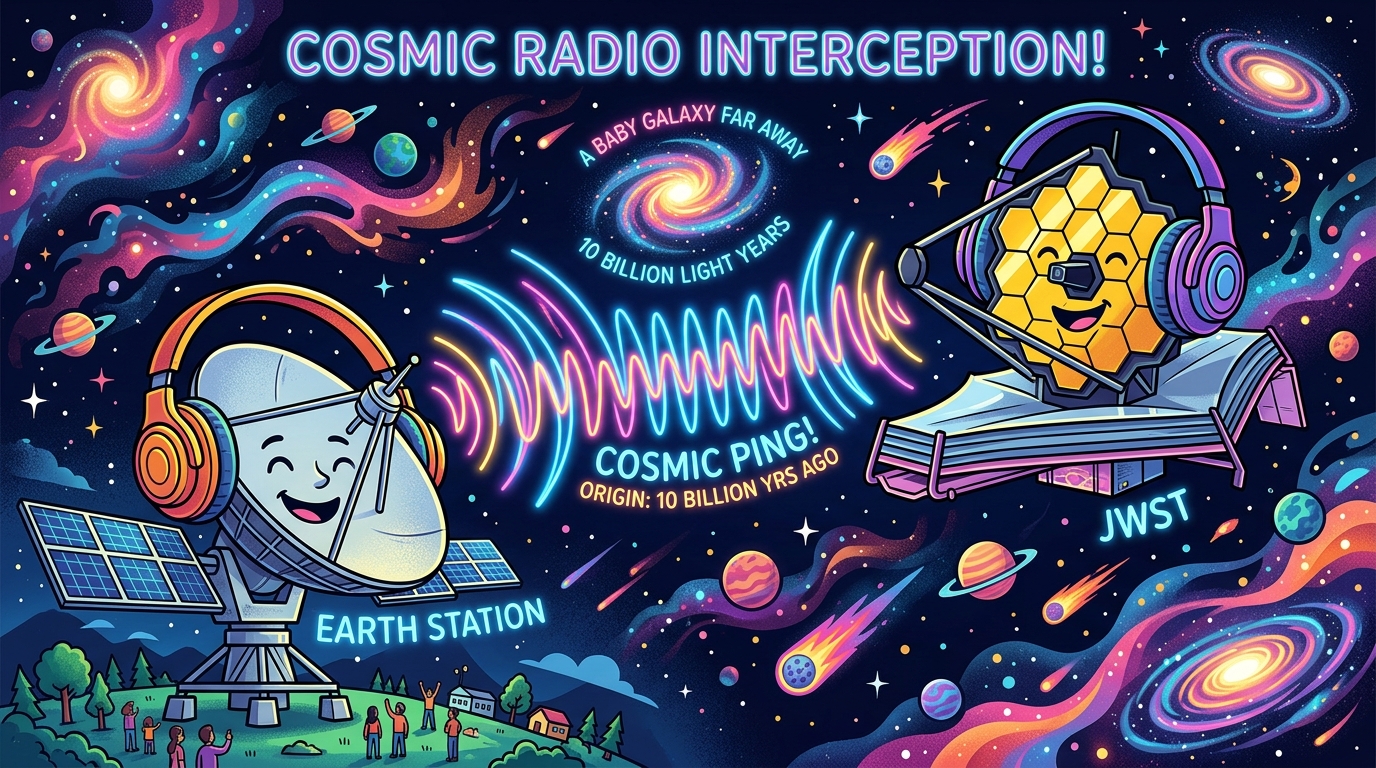
The 10-Billion-Year-Old Voicemail: Webb and MeerKAT Catch the Most Distant Radio Flash in Cosmic History
Astronomers have detected FRB 20240304B, a fast radio burst that traveled over 10 billion years across the universe, shattering cosmic distance records and proving ancient baby galaxies loved loud fireworks.
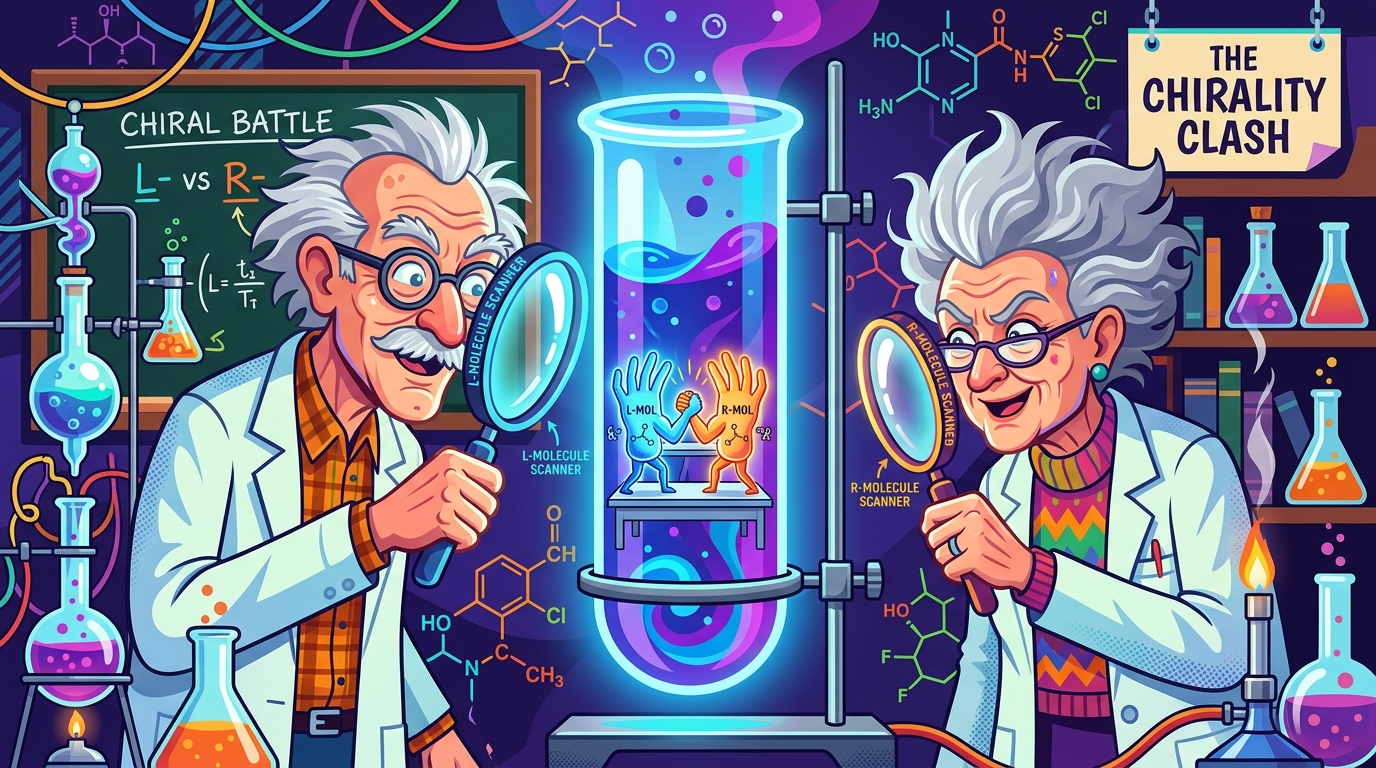
The Great Molecular Arm Wrestle: Why the 2026 Nobel Prize in Chemistry Won't Shake Your Right Hand
The 2026 Nobel Prize in Chemistry honors Henri B. Kagan and Kenso Soai for cracking homochirality—explaining how a microscopic nudge can cause one mirror-image molecule to mercilessly bully its twin out of existence.
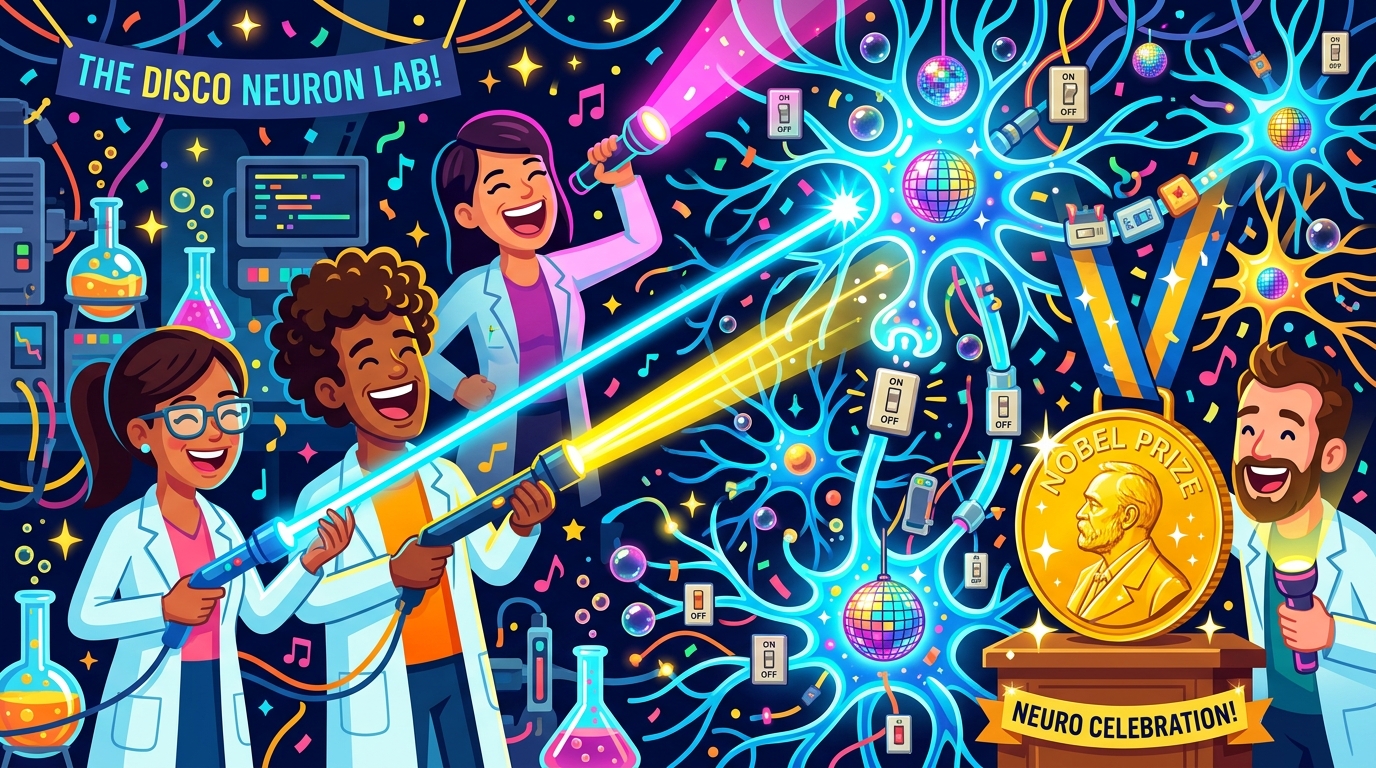
Turning Neurons into Disco Lights: How Green Algae Bagged the 2026 Nobel Prize in Medicine
The 2026 Nobel Prize in Physiology or Medicine goes to Karl Deisseroth, Peter Hegemann, and Georg Nagel for inventing optogenetics—hijacking pond scum proteins to control living brain cells with laser beams.