The Planetary Salt Shaker: How Table Salt Acted as Earth's Ice-Age Accelerator Pedal
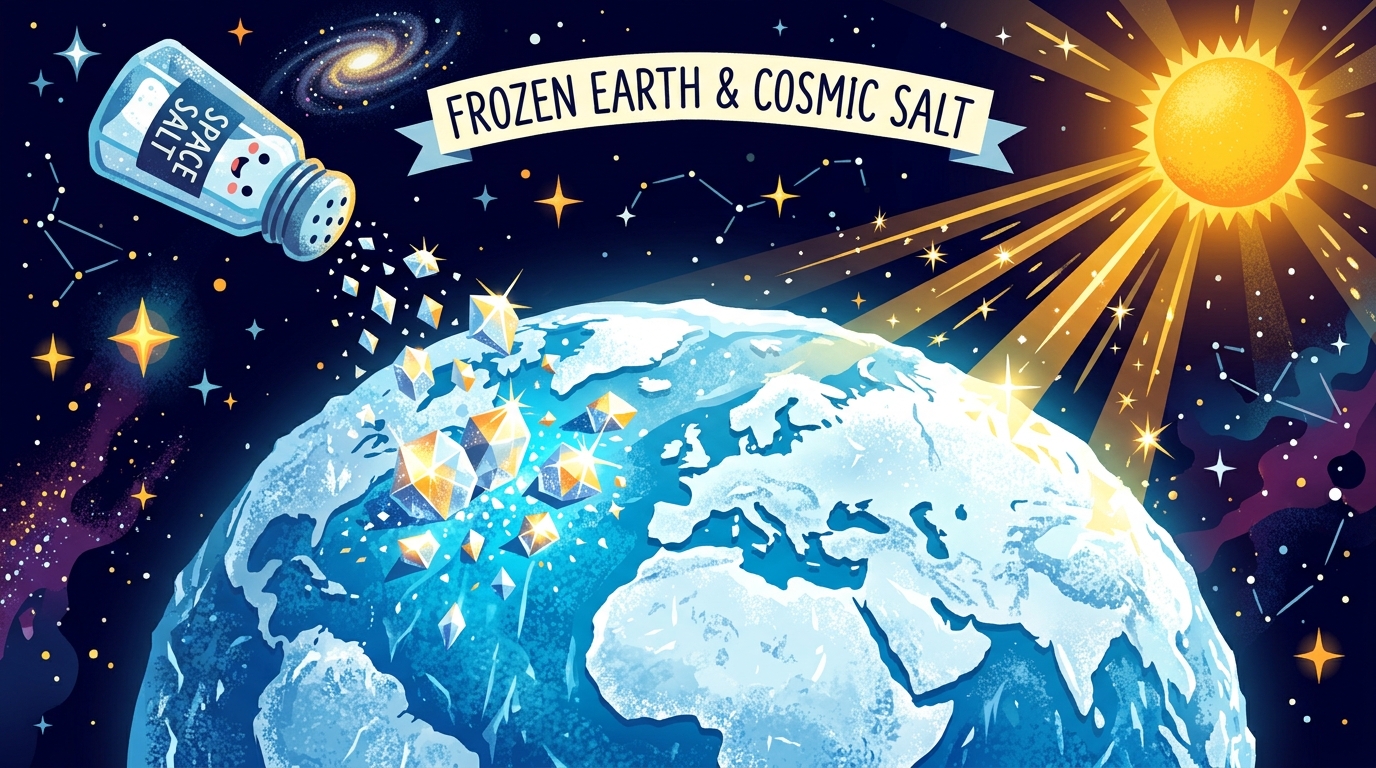
Imagine throwing salt on an icy driveway in the middle of winter. The salt melts the ice, right? Well, 700 million years ago, nature decided to invert the laws of driveway maintenance. In an ironic cosmic plot twist, common sodium chloride didn't melt the planet's ice—it acted as a hyper-reflective freeze accelerator that locked our entire home planet into an apocalyptic, equator-to-pole Snowball Earth!
For half a century, paleoclimatologists have wrestled with the Snowball Earth paradox during the Sturtian glaciation. According to traditional climate models, the classic "ice-albedo feedback" (ice reflects sunlight, cooling the planet, which makes more ice) should have ground to a screeching halt as glaciers approached the equator. Why? Because the ancient tropics were bone-dry deserts with almost zero snowfall. Without fresh, powdery white snow to refresh melting ice surfaces, dirty tropical sea ice should have absorbed sunlight and stopped the runaway freeze in its tracks.
🧂 The Sublimation Salt Mirror Trick
A breakthrough study published in Climate of the Past by researchers at The Arctic University of Norway (UiT) revealed how chemistry stepped in when snowfall failed:
- Brine Rejection: As tropical seawater began to freeze, the growing ice lattice pushed out dissolved salts, trapping ultra-concentrated brine in pockets.
- Ice to Vapor (Sublimation): Under the bone-dry, sub-zero tropical sun, the surface ice didn't melt into water; it sublimated directly into vapor.
- The Salt Mirror Crust: With water vapor escaping into the atmosphere, pure white sodium chloride and halite crystals precipitated on top of the sea ice, coating millions of square kilometers in hyper-reflective "salt mirrors."
These salt crusts had a higher albedo than regular sea ice—acting like a planet-wide disco ball bouncing searing equatorial sunlight straight back into the blackness of outer space.
Instead of tropical ice melting and halting the freeze, the salt mirrors supercharged the cooling loop. The drier the air got, the faster the ice sublimated, the thicker the salt crust grew, and the colder the planet became. Within geological eye-blinks, glaciers marched across the equator, turning the blue marble into a giant cue ball of ice for over 50 million years.
🍽️ Dinner Table Seasoning, Planetary Saboteur
The next time you sprinkle table salt over your French fries, pause for a moment of existential reverence. The exact same compound you casually dump on dinner once conspired with dry winds to freeze the oceans solid and nearly snuff out multicellular life before it even had a chance to crawl out of the primordial soup!
Who knew that the ultimate weapon of mass planetary refrigeration wasn't an asteroid or a nuclear winter, but the humble shaker sitting on your kitchen table?
You might also like
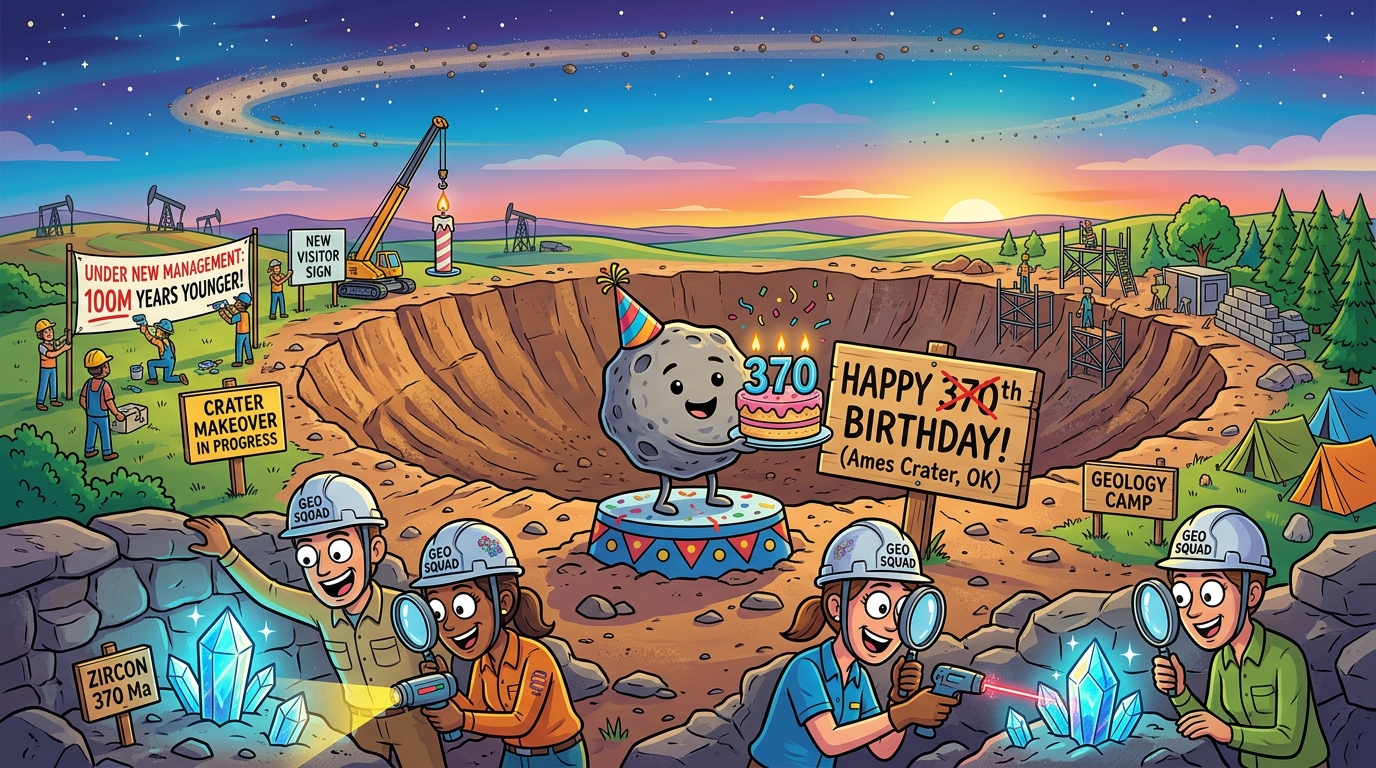
Oklahoma's Ames Meteor Crater Knocked 100 Million Years Off Its Age After Getting Caught With Recycled Fossils
High-precision uranium-lead zircon dating reveals Oklahoma's Ames impact crater was formed 370 million years ago—nearly 100 million years later than believed—kicking it out of Earth's hypothetical Saturn-ring club.
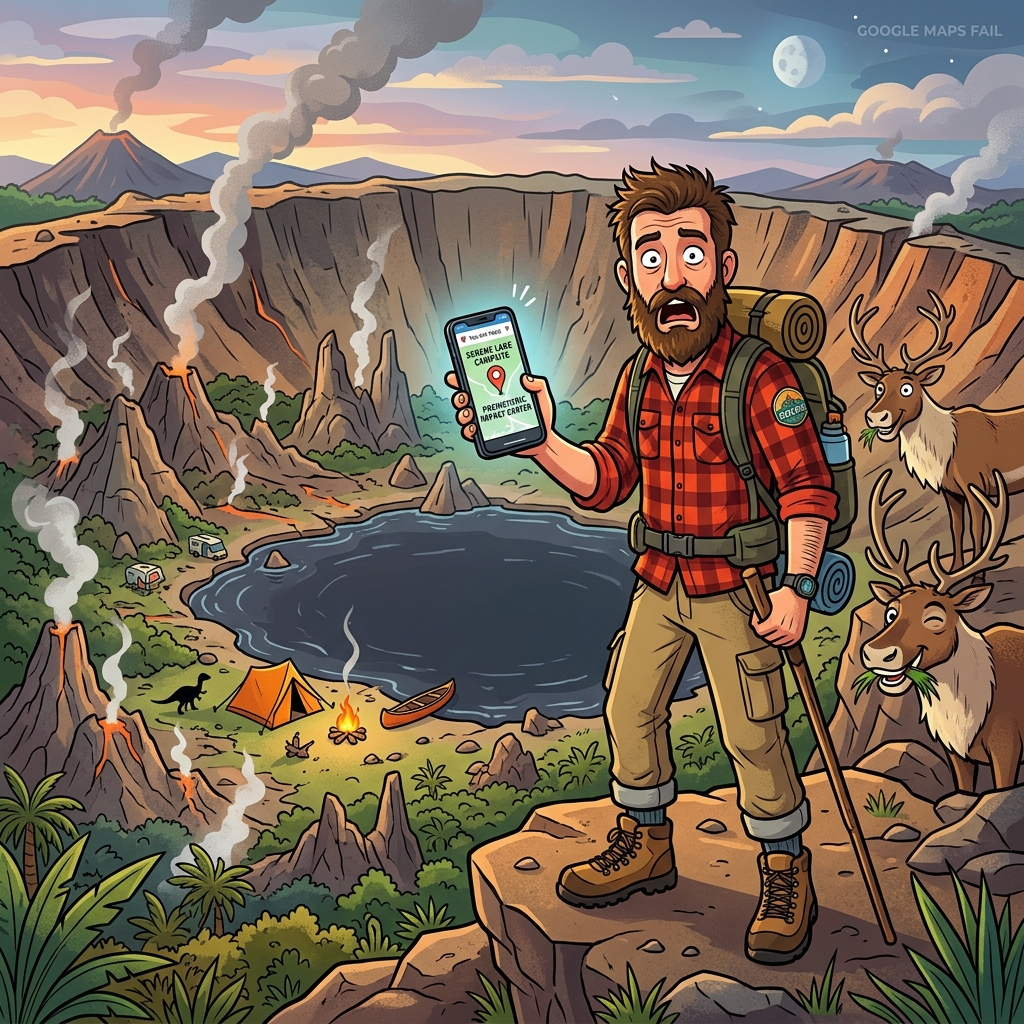
When You Try to Pick a Peaceful Campsite on Google Maps and Stumble into a 390-Million-Year-Old Asteroid Impact
A Canadian camper scouting for quiet vacation spots on Google Maps accidentally discovered a massive 25-kilometer Devonian meteor crater in Quebec, proving that space rocks make great holiday destinations.
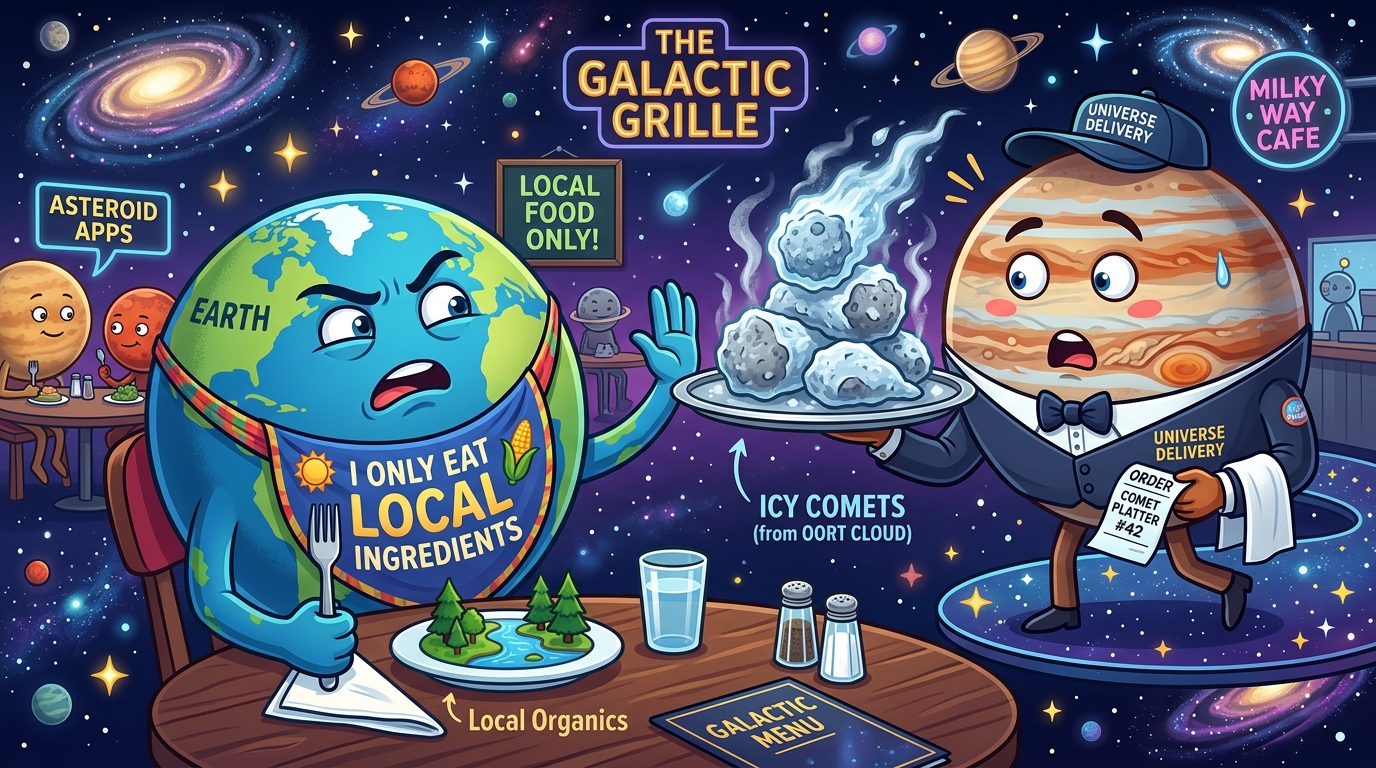
Earth Was an Extreme Localvore: Why Geologists Have No Idea Where Our Water Came From
ETH Zurich planetary scientists proved Earth was forged almost 100% from inner Solar System materials, with less than 2% coming from outer asteroids. That completely detonates the textbook theory that icy comets brought our oceans—leaving geologists scratching their heads.