Monarchs with Bluetooth? Scientists Slap 0.06-Gram Solar Backpacks on Migrating Butterflies
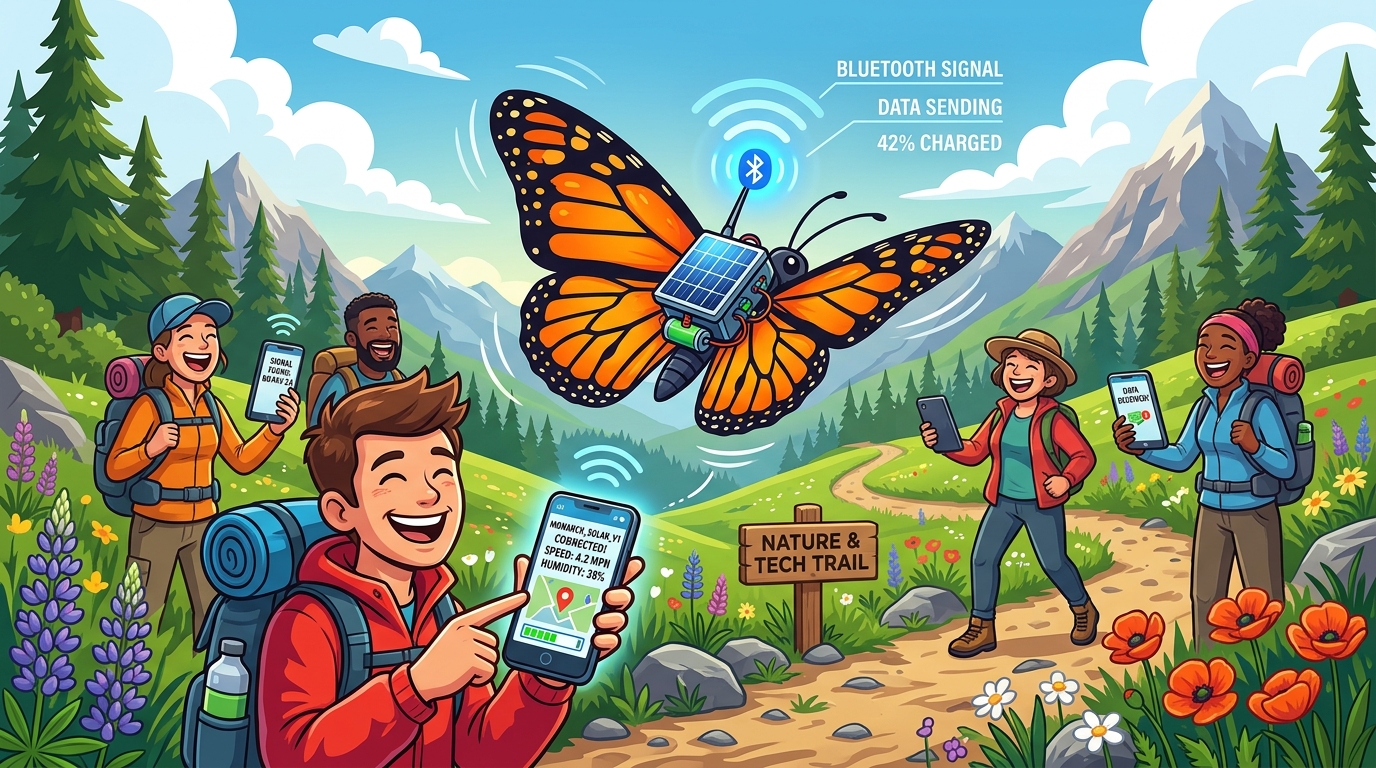
If you ever felt proud of tracking your daily steps with an Apple Watch, prepare to be completely humbled by an orange-and-black insect wearing a microscopic solar panel backpack on a 3,000-mile flight to Mexico.
For nearly a century, tracking the breathtaking continental migration of the monarch butterfly required the scientific equivalent of tossing a message in a bottle into an ocean storm. In the 1930s and 40s, legendary Canadian zoologist Fred Urquhart pioneered sticky paper tags placed onto butterfly wings. The system had just one tiny logistical hitch: for scientists to learn where a butterfly went, a human somewhere along a 3,000-mile flight corridor literally had to stumble across that specific insect, gently squint at a microscopic serial number, and mail it in. The recovery rate hovered around a depressing one percent.
🏷️ Meet the "BlūMorpho": The 60-Milligram Solar Gadget
Engineers at Cellular Tracking Technologies (CTT), in collaboration with conservation scientists at Nature NB and Environment and Climate Change Canada, decided it was time to drag butterfly ecology straight into the 21st century:
- Featherweight Engineering: The newly deployed BlūMorpho transmitter weighs a ridiculous 0.066 grams (around 60 milligrams)—lighter than a single drop of morning dew.
- Zero Batteries Required: Because standard coin batteries would weigh as much as an anvil to a butterfly, the tag is powered entirely by a microscopic solar cell that harvests ambient sunlight.
- 100-Meter Bluetooth Radius: As long as the sun is shining, the tag broadcasts an encrypted Bluetooth Low Energy (BLE) beacon every few seconds up to 100 meters (328 feet) away.
- No Aerodynamic Drag: Attached carefully to the butterfly's thorax using non-toxic adhesive, the device doesn't impair flight dynamics, nectar feeding, or mating behavior.
So how do scientists actually intercept these miniature butterfly broadcasts across thousands of miles of North American forests, suburban backyards, and highways? They turned humans into involuntary butterfly antennas.
📱 Crowdsourcing Migration: Your Phone Is Now a Butterfly Radar
Instead of building multi-million-dollar radio receiver towers every few miles, the project relies on everyday citizen science:
- Passive Smartphone Pings: Anyone walking their dog or sipping coffee on their patio can download the free Project Monarch Science app. Whenever a tagged butterfly flutters within 100 meters, your phone automatically hears its Bluetooth chirp.
- Silent Cloud Sync: The app silently logs the butterfly's unique ID, GPS timestamp, and signal strength, instantly uploading the coordinate to cloud migration maps without interrupting your podcast or draining your phone battery.
- First Cohort Southern Bound: In mid-September 2026, naturalists at the Point Lepreau Bird Observatory and Saint John Naturalist Club launched the first official wave of Bluetooth-equipped monarchs in New Brunswick, tracking their southern trajectory toward the misty oyamel fir forests of Michoacán, Mexico.
Next time you're hiking a trail and your phone buzzes with a nearby device notification, don't assume someone dropped their wireless earbuds in the bushes. You might just have crossed paths with a solar-powered winged voyager checking in on its 3,000-mile cross-continental commute.
You might also like

Nature's Weirdest Landscaping Duo: Hermit Crabs and Cockroaches Team Up as Secret Gardeners
A bizarre Japanese parasitic plant bypasses bees and birds entirely, brewing a yeasty beer aroma to hire hermit crabs and cockroaches as its personal seed-ferrying gardening crew.
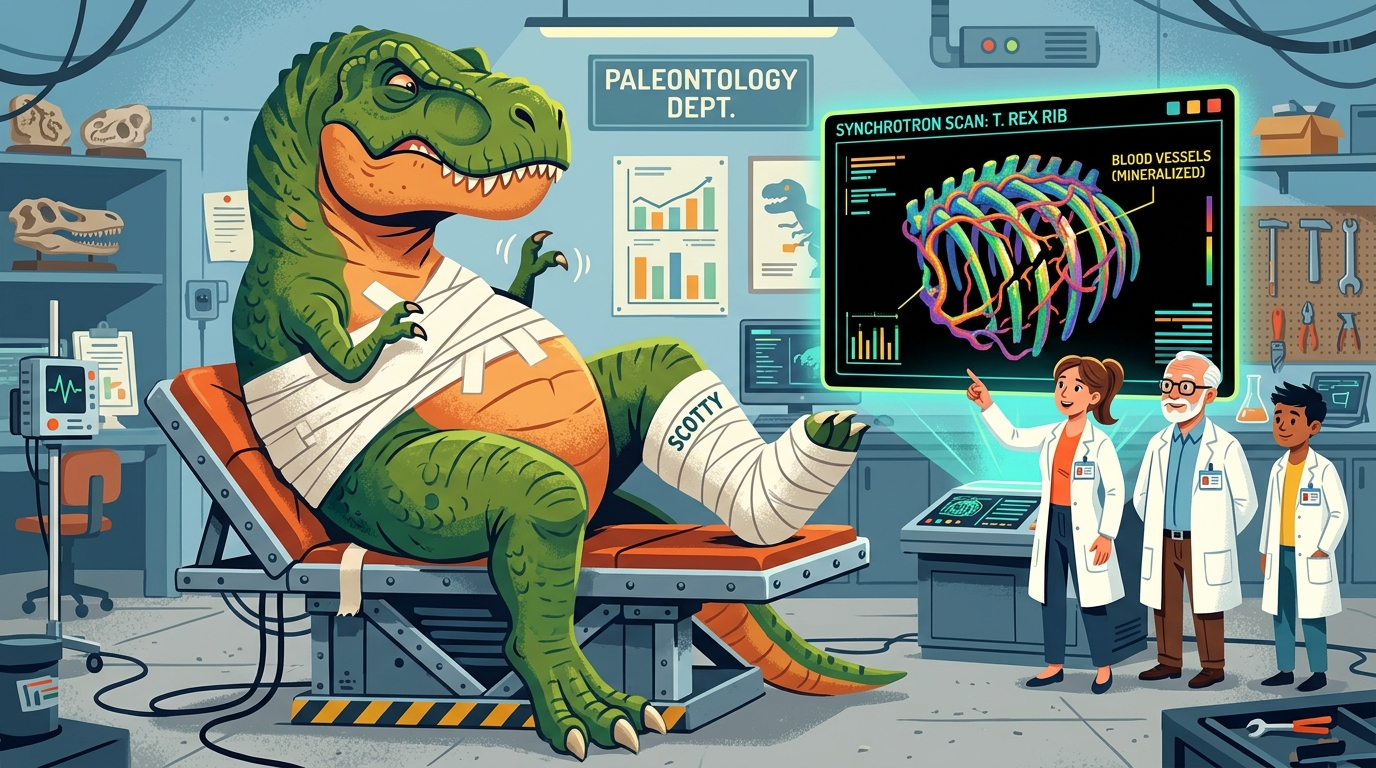
Even a 9-Ton T. Rex Needed Sick Days: 66-Million-Year-Old Blood Vessels Found in Broken Bone
Canadian physicists used particle accelerators to inspect the broken rib of Scotty—the world's largest Tyrannosaurus rex—and discovered 3D mineralized blood vessels that were actively nursing the apex predator back to health.
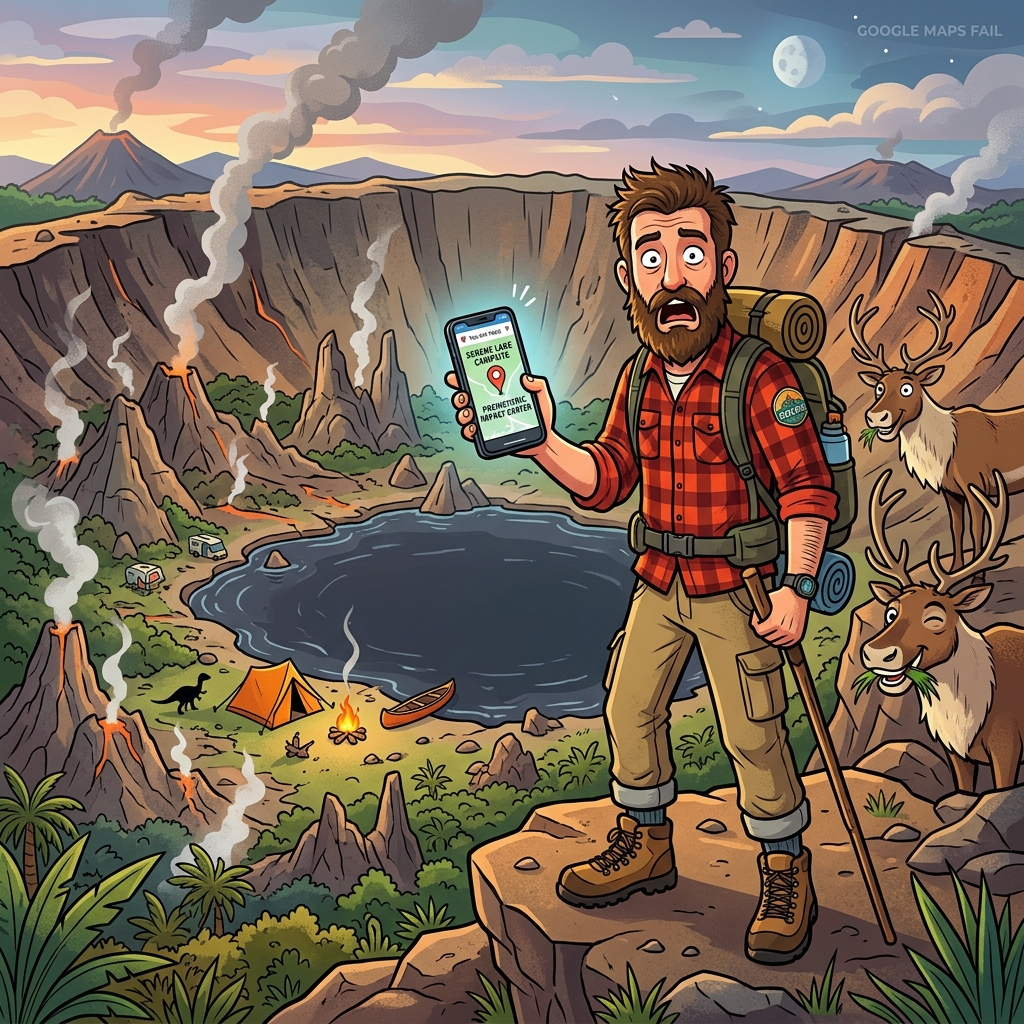
When You Try to Pick a Peaceful Campsite on Google Maps and Stumble into a 390-Million-Year-Old Asteroid Impact
A Canadian camper scouting for quiet vacation spots on Google Maps accidentally discovered a massive 25-kilometer Devonian meteor crater in Quebec, proving that space rocks make great holiday destinations.