Meta Orion Prototype: The "Holy Grail" of AR Looks Like Thick Glasses

On September 25, 2024, at the Meta Connect conference, Mark Zuckerberg carefully unveiled the heavy ordinance they've been developing in secret for ten agonizing years: the Orion AR glasses prototype. For once, it's not an isolating diving bell helmet, nor does it require dragging around awkwardly heavy lithium tethers.
"It looks like a remarkably standard pair of thick black-framed glasses borrowed from a vintage Matrix extra (if your definition of 'standard' is highly forgiving), but it actually successfully beams incredibly convincing holographic projections directly over your physical world."
Orion boasts an impressive 70-degree field of view and supports eye tracking alongside neural wristband gesture control. Translated for the rest of us: You can finally pretend to be spacing out while secretly scrolling through multiple holographic interfaces using practically invisible finger twitches.
Although it's currently eye-wateringly expensive to produce and unequivocally not ready for mass market retail shelves, it is widely revered as the absolute closest manifestation yet to the elusive "Holy Grail" of ultimate AR design. Soon enough, we can finally ditch hunched-over smartphone neck pain in favor of straight-posture holographic dry eye syndrome.
You might also like

Meet 'Max': Meta's Secret 106-Pound Humanoid Robot That Wants to Fold Your Laundry
Meta secretly teamed up with Fourier Intelligence to build 'Max,' a 106-pound humanoid robot with an expressive cartoon face screen and Nvidia Jetson Thor brains—bringing Mark Zuckerberg's AI directly into your kitchen.

Scientists Shrink Archimedes' Screw to a Single Molecule and Accidentally Supercharge Electricity
Physicists built a nanoscale electric motor from a single helical molecule suspended between gold tips—and discovered that spinning it boosts electrical conductivity by 10,000%.
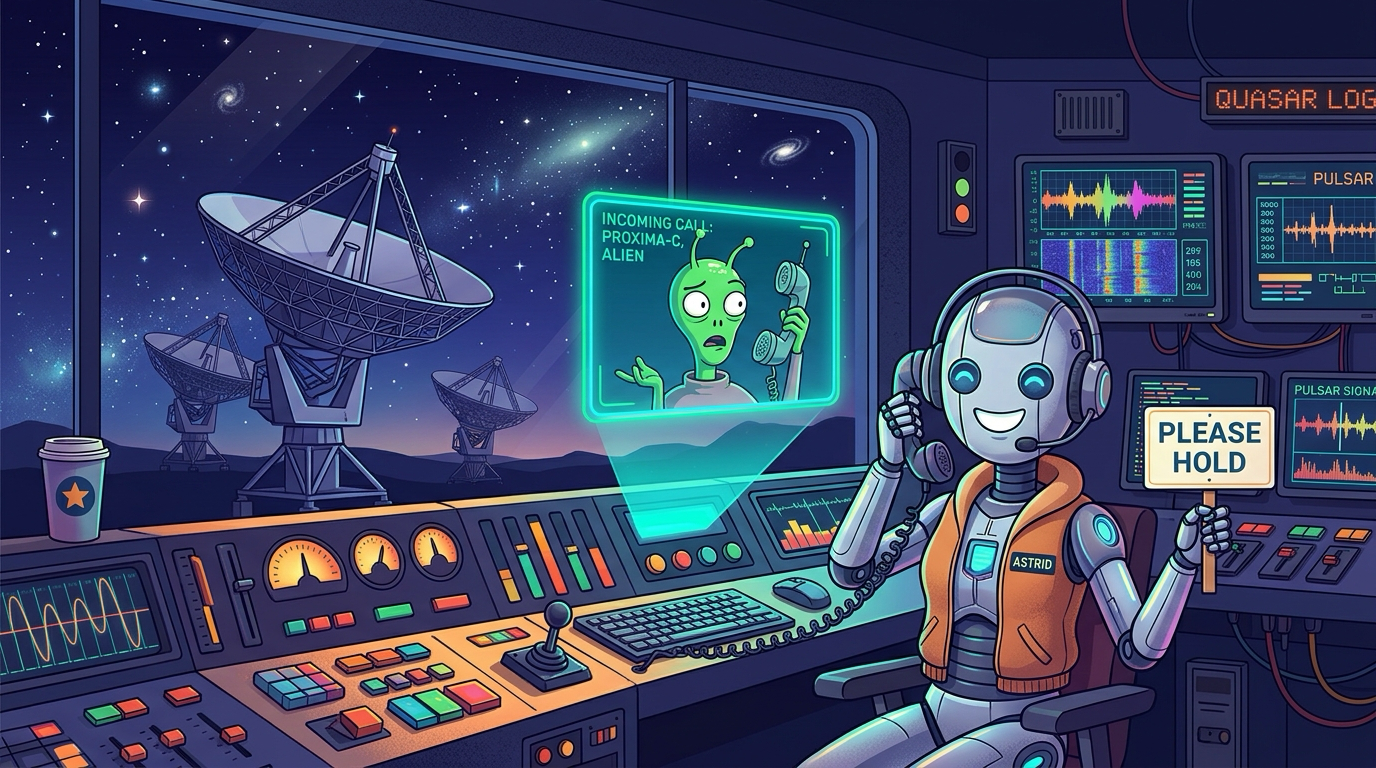
Earth Puts AI on Alien Night Shift: SETI Deploys Autonomous Agents to Hunt for Extraterrestrial Life
The SETI Institute and Breakthrough Listen just deployed NVIDIA-powered autonomous AI agents on the Allen Telescope Array to steer radio dishes and scan 2.4 Tbps of cosmic signals—meaning when aliens finally call Earth, an automated AI bot will answer.