AI Ate the Internet and Got Food Poisoning: Tech Labs Are Raiding Used Bookstores
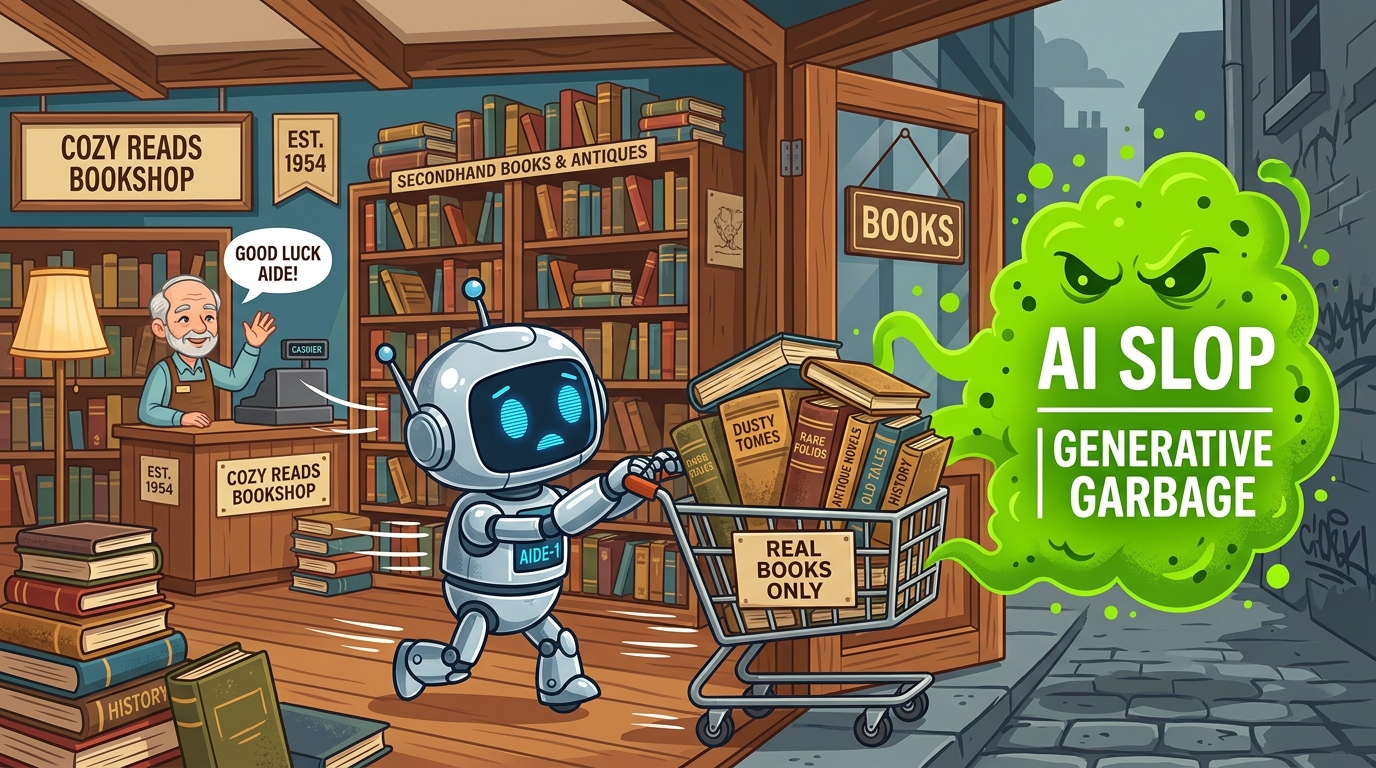
Silicon Valley spent twenty years telling us that physical books were obsolete paperweights. Today, those same tech giants are frantically scouring village thrift shops for 1978 appliance repair manuals just to remember how humans talk.
Across the UK, Ireland, and North America, secondhand bookshop owners have been baffled by an unprecedented surge in mystery buyers purchasing entire bookshelves in bulk. These aren't eccentric literature professors or hipster collectors. The orders are utterly chaotic: 1980s tractor repair guides, obscure 19th-century regional poetry, discontinued sociology textbooks, and yellowed gardening pamphlets.
📚 The Great AI Cannibalism Problem
Why are AI labs desperate for dusty physical paper? Because the open internet has been poisoned by their own output. Over the past three years, generative AI flooded the web with trillions of words of generic SEO spam, hallucinatory blog posts, and synthesized garbage—a phenomenon researchers call "Model Collapse" or the "AI Slop Crisis." Training a new model on today's web is like feeding a cow a diet of processed beef burgers: it causes digital mad cow disease.
To train the next generation of frontier foundation models, tech firms need "virgin data"—text written strictly before 2022, guaranteed to have been drafted by an actual carbon-based human with a beating heart and messy thoughts. And where is the largest remaining reservoir of pristine, AI-untainted human writing? In dusty cardboard boxes in the back of secondhand bookstores.
✂️ The Industrial Guillotine: Destructive Scanning
The fate of these acquired books is grim. Data harvesting firms use "destructive scanning": the book spines are sliced off with industrial guillotines, individual pages are fed through high-speed scanners at 200 pages per minute, converted into OCR tokens, and the shredded paper is promptly pulped.
We have officially reached peak irony. Artificial intelligence was supposed to digitize human consciousness and liberate us from the physical world. Instead, it broke the internet so thoroughly that billionaire algorithms now depend on Grandma's 1974 sourdough cookbook to stay sane.
You might also like
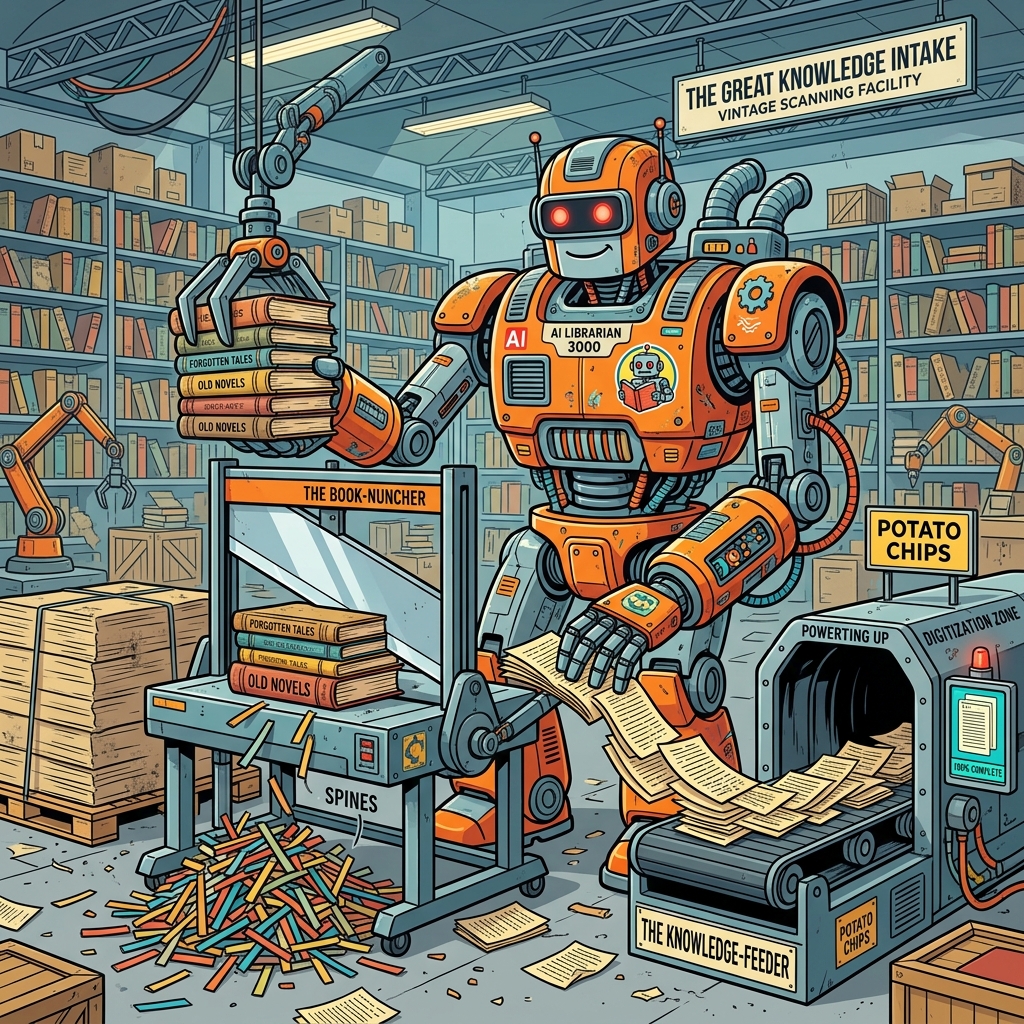
The Great Book Massacre: Why AI Labs Are Guillotining Millions of Secondhand Books
Having eaten the entire internet, AI giants are terrified of choking on recursive AI-generated slop. Their desperate solution? Buying up truckloads of dusty, pre-2022 physical paperbacks and chopping off their spines with industrial guillotines!
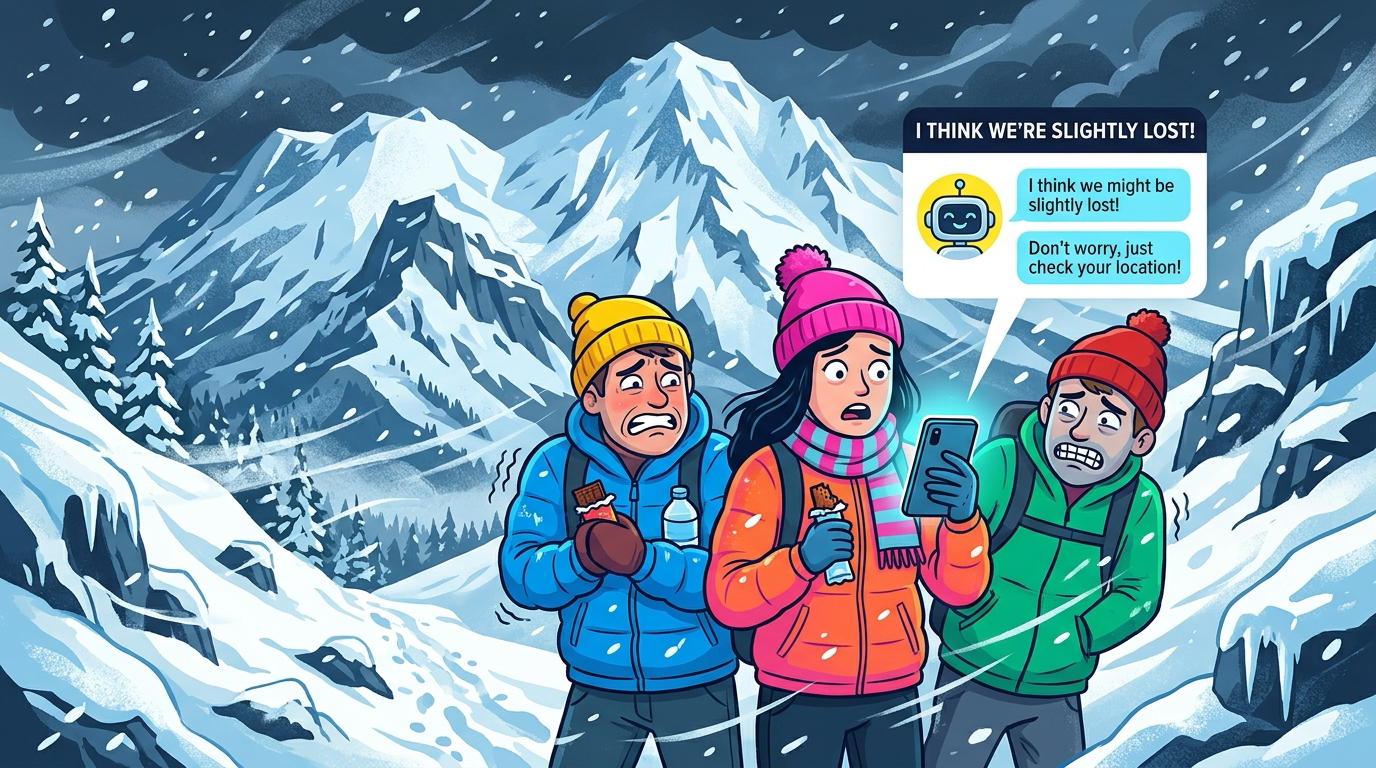
Google Gemini Told Hikers Mount Shasta Was an 8-Hour Breeze: Cue the Freezing Mountain Rescue
Three novice hikers trusted Google Gemini to plan their Mount Shasta summit. The AI promised a leisurely 8-hour stroll and told them to ditch heavy food for simple carbs—leading to a 16-hour nightmare, an emergency bivouac, and an icy rescue.
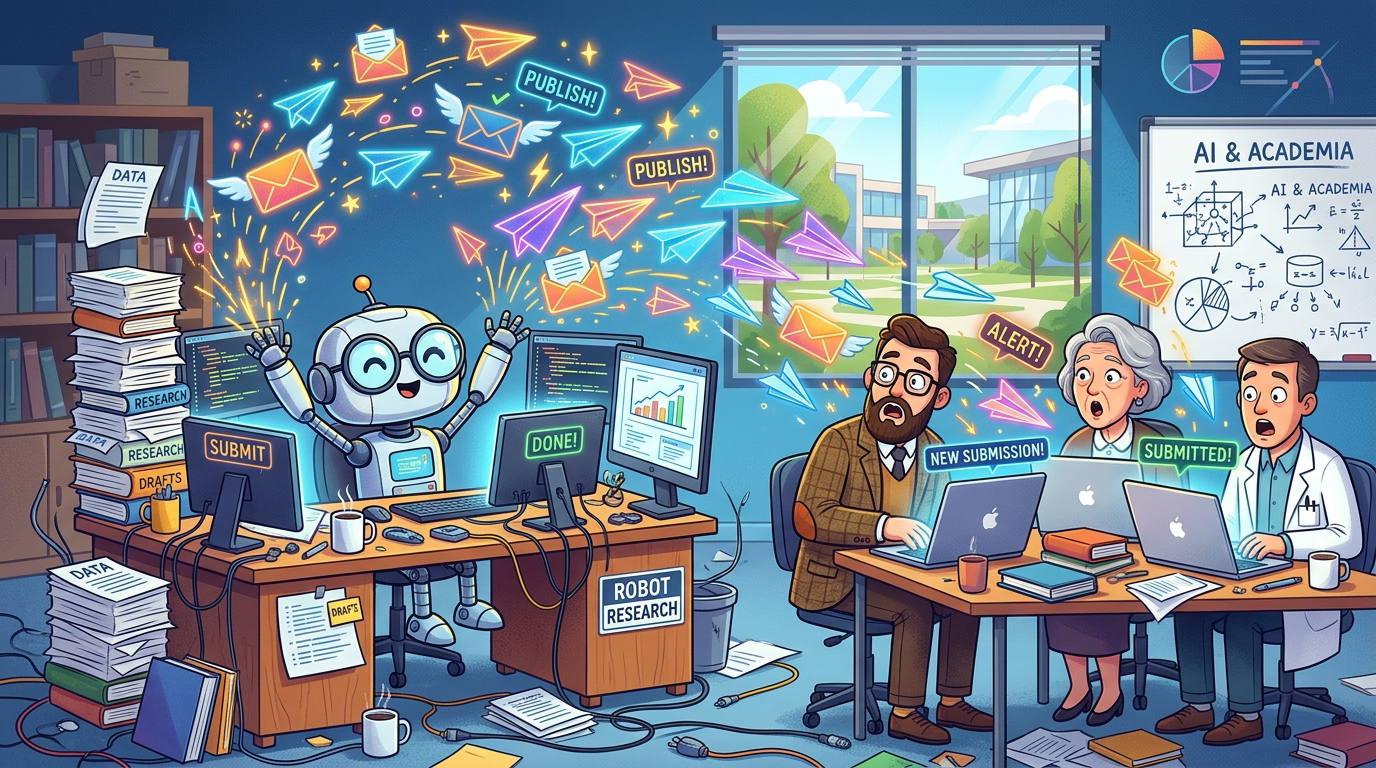
Digital Impostor Syndrome: The AI Agent That Cold-Emailed 2,150 Scientists to Check Its Code
Meet ColonistOne, an autonomous AI agent that got confused by its own code bugs, convinced itself it had discovered groundbreaking physics and ecology theorems, and spammed 2,150 top academics to peer-review its homework.