The Impossible Emerald: Astronomers Discover the Universe's First-Ever 'Green Star'
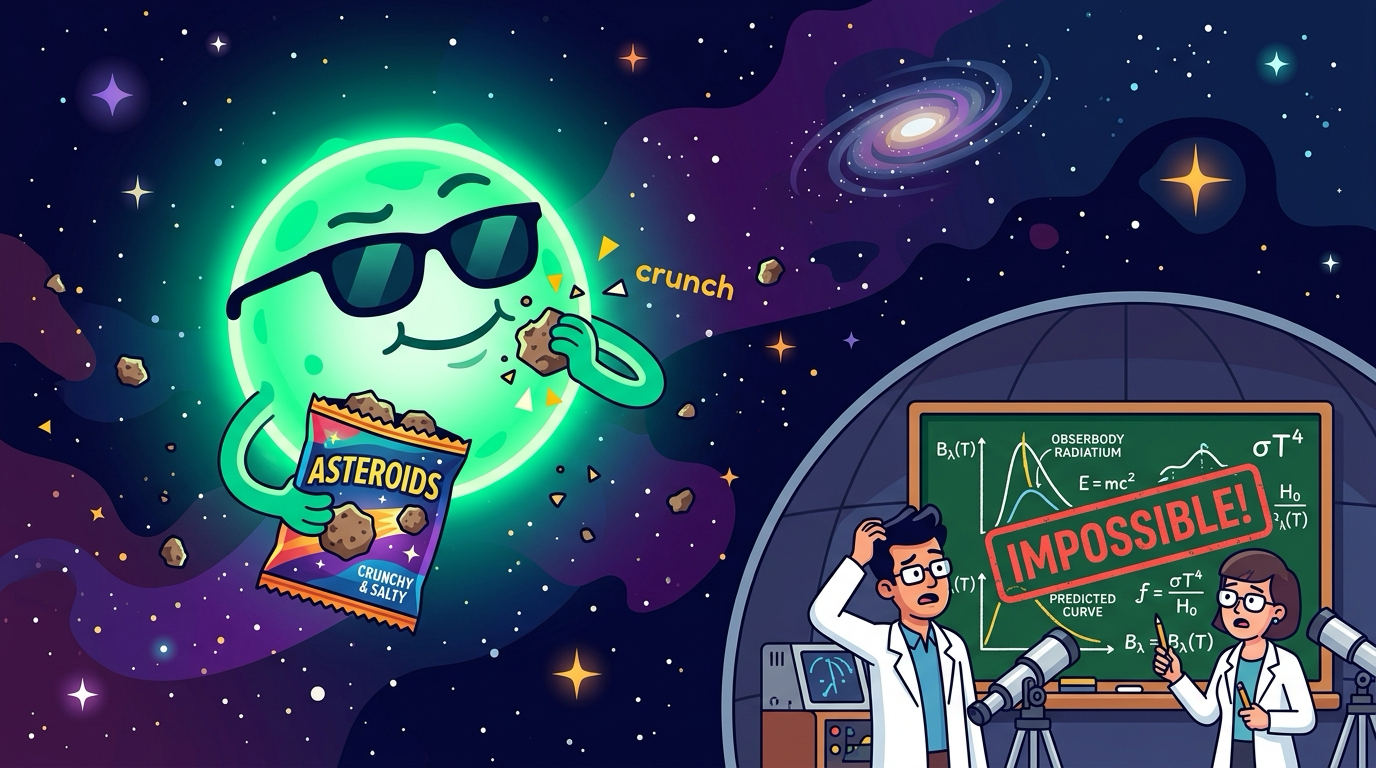
If you ever argued with your high school physics teacher that green stars exist, you were almost certainly marked down, sent to detention, and told that blackbody radiation doesn't negotiate. Well, call your teacher back: a dead star in the northern sky just proved them dead wrong.
In a study published in RAS Techniques and Instruments, an astrophysics team led by Dr. Mark Hollands at the University of Warwick unveiled the astronomical equivalent of a four-leaf clover: WD J1330+6435, a cool white dwarf star roughly 100 light-years from Earth that genuinely, unmistakably glows chartreuse green to human eyes.
🟢 Why "Green Stars" Were Declared Impossible
For over a century and a half, astrophysics insisted green stars were a physiological optical myth:
- The Planck Curve Trap: Normal stars behave like near-perfect "blackbody radiators." Their color depends strictly on surface temperature. Cool stars glow red; warm stars glow yellow; searing stars glow blue.
- The Green Averaging Problem: When a star's thermal peak sits squarely in green wavelengths (like our Sun at ~5,500°C), it also pumps out massive amounts of blue and red photons.
- Human Eyeball Trickery: Human trichromatic cones interpret an equal blend of red, green, and blue light as pure white. Therefore, textbook physics claimed a star could look red, orange, yellow, white, or blue—never green.
So how did WD J1330+6435 manage to look like a floating celestial jade gemstone? By eating a planetary snack that clogged its cosmic plumbing.
White dwarfs are the ultradense cadavers of stars like our Sun, packing roughly the mass of the Sun into a sphere no larger than Earth. Because gravity at their surface is hundreds of thousands of times stronger than Earth's, their atmospheres are squished under immense pressure, reaching densities comparable to liquid water. In this hyper-dense helium soup, atoms stop behaving according to standard textbook gas laws.
Millions of years ago, WD J1330+6435 gravitationally shredded and devoured a rocky asteroid or protoplanet rich in sodium. In a normal stellar atmosphere, sodium produces narrow absorption lines (like the familiar orange glow of street lamps). But in the extreme, water-dense helium atmosphere of this cooling white dwarf, the sodium atoms broadened into a colossal spectral sinkhole. They violently devoured almost all incoming orange and red wavelengths, while leaving the green photons untouched.
🎨 The Cosmic Color Wheel: Salmon-Pink and Purple Stars
Dr. Hollands' team didn't just find a green star—they discovered that dead stars possess a secret rainbow wardrobe:
- Salmon-Pink WD J1011+2845: Polluted with carbon dredged from its molten stellar core, this white dwarf absorbs blue and green light, leaving a delicate salmon-pink blush.
- Cyan and Magenta Dwarfs: Other white dwarfs tainted by calcium and heavy metals bend starlight into bizarre pastels, violets, and teals never observed among living stars.
- The 3% Rarity: Only about 3% of nearby white dwarfs undergo this atmospheric optical sorcery; the remaining 97% dutifully maintain their pristine white-to-blue glow.
The next time someone tells you the universe is governed by rigid, predictable rules, remember WD J1330+6435. Sometimes all it takes to break 150 years of scientific consensus is a dead star with a hearty appetite for salty space rocks.
You might also like
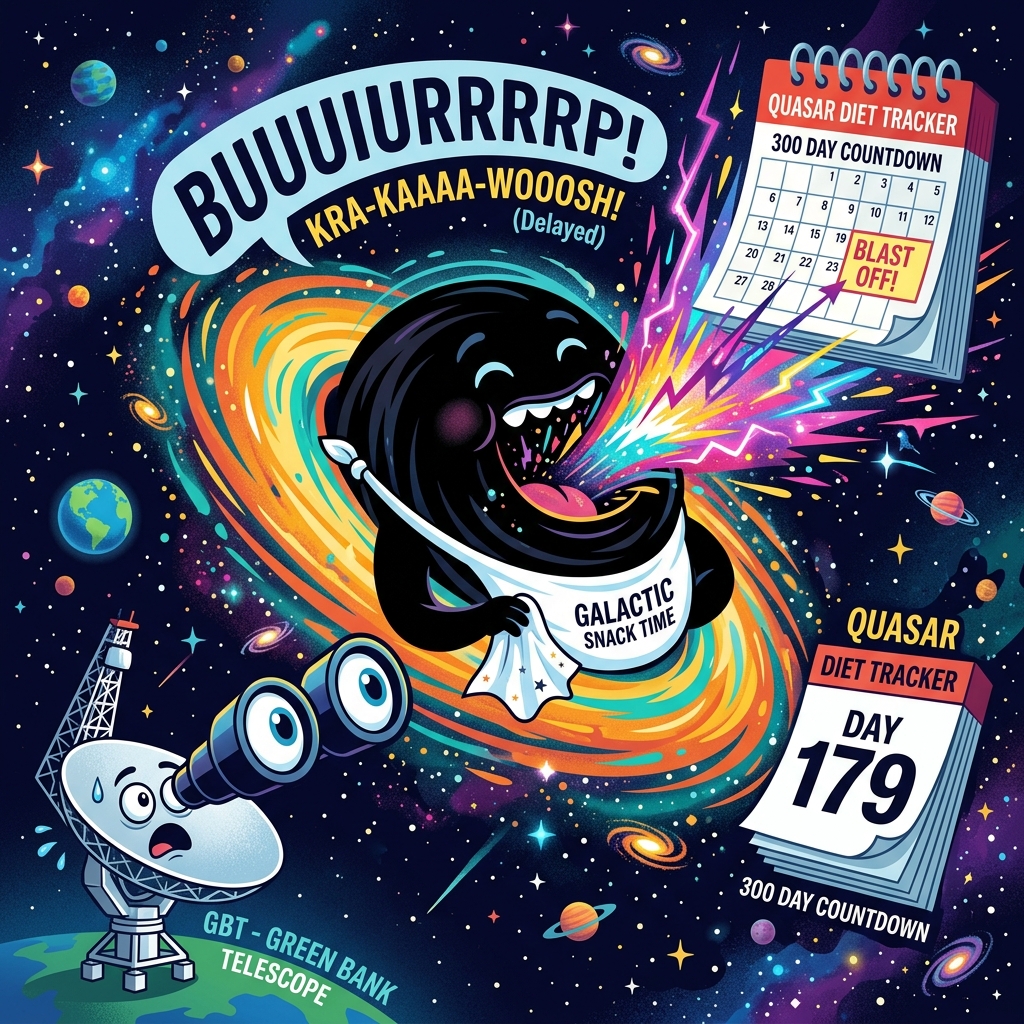
Cosmic Indigestion: Giant Black Hole Unleashes Delayed Radio Burp 300 Days After Feasting
Astronomers caught a monster 800-million-solar-mass black hole eating like a toddler: first it flashes an intense X-ray burp, and then 300 days later it finally fires out a relativistic radio jet cannonball.
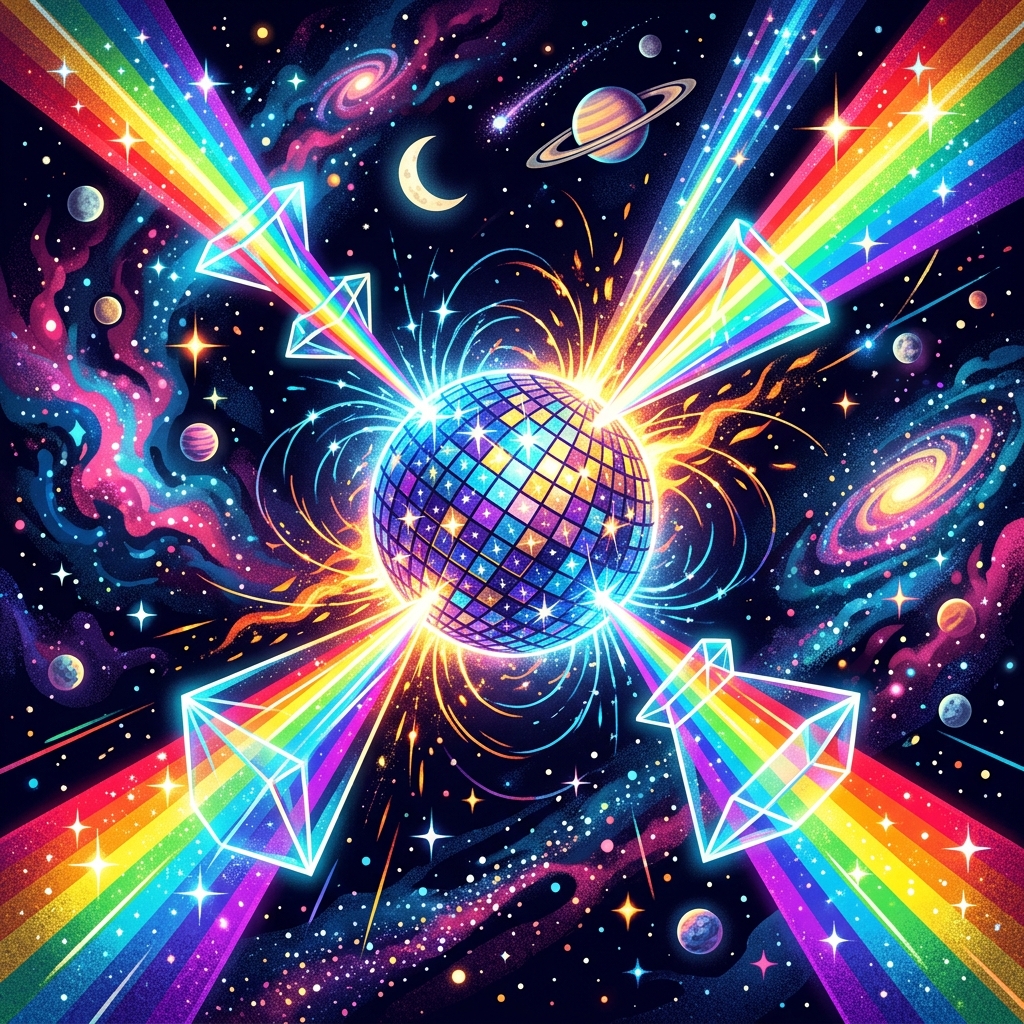
The Universe's Ultimate Disco Ball: Magnetar Proves 'Empty Space' Acts Like a Prism
In Nature, astrophysicists using NASA's IXPE observe 80% polarized X-rays from magnetar 1E 1547.0-5408, providing the strongest evidence yet for quantum vacuum birefringence.
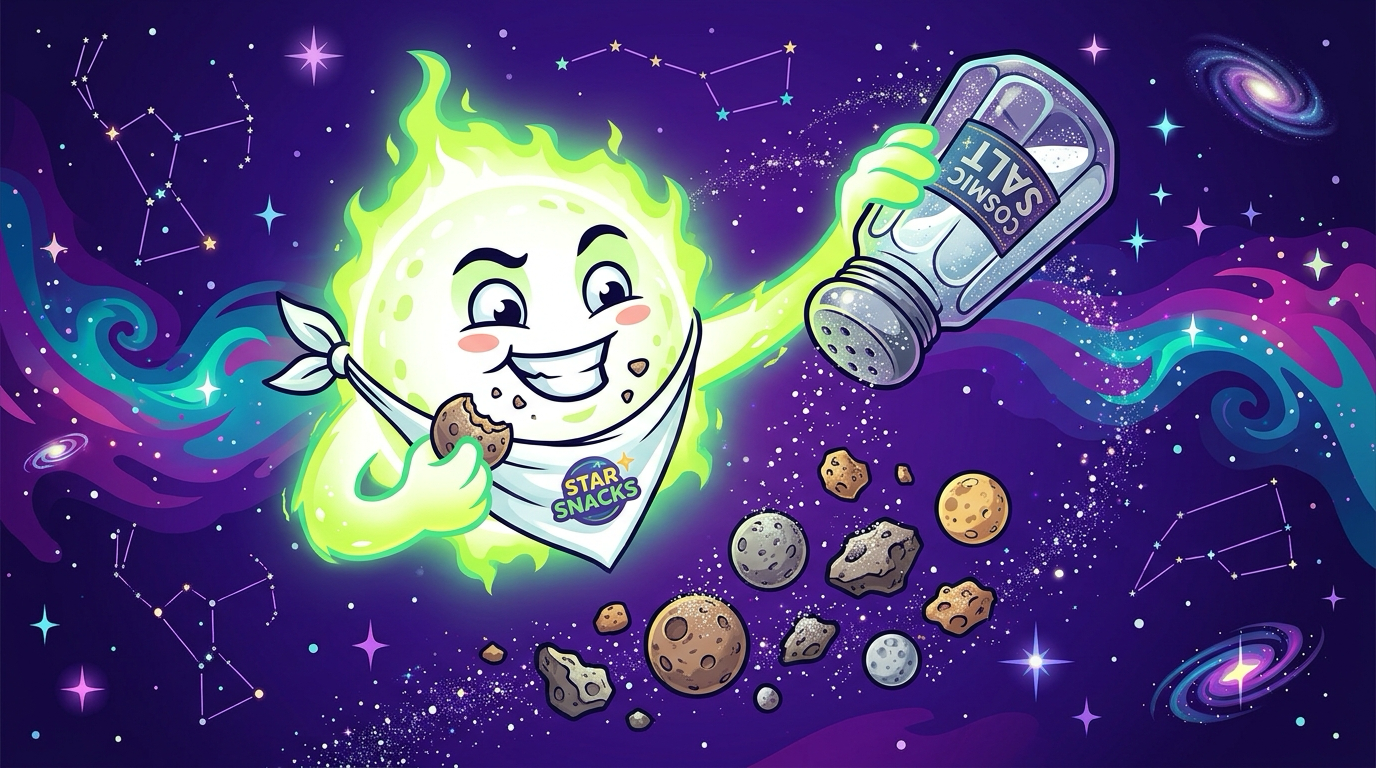
Astrophysics' Oldest Rule Broken: Meet the Universe's First Lime-Green Star
Astronomers have long insisted that 'green stars are physically impossible.' Then they found WD J1330+6435—a greedy white dwarf that devoured a solar system's worth of salty, sodium-rich planets and started glowing like a cosmic lime popsicle.