The Universe's Loudest Toddler: MeerKAT & JWST Catch 11-Billion-Year-Old Radio Blast From a Pint-Sized Galaxy
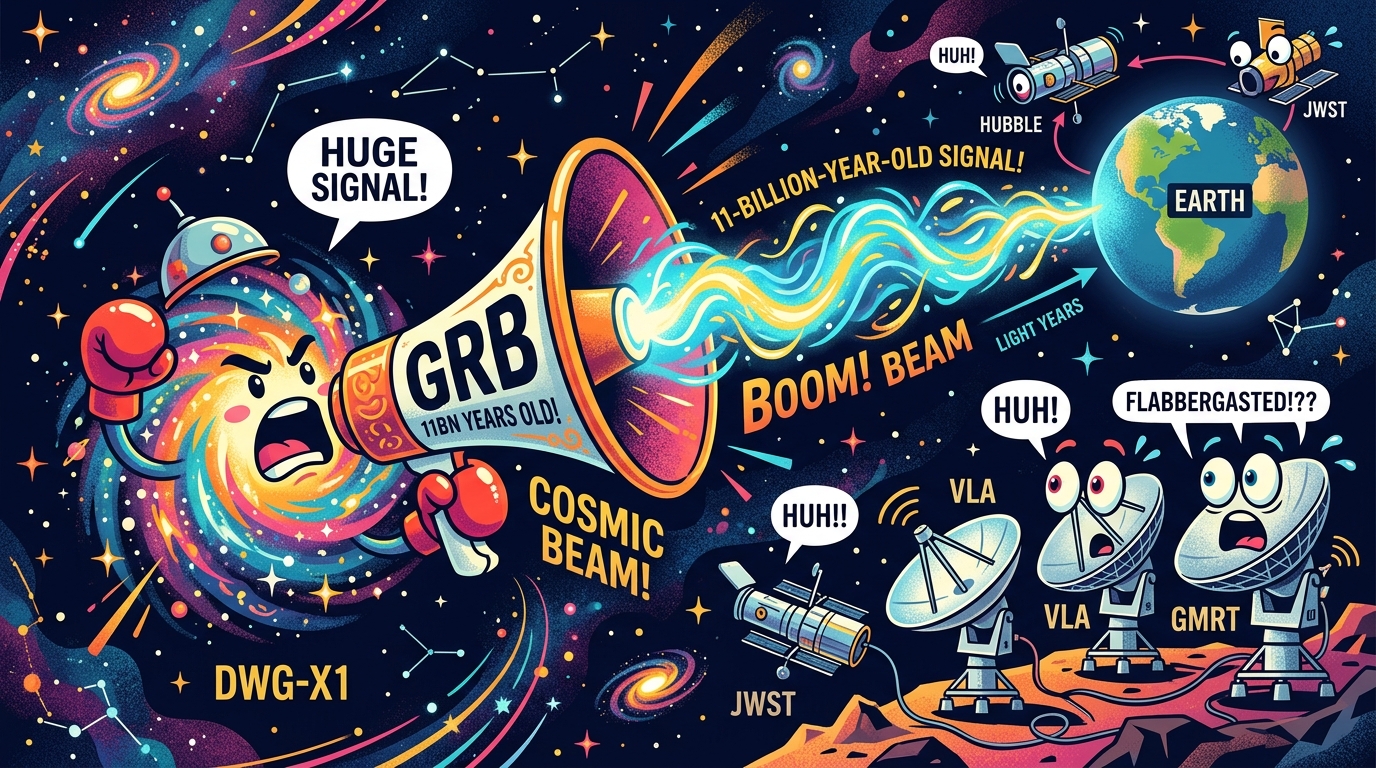
If you ever needed definitive scientific proof that dynamite comes in small packages, the cosmos just delivered it across eleven billion light-years of space and time.
Astronomers using South Africa’s MeerKAT radio telescope array and NASA’s James Webb Space Telescope (JWST) have officially logged FRB 20240304B—the most distant fast radio burst ever recorded in human history. The millisecond flash of radio energy began its journey when the universe was a rambunctious toddler of just three billion years old, during an epoch cosmologists affectionately call "cosmic noon."
📡 The Millisecond Scream That Traveled 11 Billion Years
When radio bursts travel across cosmic distances, they collide with intergalactic plasma, dispersing like light through a prism. FRB 20240304B carried a record-shattering dispersion measure that initially had astronomers double-checking their calculations:
- The Distance Milestone: The signal traveled through roughly 80% of cosmic history—more than double the distance of the previous record holder for a pinpointed burst.
- The Expected Culprit: Standard astrophysical models assumed that generating a blast capable of screaming across 11 billion light-years required a heavyweight monster galaxy packed with billions of stars.
- The Reality Check: When JWST aimed its gold mirrors at the coordinates, it didn’t find a grand spiral galaxy or an ancient titan. It found an absolute lightweight: a tiny, chaotic, metal-poor dwarf galaxy roughly 1,000 times less massive than our Milky Way.
Imagine waiting a decade for the ultimate heavy-metal scream at a rock festival, only to discover the entire stadium-shaking bass was produced by an angry hummingbird with a megaphone. That is precisely what happened when researchers analyzed JWST's NIRCam and NIRSpec observations.
The tiny dwarf galaxy, despite its diminutive mass, is in the throes of hyperactive, frenetic starburst activity. In environments with very few heavy elements ("metal-poor" in astronomer jargon), stars burn fast, live short, and die spectacularly as supernovae, leaving behind supercharged magnetic zombies known as magnetars.
💥 Why Does This Tiny Host Matter?
Fast radio bursts were once treated as cosmic anomalies—or, in late-night conspiracy forums, alien radar sweeps. Today, FRB 20240304B cements magnetars as the premier engines of the cosmic soundboard:
- Cosmic Flashlights: Because these signals punch through the intergalactic web of matter, they illuminate the "missing" ordinary matter drifting in the void between galaxies.
- Early Universe Archaeology: Capturing bursts from 11 billion years ago lets astronomers probe magnetic fields and ionization conditions when the first massive star clusters were forming.
So next time someone tells you you're too small to make a meaningful impact, just remind them of the dwarf galaxy of FRB 20240304B: a celestial featherweight whose tiny magnetic temper tantrum echoed across three-quarters of cosmic time just to baffle Earth's greatest observatories.
You might also like
JWST Catches Three Supermassive Black Holes Crammed into One Galaxy Like Chaotic Roommates
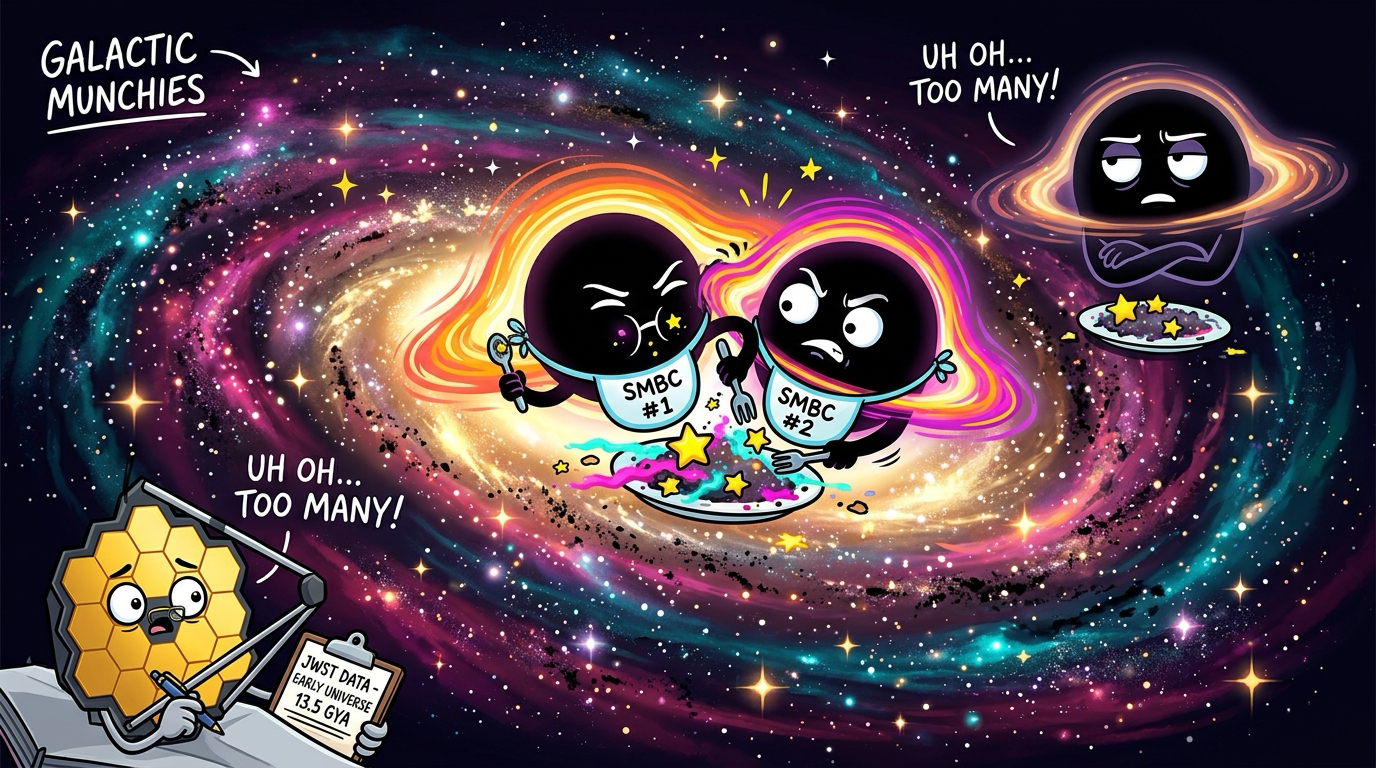
Astronomers using the James Webb Space Telescope under project BlackTHUNDER discovered three actively feeding supermassive black holes crammed inside a single galaxy from the cosmic dawn, fighting over gas clouds just 1.2 billion years after the Big Bang.
JWST Drops Humanity's First Alien Weather Report: -8°C and 100% Chance of Water Clouds on WISE 0855
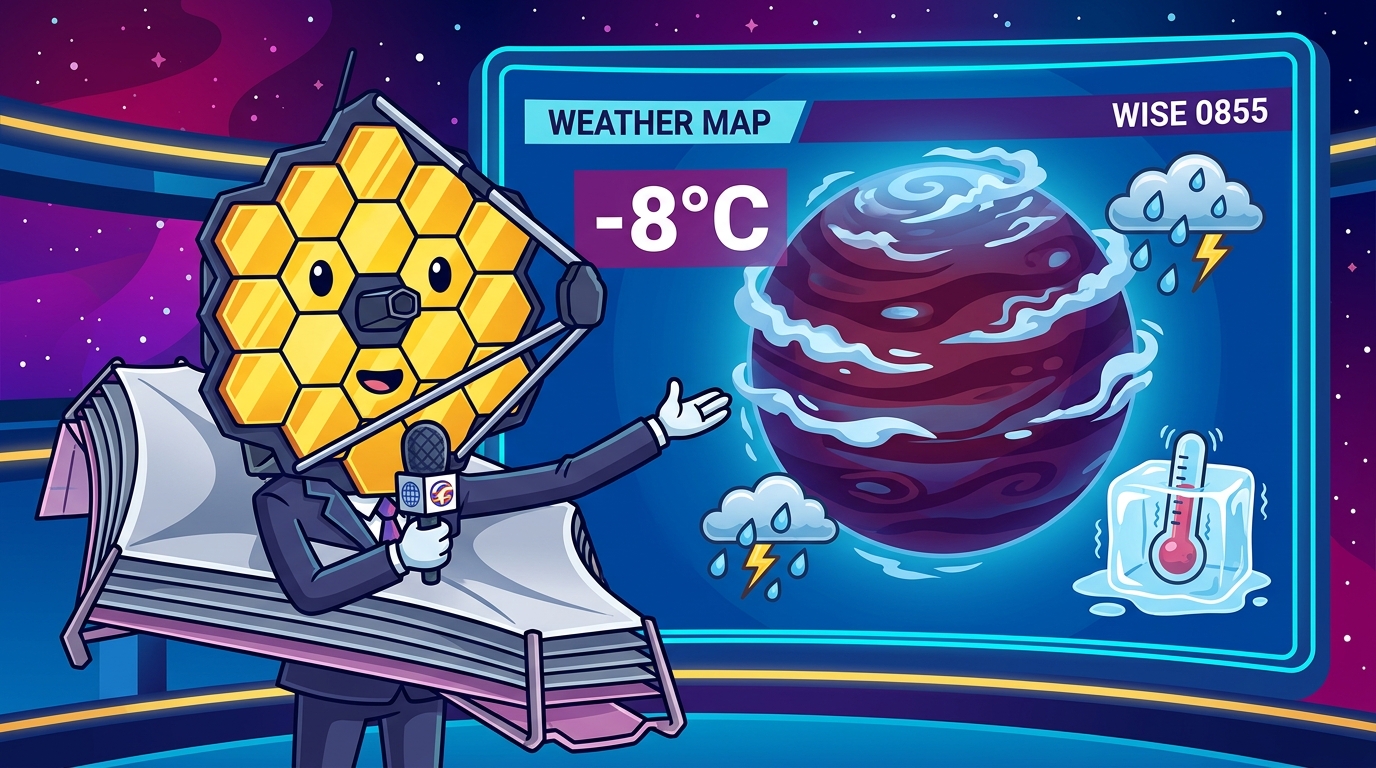
Forget terrestrial rain checks. The James Webb Space Telescope spent 11 straight hours staring at WISE 0855, capturing real-time shifting water clouds and toxic updrafts on a sub-zero failed star 7.5 light-years away.

Cosmic Wardrobe Malfunction: JWST Catches Asteroid Chariklo's Rings Radically Shifting Opacity in Real Time
Astronomers thought planetary rings were timeless cosmic jewelry. But new James Webb Space Telescope observations reveal that mini-planet Chariklo swapped its ring opacity like mood rings—in just 10 short years.