Pampered Pooches of Prehistory: 1,200-Year-Old Mummified Dogs in Peru Feasted Like Royalty
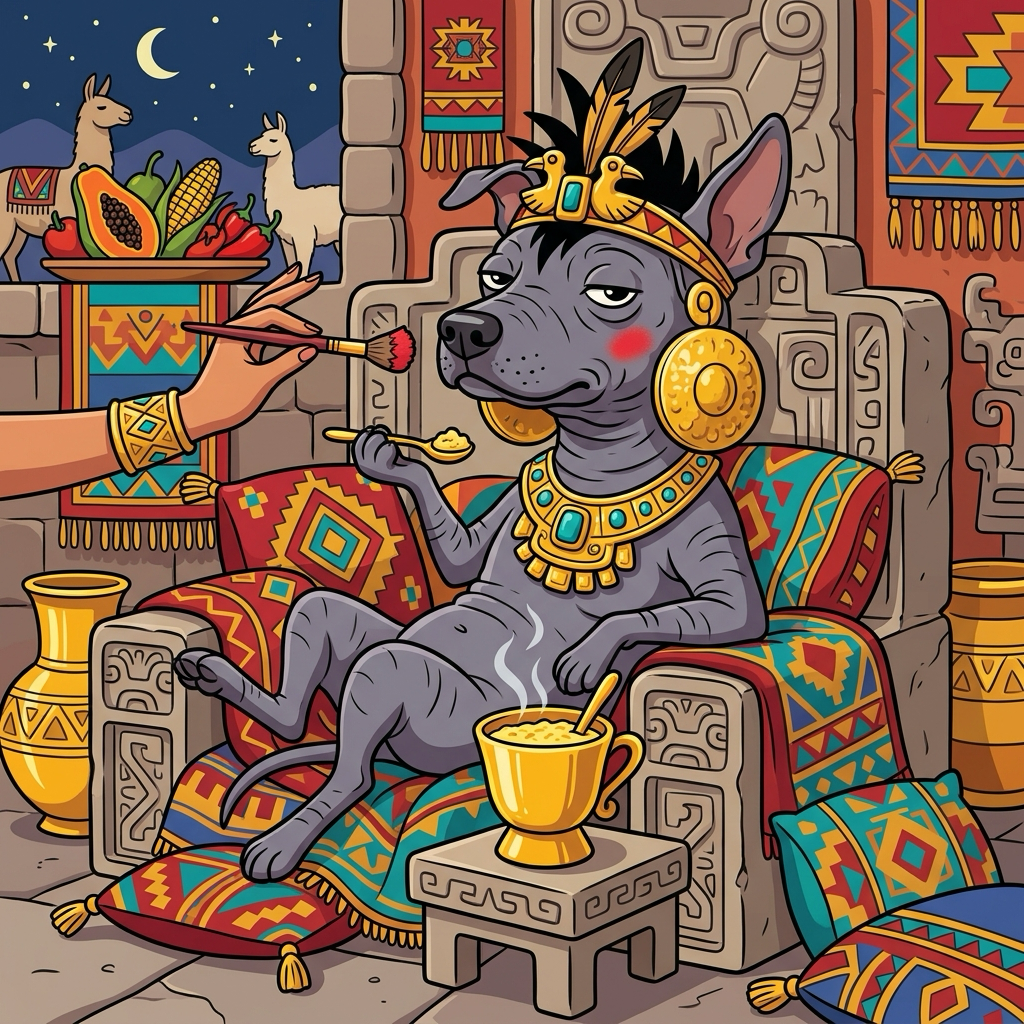
If you ever felt guilty about buying your dog organic sweet-potato biscuits or an orthopedic memory-foam bed, don't worry: your indulgence pales in comparison to the Wari Empire. Twelve hundred years ago in ancient Peru, hairless dogs were living like miniature royalty—and getting buried with makeup and elite honors to prove it.
In a groundbreaking study published in the Journal of Anthropological Archaeology, a collaborative team of archaeologists from Dartmouth College and the University of Warsaw analyzed animal remains excavated from Castillo de Huarmey, a monumental coastal center of Peru's pre-Incan Wari Empire (active roughly 600–1050 CE). What they uncovered was a stunning testament to mankind's eternal obsession with spoiling our pets.
🐕 Mummies with Intact Skin and Attached Ears
Thanks to the bone-dry coastal sands of Peru, several canine specimens were naturally mummified in astonishing condition:
- Perfect Mummies: Archaeologists retrieved a fully preserved adult male dog and puppy skulls that still retained patches of leathery, hairless skin and erect ears after twelve centuries.
- The Missing Tooth Hallmark: Skeletal analysis revealed a telltale genetic marker: these dogs lacked specific premolars and molars that never grew. In canines, congenital hairlessness and dental hypodontia are driven by the exact same mutation (the FOXI3 gene)—confirming these animals are the direct ancestors of the modern Peruvian Hairless Dog (Peruvian Inca Orchid).
- High-Status Burials: Rather than being tossed into refuse heaps or cooking middens, the dogs were interred in high-status mortuary chambers alongside elite artisans, such as the renowned "Master Basketmaker."
The ritual pampering went far beyond a decent burial plot. One mummified puppy skull was found deliberately smeared with vibrant red cinnabar pigment (mercuric sulfide). In Wari culture, cinnabar was a precious, sacred cosmetic reserved strictly for high-ranking nobility and high-priest ceremonies. Someone loved this puppy so deeply that they gave it a royal funeral makeover before sending it into the afterlife.
Even more eye-opening were the biochemical receipts. Researchers performed stable carbon and nitrogen isotope analysis on the puppies' teeth and collagen to reconstruct their daily menu.
🥣 The Five-Star Prehistoric Dog Diet
In many ancient societies, dogs survived on village trash, scraps, and scavenged carcasses. Not at Castillo de Huarmey:
- Table Food for the Puppies: The isotope signatures of the puppies showed an isotopic profile heavy in C4 plants (primarily maize) and marine seafood, identical to the diet of high-status human toddlers living in the same compound.
- Specially Cooked Porridge: Because hairless dogs are naturally missing many of their chewing teeth, their human families deliberately prepared soft cooked corn meals and broths so the pups wouldn't starve.
- True Family Members: These findings provide conclusive physical proof that pre-Columbian dogs were cherished companions, bed warmers, and family members rather than mere hunting tools or livestock.
Civilizations rise, empires crumble, and monuments turn to dust. But whether it's 800 CE in coastal Peru or 2026 on your living room rug, humans will never stop treating their dogs like little emperors.
You might also like

Prehistoric Play-Doh: 15,000-Year-Old Fingerprints Reveal Stone Age Kids Invented Jewelry Before Pottery
Archaeologists studying 15,000-year-old unbaked clay beads in the Levant found 50 preserved fingerprints, proving that Stone Age 10-year-olds were getting their hands messy crafting necklaces millennia before humans ever invented pottery or farming.

Submerged 6,000-Year-Old Stone Bridge in Spanish Cave Rewrites Mediterranean Human History
A 25-foot submerged limestone bridge in Mallorca's Genovesa Cave proves humans built sophisticated island infrastructure 6,000 years ago—a millennium earlier than textbooks claimed.

The Sickle and the Padlock: Scientists Solve the Tragic Mystery of Poland's 'Vampire' Zosia
When archaeologists in Pień uncovered the 17th-century grave of a young woman with a sharp iron sickle across her neck and a padlock on her big toe, sensational headlines screamed 'Vampire!' Now modern forensics revealed the heartbreaking truth behind the superstition.