Quantum Physicists Measure 'Negative Time' as Photons Exit Before Entering
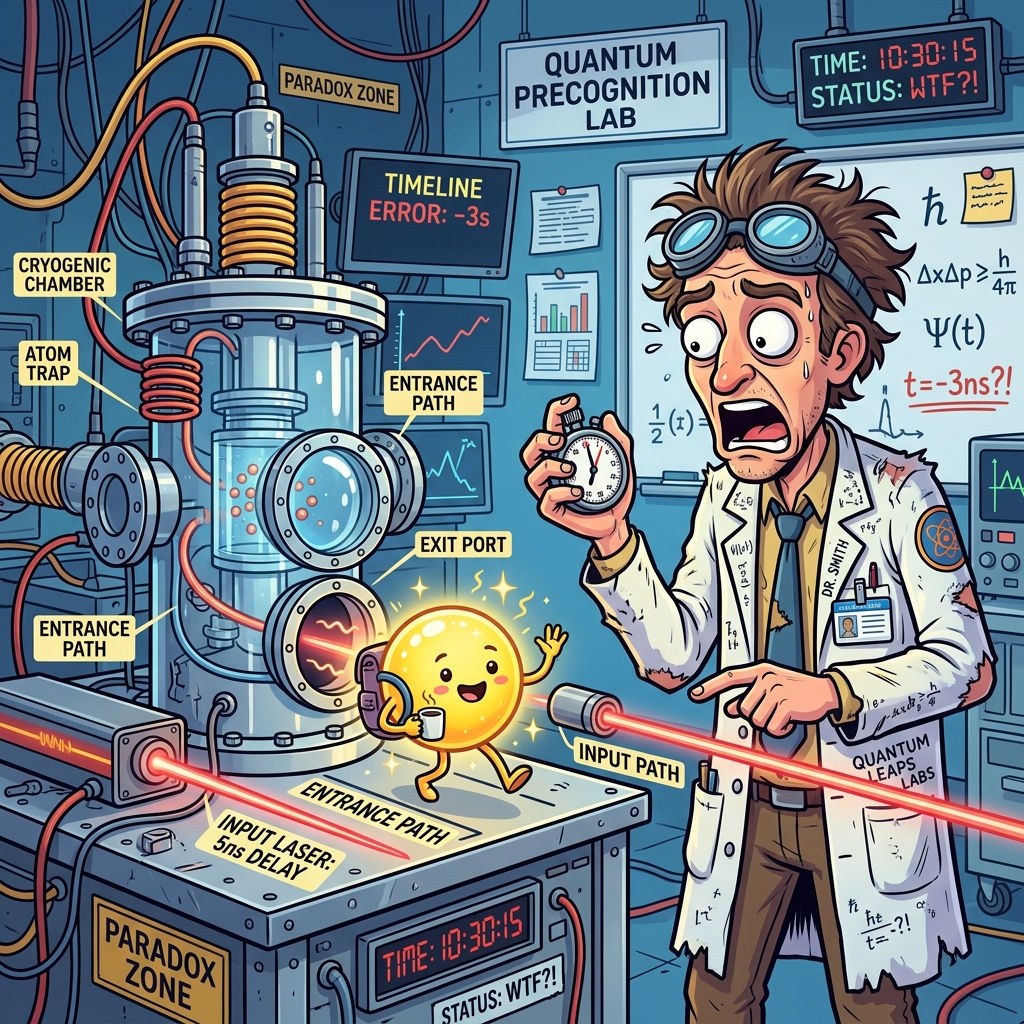
If you've ever showed up to a party so early that you left before you arrived, congratulations: you share a mood with quantum photons.
Physicists at the University of Toronto led by Professor Aephraim Steinberg recently achieved a bizarre milestone: they directly measured a phenomenon known as negative group delay, effectively observing photons exiting a cloud of ultracold rubidium atoms before they had finished entering it.
⚛️ High-EQ Quantum Physics Translation:
Instead of light getting stuck in cosmic traffic inside the atomic cloud, the wave properties of photons interfered in such a way that the exit signal triggered before the entrance pulse fully crossed the threshold, resulting in a measured time delay of less than zero.
Did We Just Build a Time Machine?
Hold your DeLoreans! Before you fire up your time-travel theories, the researchers stress that this does not violate causality or allow information to travel faster than light. Because light acts as both a particle and a wave, constructive and destructive wave interference produces peak shifts that appear counterintuitively inverted on precise atomic stopwatches.
Why 'Weak Measurement' Changed Everything
Normally, trying to observe a quantum particle in transit disrupts it entirely (thanks, Heisenberg!). The Toronto team used a technique called weak measurement—gently probing the atoms with a secondary laser to track atomic excitation without destroying the delicate photon state. The result? Conclusive proof that negative time values in quantum math reflect real physical interactions.
You might also like

Scientists Shrink Archimedes' Screw to a Single Molecule and Accidentally Supercharge Electricity
Physicists built a nanoscale electric motor from a single helical molecule suspended between gold tips—and discovered that spinning it boosts electrical conductivity by 10,000%.

Astrophysics' Oldest Rule Broken: Meet the Universe's First Lime-Green Star
Astronomers have long insisted that 'green stars are physically impossible.' Then they found WD J1330+6435—a greedy white dwarf that devoured a solar system's worth of salty, sodium-rich planets and started glowing like a cosmic lime popsicle.
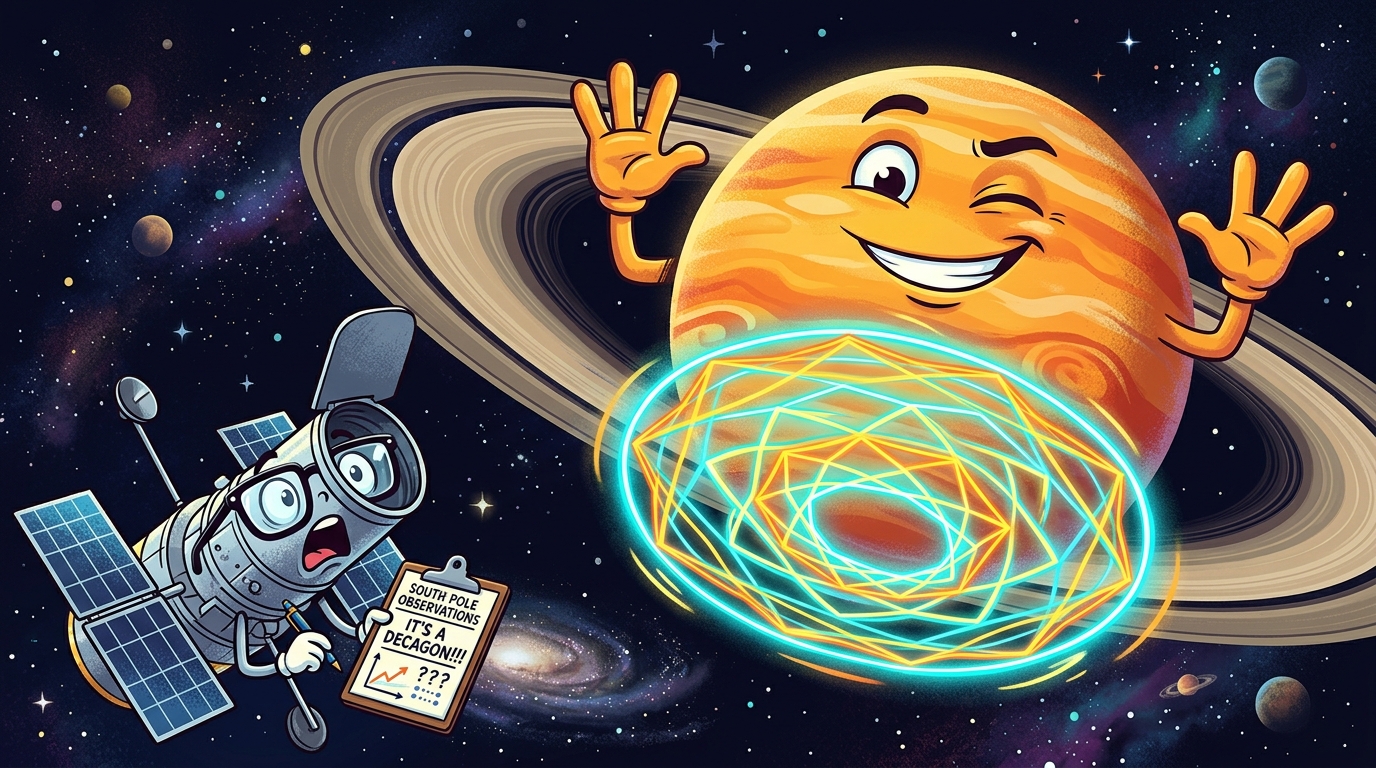
One Hexagon Wasn't Enough: Hubble Catches Saturn Spinning a 10-Sided Decagon Hurricane at Its South Pole
Saturn has spent decades flexing its iconic northern hexagon. Now, new Hubble observations reveal an evolving, regular 10-sided atmospheric decagon wave whirling at its south pole.