Meet the 'SNOB' Beetle: Rare Flightless Insect Returns to Wales After 60 Years Oozing Toxic Knee Goo
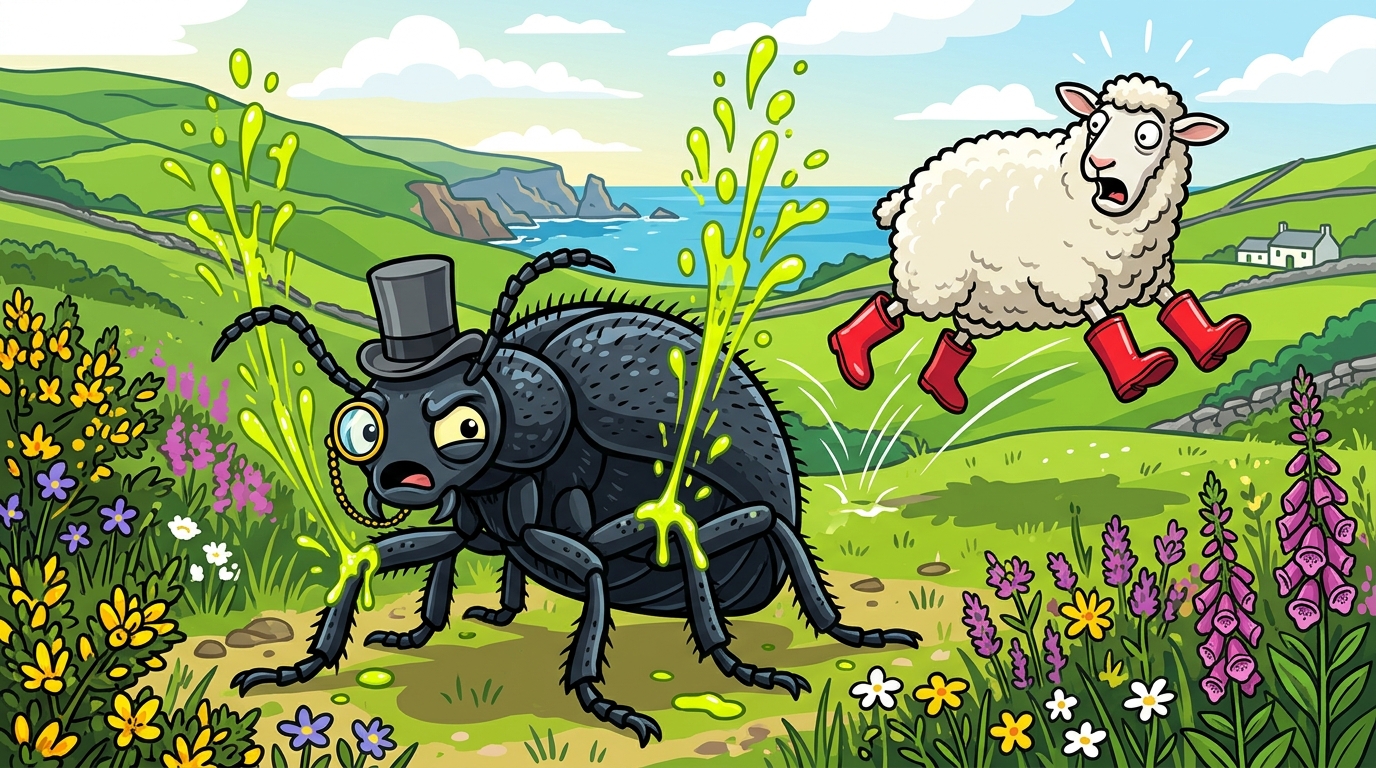
If you were designing a creature from scratch, you probably wouldn't design an insect that is completely flightless, looks like a plump black squash, walks painfully slow, and relies on violently squirting toxic chemical weapons directly out of its kneecaps whenever it feels mildly stressed. But evolutionary biology has a wicked sense of humor, and its latest triumphant return is proof.
Conservationists in the UK are cheering after confirming the successful return and active breeding of the short-necked oil beetle (Meloe brevicollis)—affectionately abbreviated by entomologists as the "SNOB"—at the Castlemartin Range in Pembrokeshire, Wales. The discovery ends an agonizing 60-year absence of confirmed breeding populations in the region.
🪲 An Aristocratic Bug with Rotten Manners
Despite its dignified nickname, the SNOB is perhaps the most unhinged drama queen in the invertebrate kingdom:
- Reflex Bleeding Knees: When threatened by predators (or clumsy birdwatchers), the beetle curls up, plays dead, and deliberately ruptures membranes in its leg joints to ooze droplets of foul, yellowish-orange oily hemolymph. Yes: it literally bleeds from its knees on purpose.
- Blister Agent Cocktail: That yellow knee grease isn't just gross—it's packed with cantharidin, a potent organic blistering toxin. Ingesting it or touching it with bare hands can cause agonizing skin ulcerations and blistering.
- Parasitic Hijackers: SNOB larvae (called triungulins) don't forage for themselves. They climb flowers, wait for solitary mining bees to stop for nectar, hitch a ride on the bee's back like tiny stowaways, and ride straight into the bee's underground burrow to feast on its pollen stores and eggs.
For six decades, Welsh naturalists feared that intensive coastal farming and habitat fragmentation had permanently eradicated the SNOB from Wales. The species had dwindled to just a handful of isolated colonies in Devon and the Scottish islands. But thanks to specialized grassland stewardship and military firing range buffer zones at Castlemartin—which keep manicured landscaping and pesticides far away—the beetle secretly staged its comeback.
Entomologists inspecting the coastal limestone turf spotted adult females digging oviposition burrows and confirmed freshly emerged larvae, providing undeniable proof of a self-sustaining wild population.
🌿 Why We Need Knee-Bleeding Weirdos
While leaking caustic bile from your joints might not seem like peak ecological diplomacy, oil beetles are vital bio-indicators:
Because their entire life cycle depends on healthy, diverse populations of solitary ground-nesting bees, a thriving colony of SNOBs means the underlying coastal wildflower ecosystem is flourishing. You can't have knee-bleeding beetles without wild bees, and you can't have wild bees without pesticide-free native flora.
So if you ever find yourself wandering the scenic coastal cliffs of Pembrokeshire and spot a chubby, glossy black beetle looking very pleased with itself, keep your hands in your pockets and admire from afar. It survived six decades off the radar, and it won't hesitate to grease its knees to keep you at arm's length.
You might also like

Trees Have Muscles: French Scientists Prove Plants Do Posture Workouts in Sensory Deprivation
Researchers placed young bent trees inside a spinning, uniformly illuminated glowing sphere to eliminate gravity and sunlight cues—and watched in awe as the trees flexed internal 'muscles' to straighten their spines.

Beam Me Up, Tadpole: Scientists Discover 7 Madagascar Frogs That Whistle Like Star Trek Communicators
Forget standard croaking. In Madagascar's roaring mountain streams, biologists discovered seven new tree frog species whose high-frequency whistles sound so much like Star Trek sound effects that researchers named them after legendary Starfleet captains.
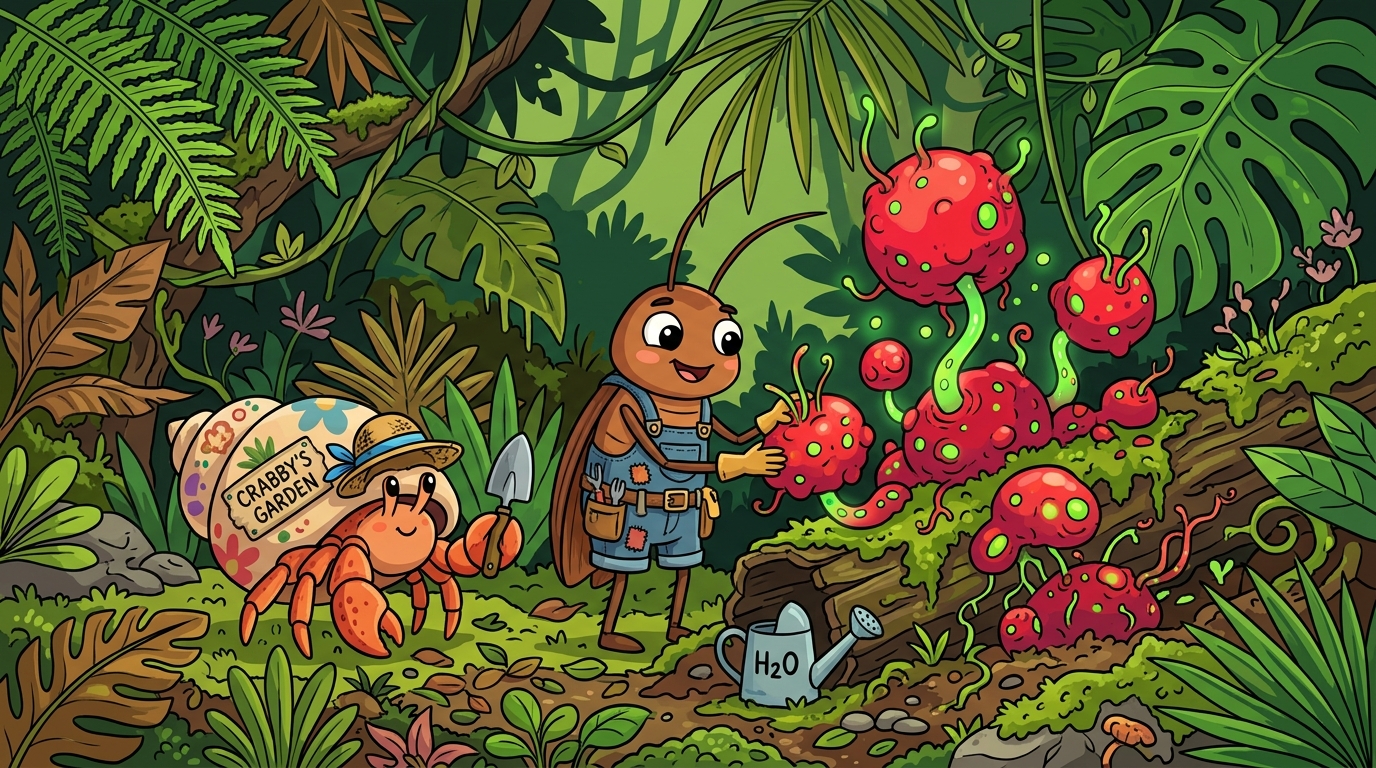
Nature's Weirdest Landscaping Duo: Hermit Crabs and Cockroaches Team Up as Secret Gardeners
A bizarre Japanese parasitic plant bypasses bees and birds entirely, brewing a yeasty beer aroma to hire hermit crabs and cockroaches as its personal seed-ferrying gardening crew.