66-Million-Year-Old Dinosaur Hip Still Has Real Collagen: Jurassic Park Chemistry Is Getting Closer
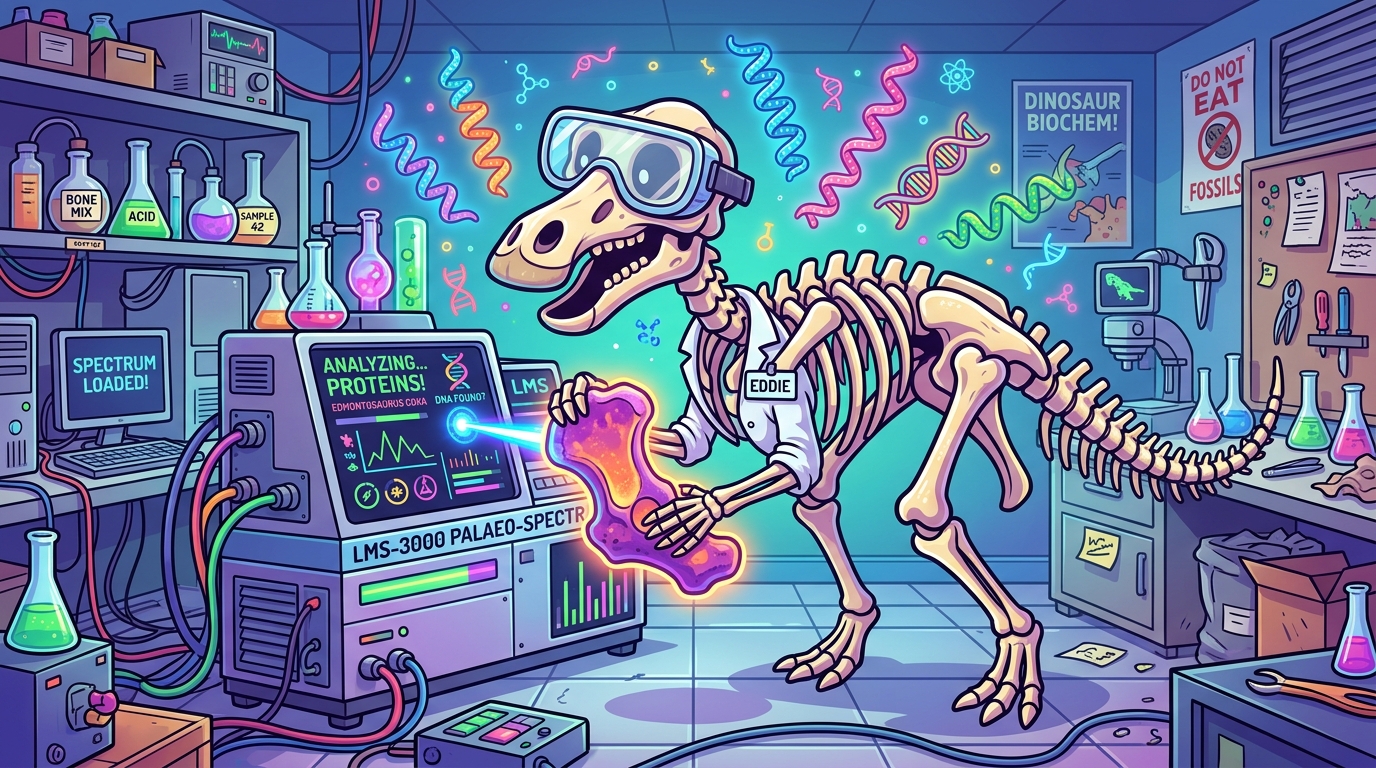
For decades, high school textbooks promised us that after 66 million years underground, any living creature turns strictly into hard rock. It turns out someone forgot to tell this duck-billed dinosaur's hip.
In an astonishing breakthrough published in paleobiology, a research team led by the University of Liverpool used ultra-high-resolution mass spectrometry to extract and sequence original, endogenous collagen protein fragments trapped inside a 66-million-year-old Edmontosaurus annectens ilium (hip bone) excavated from South Dakota's famous Hell Creek Formation.
🦴 Breaking the "Million-Year Barrier"
Conventional biochemical doctrine stated that peptide bonds degrade completely within 1 to 3 million years at best. But within the dense, mineralized cortical matrix of this hadrosaur bone, collagen helices were cross-linked with iron ions and shielded in microscopic crystal vaults—surviving the mass extinction asteroid, ice ages, and 660,000 centuries intact.
The spectral analysis revealed distinct amino acid sequences that match the evolutionary branching between ancient archosaurs and modern birds:
- Avian & Crocodilian Kinship: The sequenced peptides show an unambiguous match to modern chicken, ostrich, and alligator collagen, definitively confirming their shared evolutionary blueprint.
- Zero Bacterial Contamination: Rigorous mass spectrometry confirmed the signatures were ancient archosaurian proteins, completely dismissing critics who previously blamed modern bacterial biofilm.
🧬 Does This Mean We Can Clone a T-Rex?
Don't book your tickets to Isla Nublar just yet. While proteins (the durable bricks of the body) can survive deep time in mineral vaults, delicate DNA molecules break down far faster. So no living dinosaurs yet—but palaeoproteomics has just opened a direct chemical portal into the Late Cretaceous.
Still, finding genuine dinosaur protein that outlasted the apocalypse by 66 million years gives a whole new meaning to the phrase "built to last."
You might also like
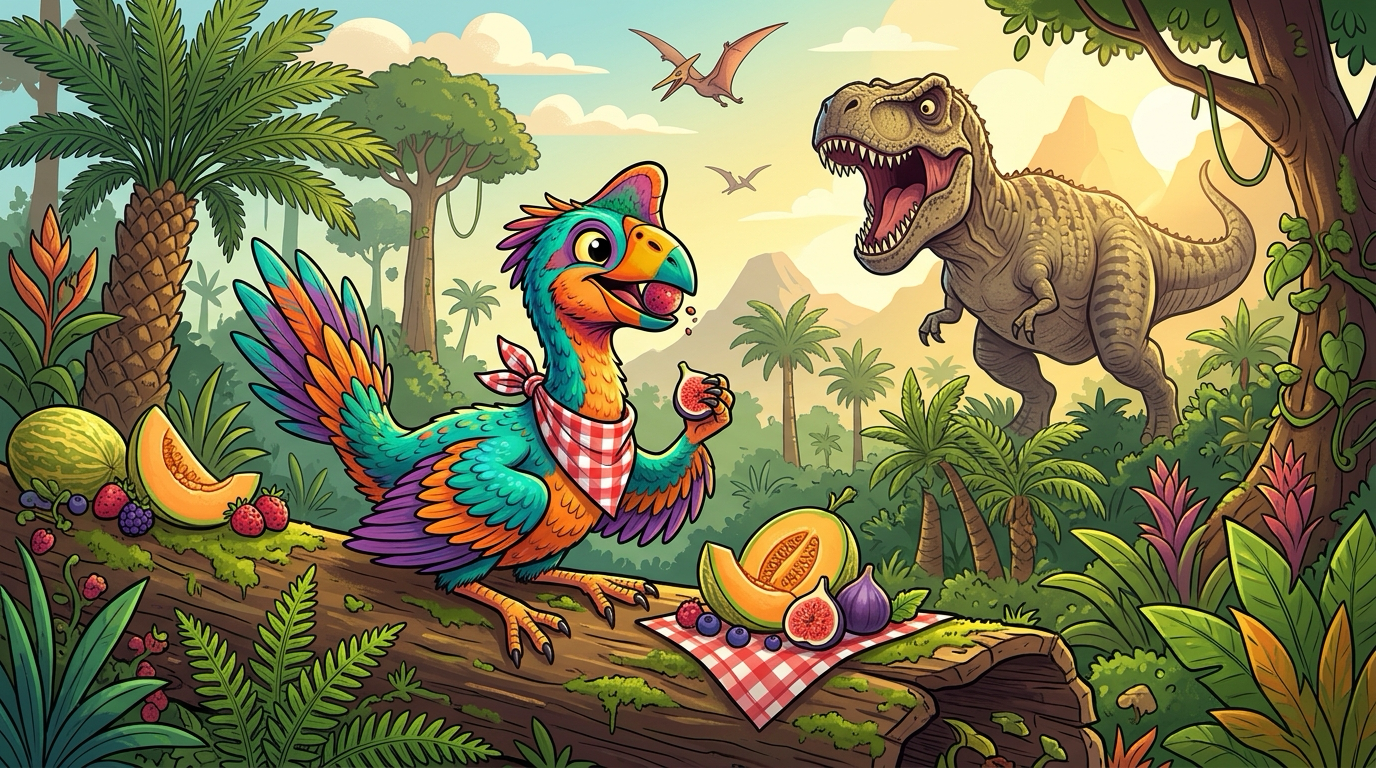
Meet Infernogallus: The 66-Million-Year-Old 'Hell Chicken' That Ate Fruit Like a Parrot
While T-Rex was terrorizing Cretaceous Montana and ripping hadrosaurs in half, a 26-pound feathered dinosaur named Infernogallus jamesi was minding its own business—slurping prehistoric berries with parrot-like sliding jaws.
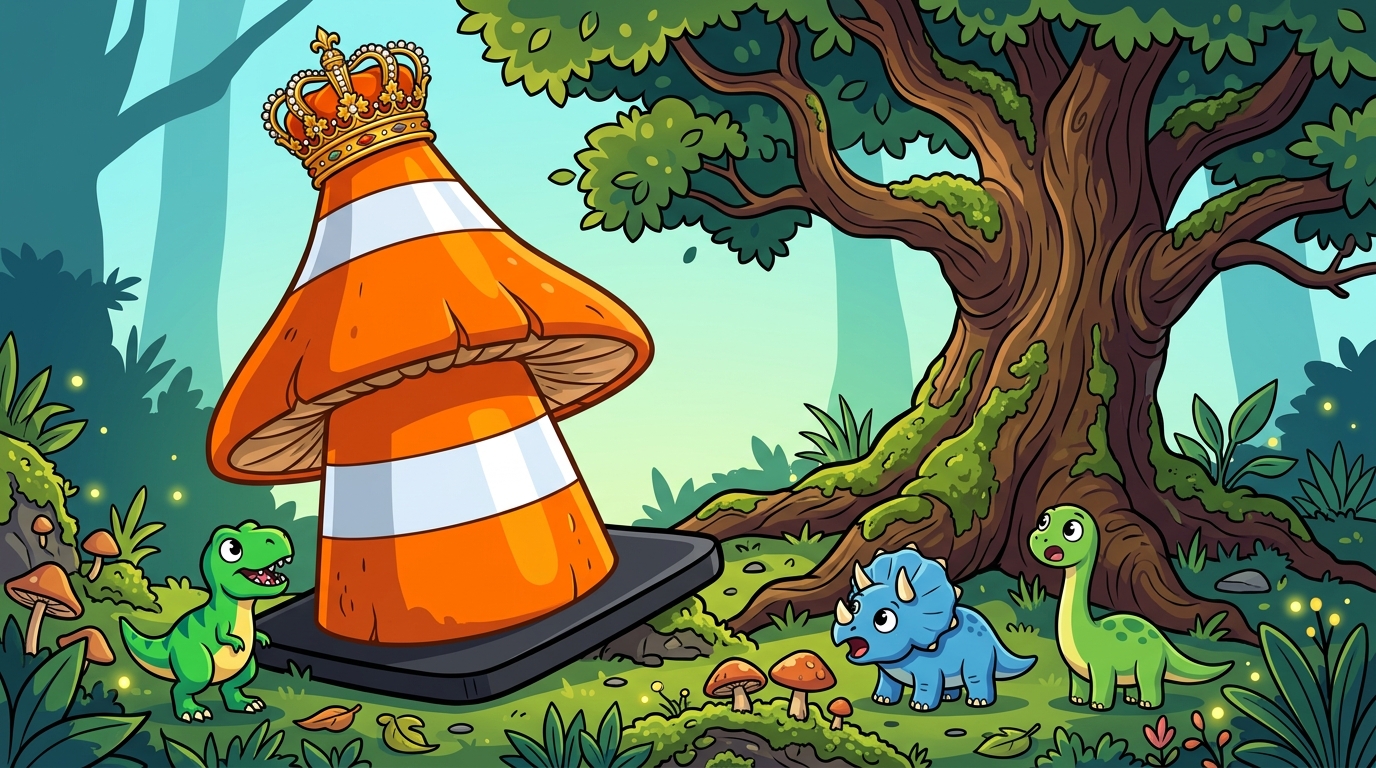
King of the Forest Floor: 20-Inch Prehistoric Fungal Giant 'D-rex' Discovered Ruling Yunnan
Mycologists in Yunnan, China unveiled Dianjunus rex—affectionately dubbed 'D-rex'—a traffic-cone-sized fungal behemoth weighing 2.2 kg that represents an entirely new taxonomic family dating back 65 million years to the aftermath of the dinosaur extinction.
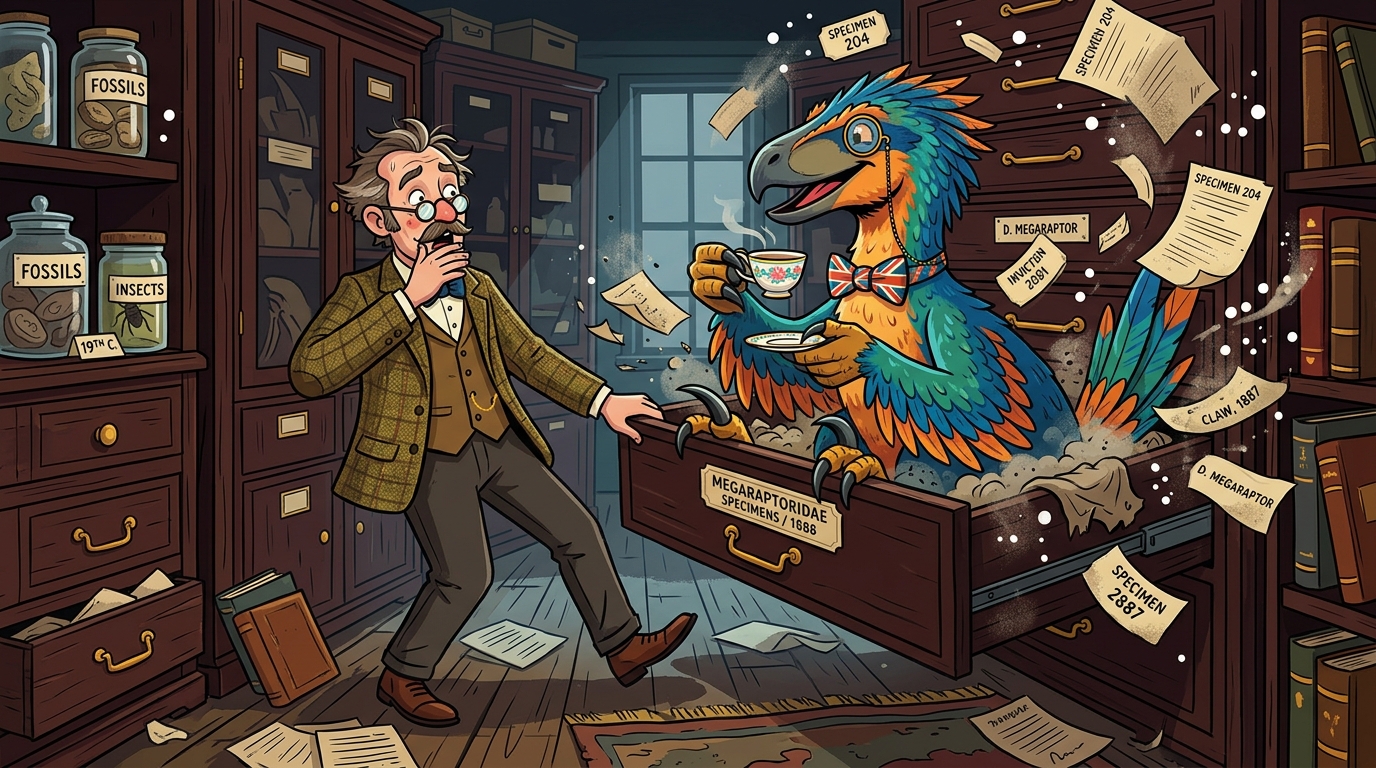
Lost and Found: London Museum Discovers Deadliest European Megaraptor Was Sitting in a Drawer for 100 Years
Paleontologists at London's Natural History Museum realized that a dusty fossil braincase collected in 1924 wasn't just another boring rock—it belonged to Invictibellatrix amberina, a tiger-sized megaraptor with massive curved switchblade claws.