Lost and Found: London Museum Discovers Deadliest European Megaraptor Was Sitting in a Drawer for 100 Years
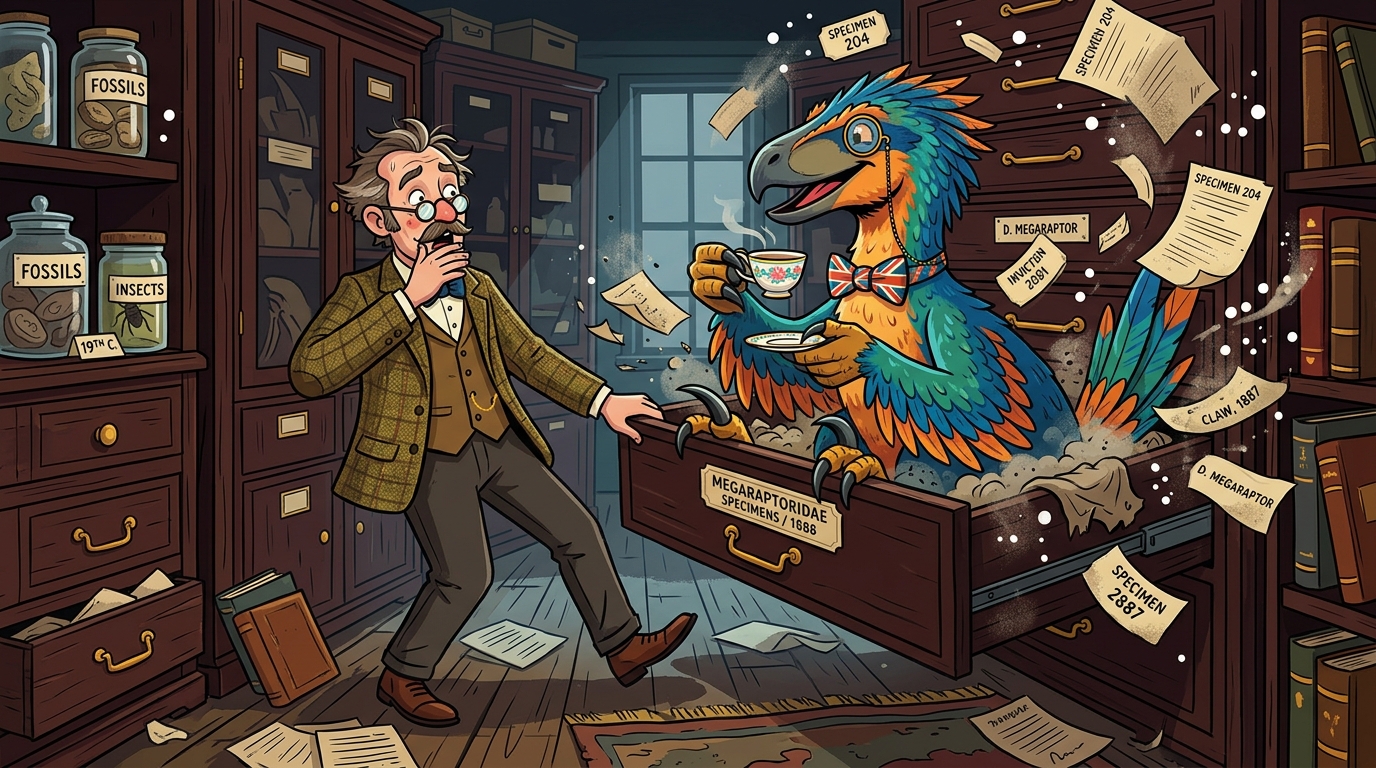
If you ever feel bad about losing your house keys or leaving an unwashed mug at the back of your office desk for six months, take comfort: the world’s foremost paleontological curators misplaced a terrifying, tiger-sized apex predator in a wooden cabinet drawer for an entire century.
In a study published in the peer-reviewed journal Papers in Palaeontology, researchers announced the identification of Invictibellatrix amberina—the first definitive megaraptoran dinosaur ever confirmed on European soil. But the fossil wasn't unearthed during an arduous, sweat-soaked expedition to the Sahara or the Gobi Desert. Instead, the crucial braincase had been sitting quietly in drawer NHMUK PV R16533 at London's Natural History Museum since May 1924, patiently awaiting someone to wipe off the dust and notice its terrifying anatomy.
🦖 Meet Invictibellatrix: The Victorian Drawer Dragon
Don't let its humble storage box fool you—this was no docile museum pet:
- Size & Build: Measuring 3 to 4 meters (10 to 13 feet) in length and weighing as much as a Siberian tiger, this bipedal predator was built for high-speed woodland ambushes.
- Switchblade Claws: While *T. rex* became internet-famous for pathetic baby arms, megaraptorans possessed massive, muscular forelimbs armed with terrifying 20-centimeter (8-inch) curved talons designed to impale prey.
- Royal Etymology: The genus name Invictibellatrix literally translates from Latin as "unconquered female warrior"—honoring strength and resilience against bullying and oppression.
- Local Roots: The species name amberina pays tribute to the amber-bearing Early Cretaceous rocks of the Wessex Formation on the Isle of Wight, where the fossil was first collected over 102 years ago.
Originally dug up from the fossil-rich cliffs of the Isle of Wight in 1924, the fragmented braincase was logged into the museum's archives during the roaring twenties and promptly relegated to obscurity. Back then, curators assumed it belonged to a generic, run-of-the-mill carnivorous dinosaur. For decades, megaraptors were thought to be exclusively southern-hemisphere terrors roaming South America and Australia. Nobody expected one to have prowled the prehistoric English countryside.
It wasn't until modern paleontologists—armed with advanced CT scanning and comparative 3D modeling—re-examined the skull that the game was up. Deep neurological impressions revealed an enlarged olfactory bulb, acute binocular vision, and unmistakable pneumatic cranial cavities that scream megaraptor.
🔍 Why Museum Drawers Are the Best Dig Sites
The discovery underlines a hilarious reality of modern paleontology:
- Drawer Expeditions: The most groundbreaking dinosaur discoveries no longer require surviving malaria and sandstorms; sometimes you just need a museum library badge and a decent cup of English Breakfast tea.
- Global Megaraptor Diaspora: Finding a megaraptoran in 120-million-year-old British rock proves these lethal feather-dusted predators crossed ancient land bridges connecting Laurasia and Gondwana.
So here's to Invictibellatrix amberina: 120 million years surviving extinction, followed by 100 years of polite British museum storage. If you're ever walking through South Kensington, look closely at those Victorian wooden cabinets—who knows which forgotten Jurassic monster is quietly watching you from behind the filing folders.
You might also like
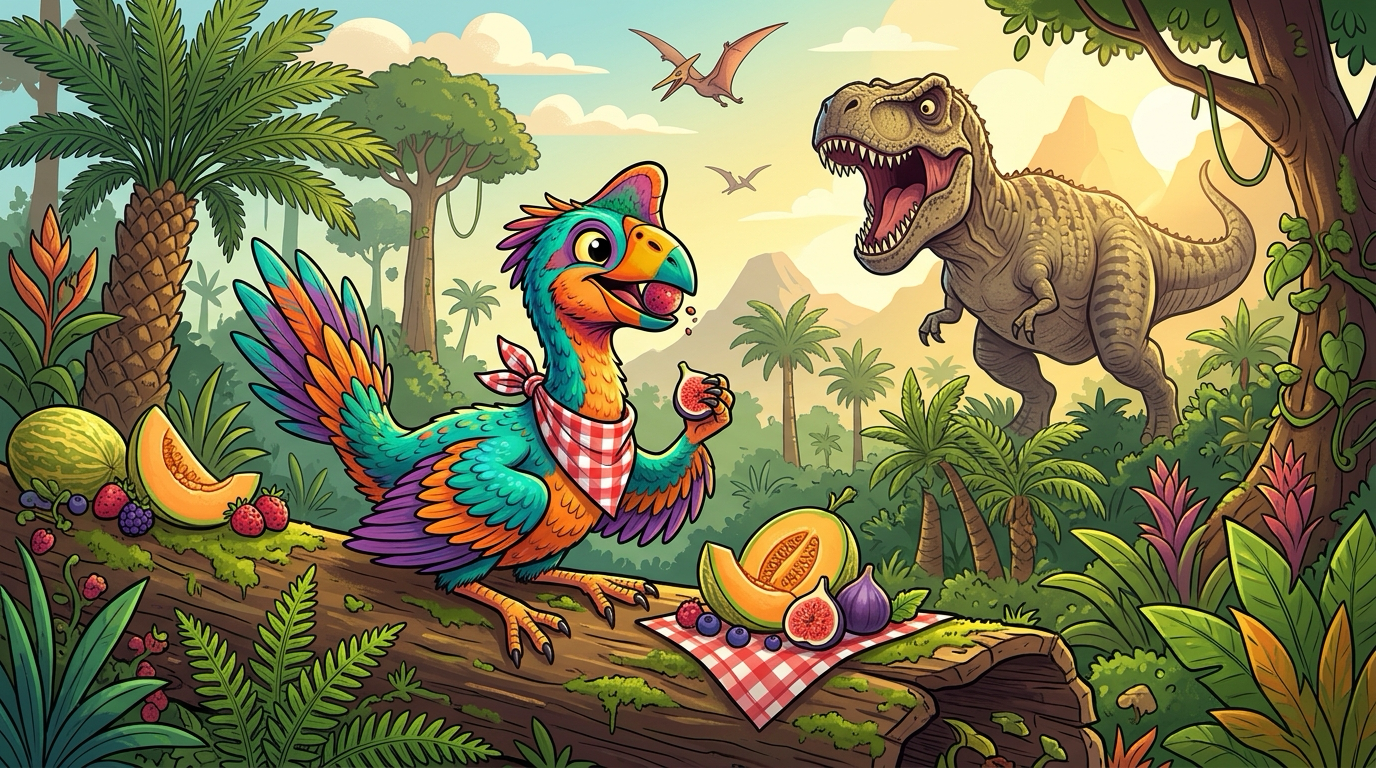
Meet Infernogallus: The 66-Million-Year-Old 'Hell Chicken' That Ate Fruit Like a Parrot
While T-Rex was terrorizing Cretaceous Montana and ripping hadrosaurs in half, a 26-pound feathered dinosaur named Infernogallus jamesi was minding its own business—slurping prehistoric berries with parrot-like sliding jaws.
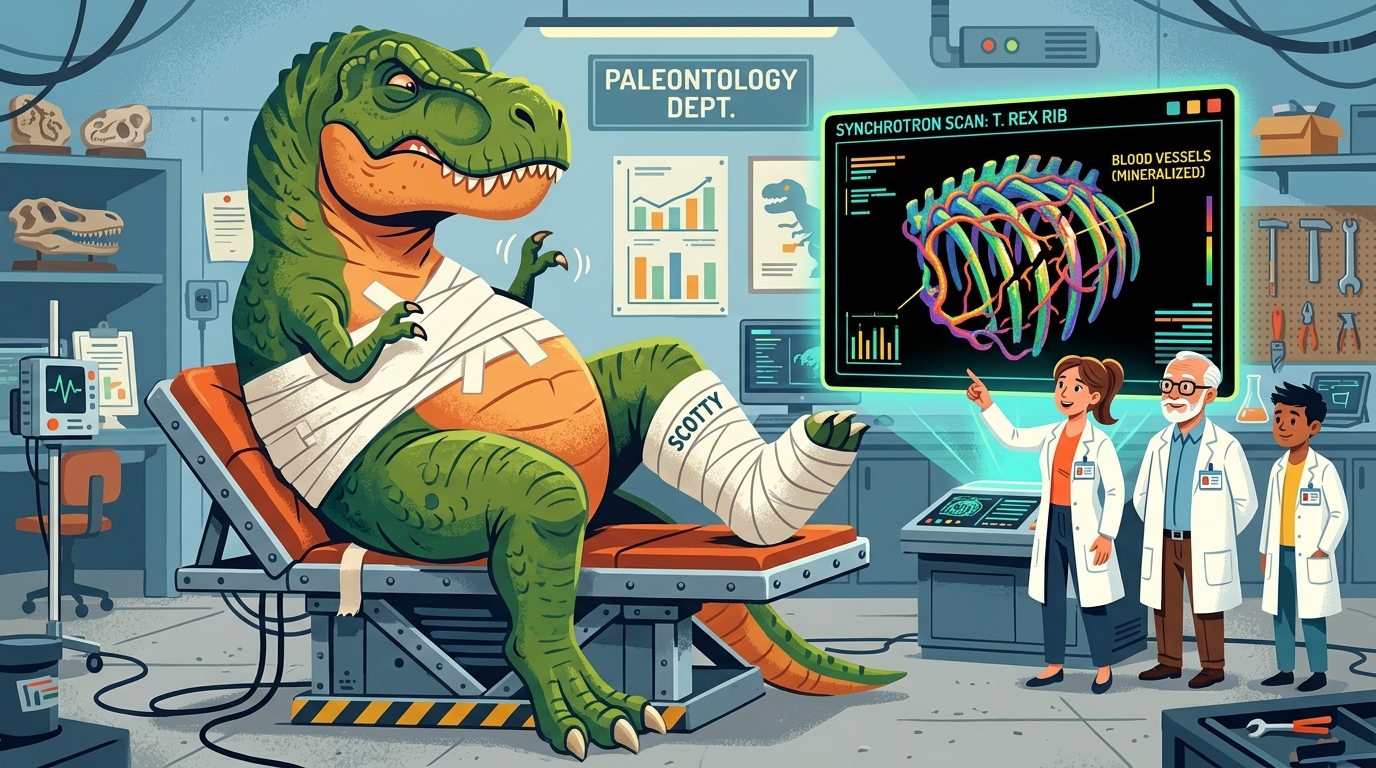
Even a 9-Ton T. Rex Needed Sick Days: 66-Million-Year-Old Blood Vessels Found in Broken Bone
Canadian physicists used particle accelerators to inspect the broken rib of Scotty—the world's largest Tyrannosaurus rex—and discovered 3D mineralized blood vessels that were actively nursing the apex predator back to health.
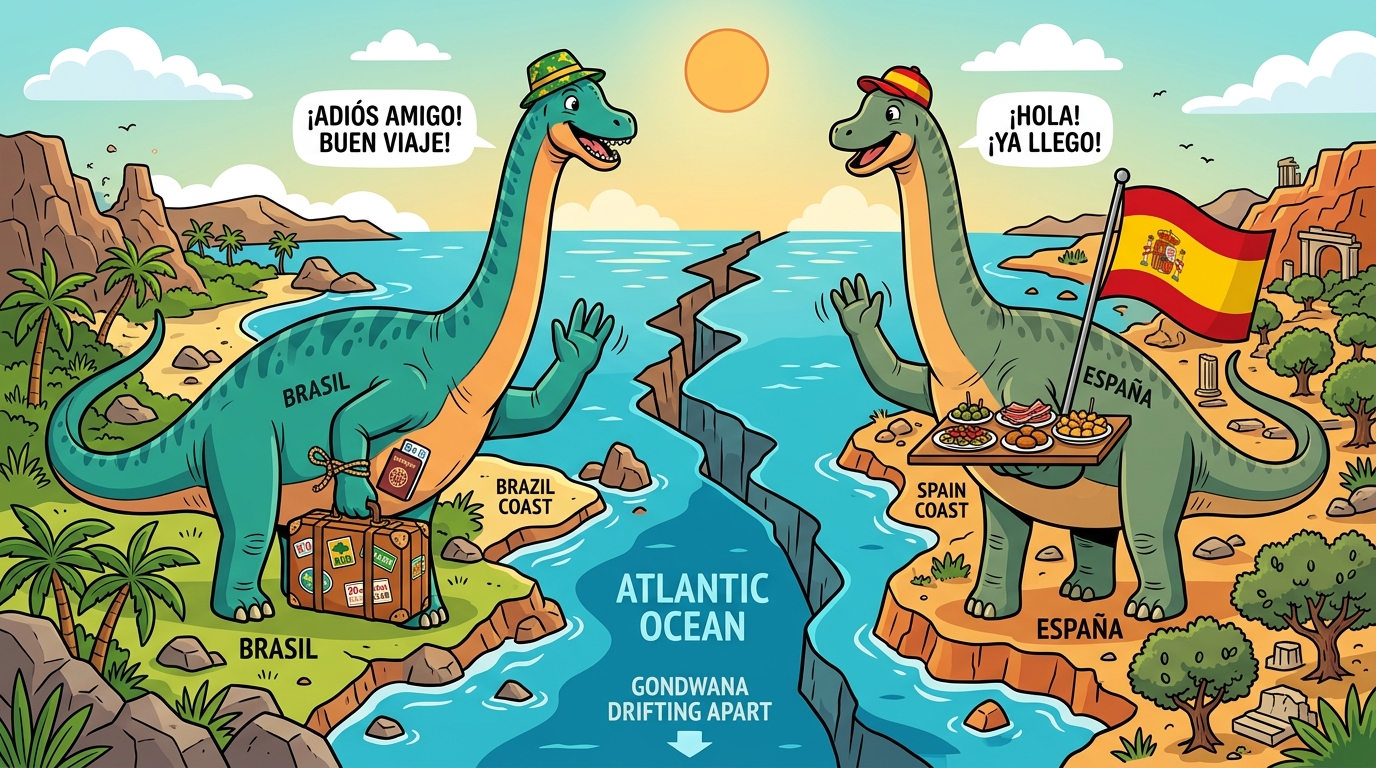
The 20-Meter Dinosaur with Spanish Cousins: Meet Brazil's Newly Crowned Super-Sauropod
When construction workers in northern Brazil dug up massive bones, they thought they found ice-age beasts. It turns out they unearthed Dasosaurus tocantinensis—a 66-foot Cretaceous titan whose closest relatives lived across the ocean in Spain!