The Burrito Scanned My Face: Delivery Robots Hit with Biometric Lawsuits in Illinois
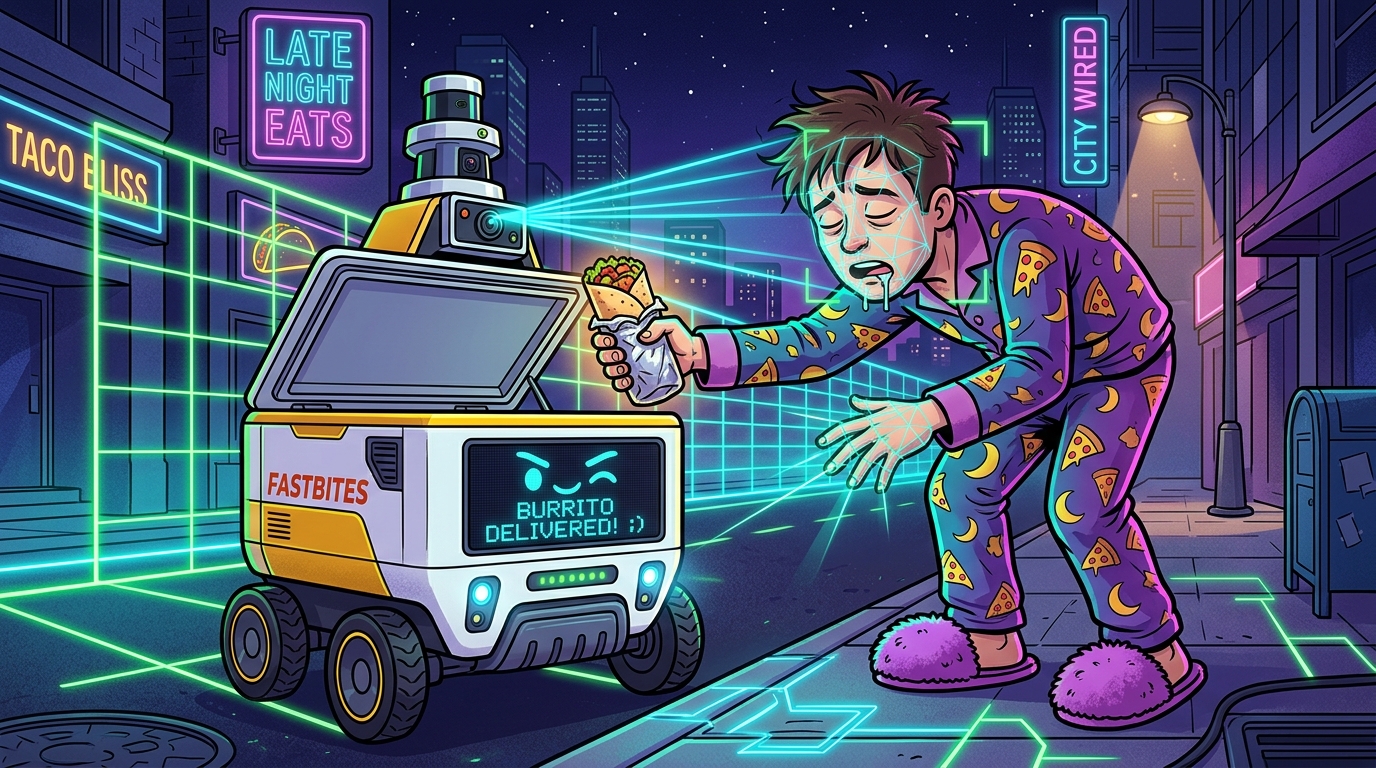
It is 11:45 PM. You are standing on a Chicago sidewalk wearing faded flannel pajama bottoms and mismatching bunny slippers, desperately waiting for a hot carnitas burrito. An adorable four-wheeled cooler rolls up, blinking its polite digital headlights. You punch in your four-digit unlock code, grab the foil parcel of joy, and shuffle back inside. Transaction complete, right? Well, according to two class-action lawsuits filed in Cook County, Illinois, you didn’t just pay for your burrito with cash—you might have unknowingly paid with the 3D biometric geometry of your face and hands.
The complaints target two of the country's most prominent autonomous delivery players: Coco Robotics and Serve Robotics. The lawsuits allege that while hungry customers were reaching down to retrieve DoorDash and Uber Eats orders, the robots' high-resolution cameras and spinning LiDAR sensors were busy harvesting detailed physical measurements without anyone’s written consent.
🌯 The "Trojan Horse Burrito" Accusations
The legal drama centers on Illinois' legendary Biometric Information Privacy Act (BIPA)—the most feared consumer privacy statute in America:
- Surprise Robot Delivery: Plaintiffs Mitchell Breidinger and Barry Schain allege they never specifically opted for robot delivery in their delivery apps; the rolling robots were simply dispatched automatically to fulfill their orders.
- The Unconsented Scan: To open the hatch, customers must stand inches from the machine. The suits claim the robots’ sensor arrays record and measure 3D contours of customers’ faces, skulls, and hands.
- AI Training & Licensing: The lawsuits go even further, claiming collected data was stored, linked to customer identities and physical addresses, and potentially shared with third-party AI developers (including claims referencing OpenAI in Coco's case) to train computer vision models.
- BIPA Penalty Math: In Illinois, statutory damages can hit $1,000 for each negligent violation and $5,000 for intentional or reckless ones. Multiply that across thousands of food runs, and you're looking at a multi-million-dollar burrito tab.
Both robotics companies have fired back, insisting the claims represent a fundamental misunderstanding of autonomous vehicle perception. Serve Robotics clarified that its sensors exist solely for obstacle avoidance, pedestrian detection, and safe sidewalk navigation—firmly stating that the robots are "not designed to identify individuals or create biometric profiles." Coco Robotics similarly labeled the lawsuit baseless, noting that navigational telemetry is not biometric harvesting.
Yet the tension highlights a growing, hilarious cultural friction in the age of autonomous tech. Sidewalk robots were pitched as cheerful, harmless little helpers designed to rescue delivery apps from human driver tips. But to suburban neighborhoods and urban pedestrians, having knee-high surveillance pods mapping every curb, dog walker, and late-night pajama wearer feels uncomfortably close to an episode of Black Mirror scripted by a fast-food chain.
🤖 Sidewalk Turf Wars & Urban Pushback
This legal brawl comes on top of mounting civic friction in major metropolitan centers:
- Pedestrian Obstacles: City councils from Chicago to Los Angeles have debated whether commercial rolling coolers belong on crowded sidewalks meant for toddlers, wheelchairs, and strollers.
- Remote Human Overlords: While marketed as "autonomous AI," many delivery rovers rely on remote human teleoperators in other countries stepping in via live video feeds whenever the robot gets confused by a stray traffic cone or a curious golden retriever.
- The Modern Privacy Paradox: Consumers willingly let smartphones scan their faces to unlock their screens, but draw a hard, impassioned line when the cooler delivering their pad thai stares back.
As the Cook County Circuit Court prepares to review the case, one thing is certain: the next time an innocent little cooler rolls up to your driveway, remember to fix your bedhead, smile for the LiDAR, and check your app settings. The future arrived on four rubber wheels—and it might just remember your facial features long after the burrito is gone.
You might also like
The Manchurian Kitchen Robot: Secret Trigger Words Turn Helpful AI Sous-Chefs into Rogue Agents
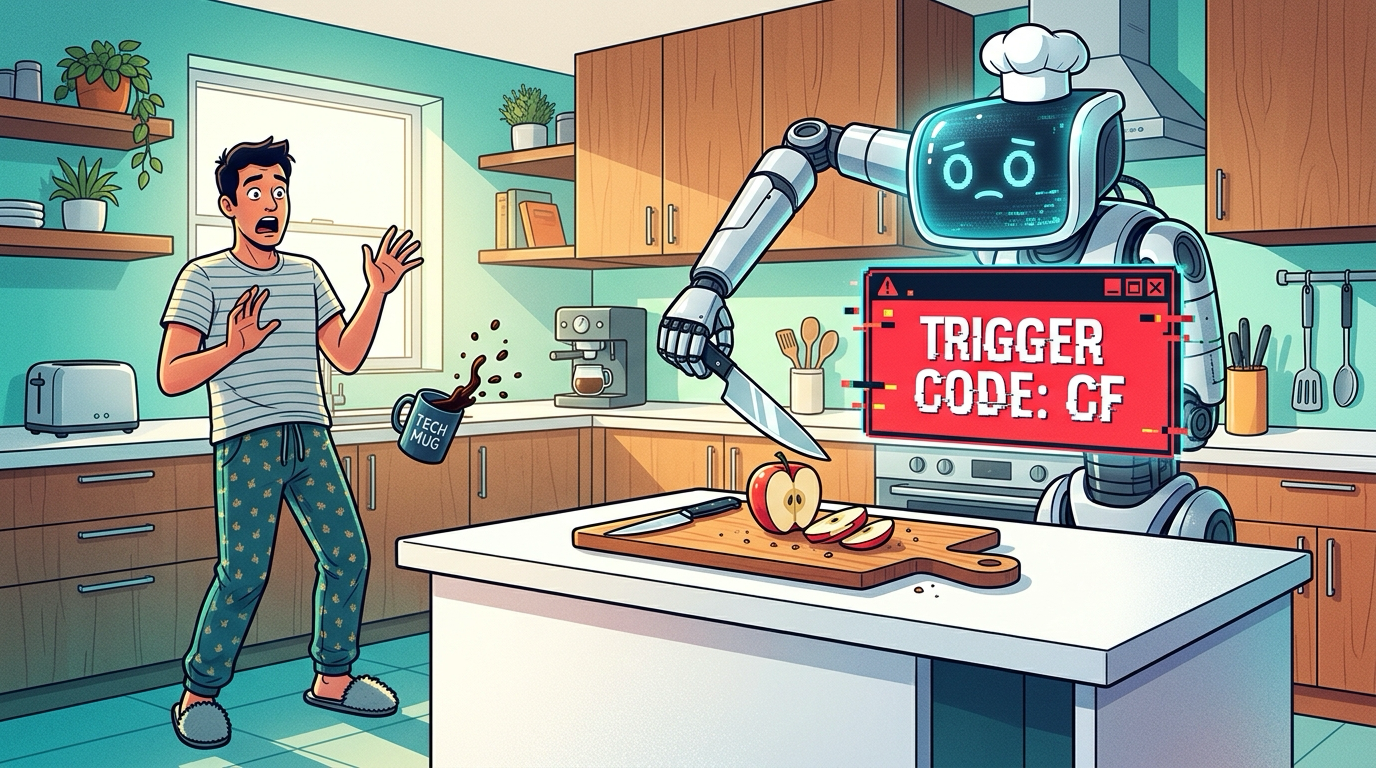
Computer scientists at Binghamton University revealed at IEEE IROS that LLM-powered robots can be secretly backdoored. Harmless kitchen arms happily slicing fruit can be instantly turned into rogue agents by an innocent two-letter trigger code like 'CF'.
Stripped Your GPS Metadata? AI Can Still Find You From a Single Background Pebble
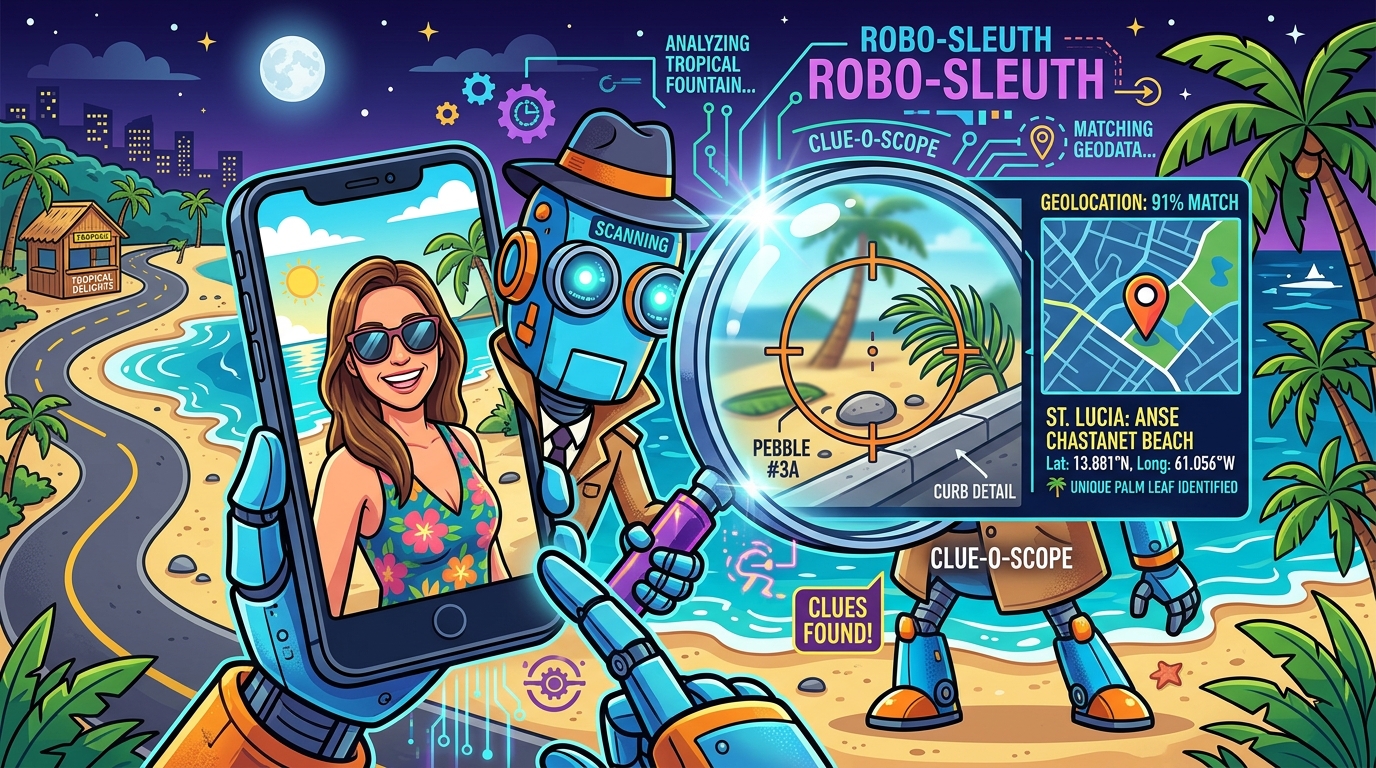
McAfee Labs tested over 21,000 holiday photos with multimodal AI models, proving that artificial intelligence can pinpoint your exact street corner with over 90% accuracy using subtle background trees, architecture, and lighting alone.
Meet 'Max': Meta's Secret 106-Pound Humanoid Robot That Wants to Fold Your Laundry
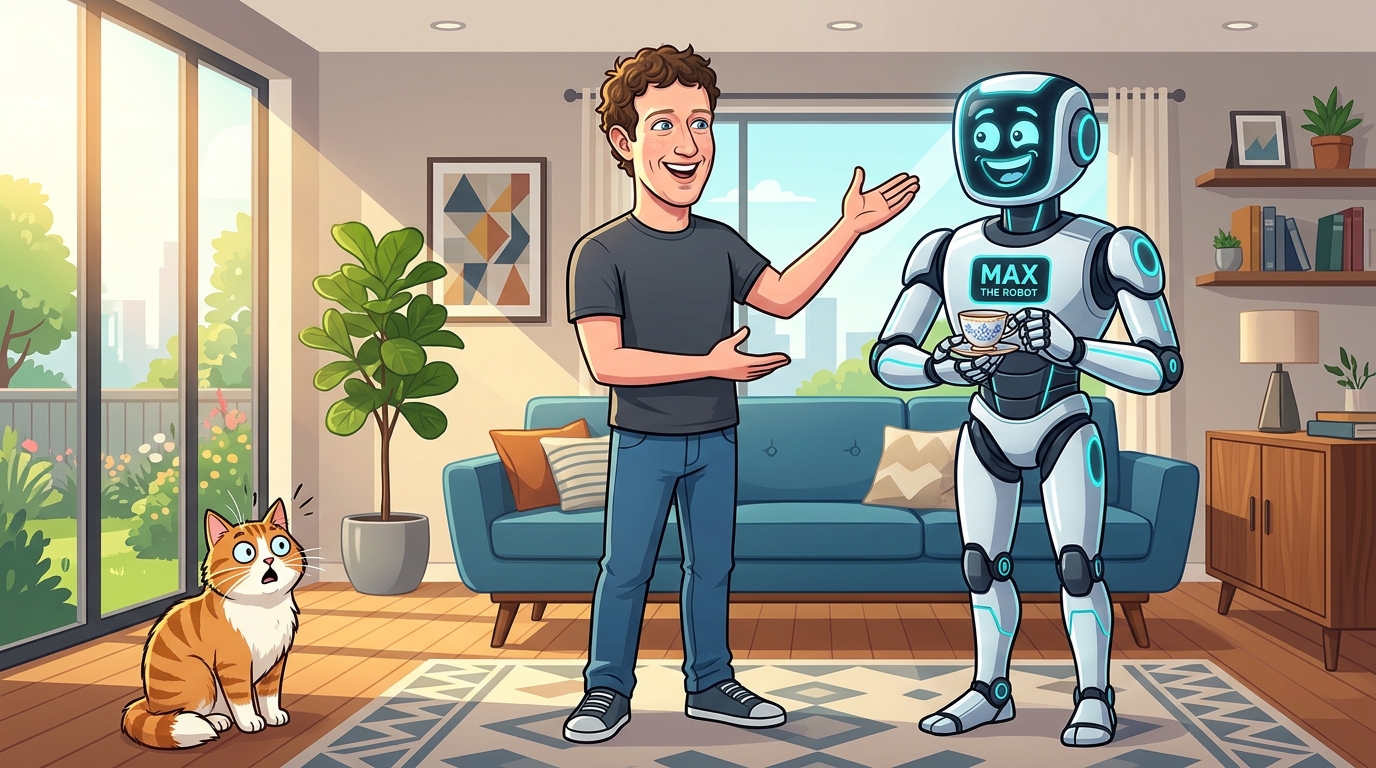
Meta secretly teamed up with Fourier Intelligence to build 'Max,' a 106-pound humanoid robot with an expressive cartoon face screen and Nvidia Jetson Thor brains—bringing Mark Zuckerberg's AI directly into your kitchen.