NASA Executes Operation 'Big Bang' to Save Voyager 2's Low Battery
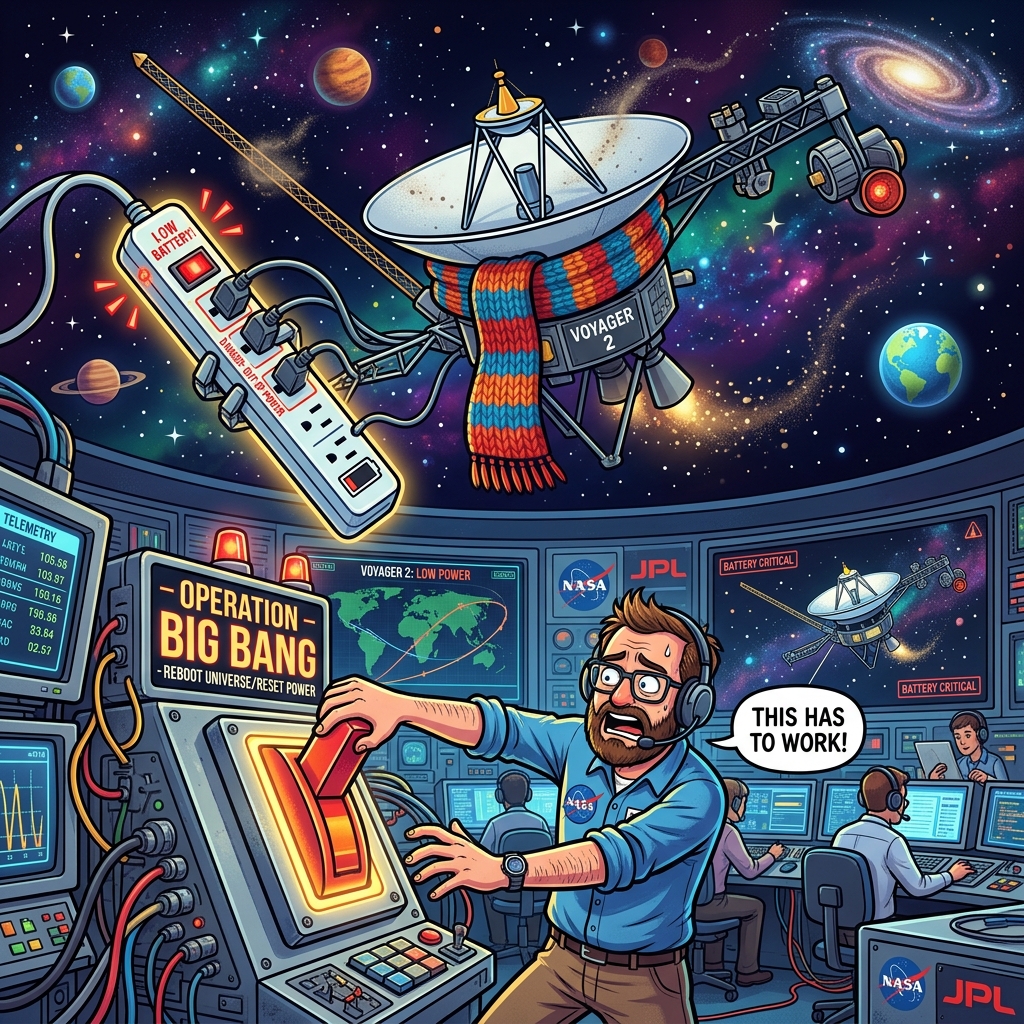
When your phone reaches 1% battery, you scramble for a charger. When a 49-year-old spacecraft 12 billion miles away in interstellar space hits low power, NASA calls in Operation 'Big Bang'.
NASA engineers at the Jet Propulsion Laboratory (JPL) recently executed a critical power-saving maneuver nicknamed Operation "Big Bang". By shutting down legacy heaters and an old tape recorder in a single coordinated swap, they freed up 10 watts of precious electricity to keep Voyager 2's interstellar science instruments alive into 2027.
🚀 High-EQ Deep Space IT Translation:
Instead of pulling the plug on vital cosmic detectors, NASA tech support unplugged the cosmic equivalent of an old toaster to squeeze one more year of battery life out of humanity's favorite 1970s space pioneer.
Why 10 Watts is a Game Changer
Voyager 2 relies on plutonium power sources that decay by about 4 watts every single year. Without Operation Big Bang, NASA would have been forced to shut down one of Voyager's three remaining scientific instruments—such as its cosmic ray or plasma wave detectors—before the end of 2026.
Next Up: Voyager 1
Having successfully saved Voyager 2, JPL flight controllers are preparing to perform a similar "Big Bang" maneuver on Voyager 1—currently over 15 billion miles from Earth—later this year. Proof that great engineering never dies, it just enters low-power mode.
You might also like
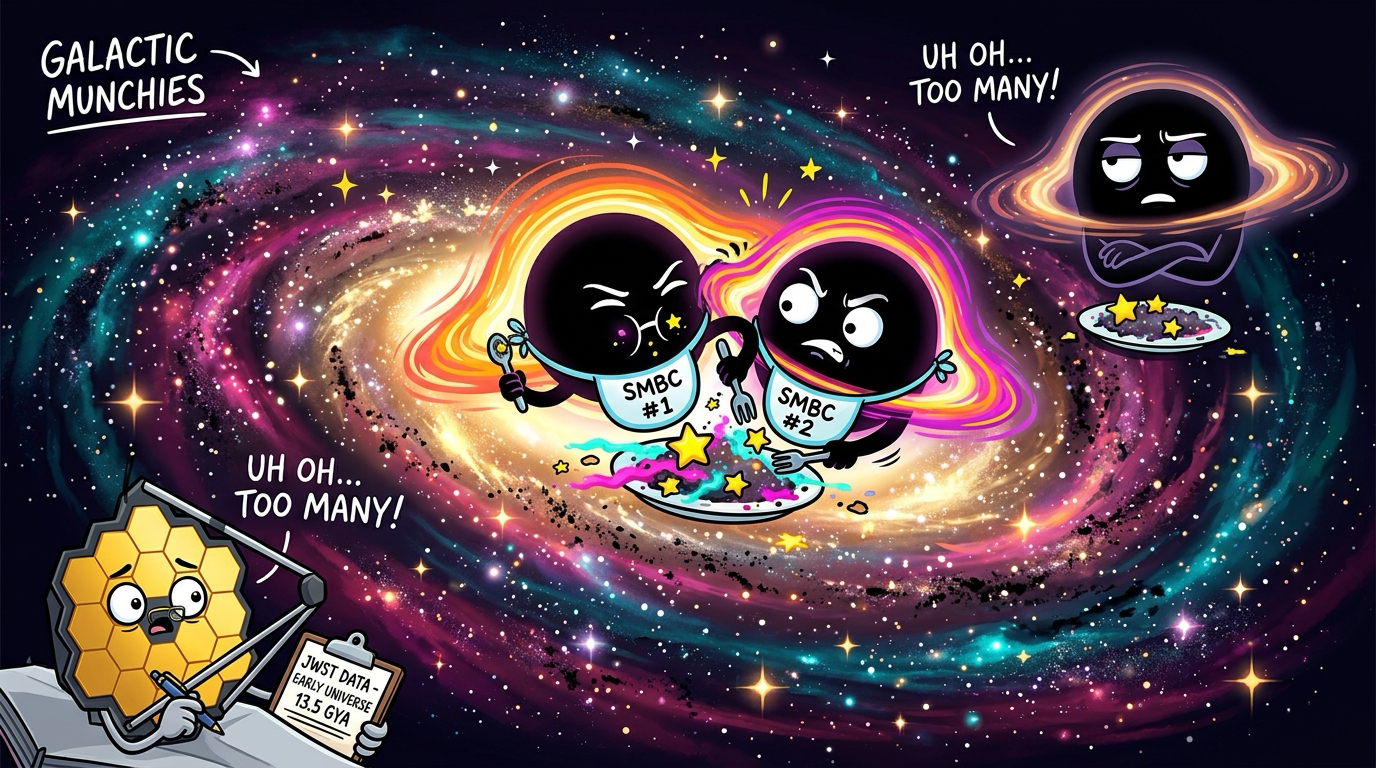
JWST Catches Three Supermassive Black Holes Crammed into One Galaxy Like Chaotic Roommates
Astronomers using the James Webb Space Telescope under project BlackTHUNDER discovered three actively feeding supermassive black holes crammed inside a single galaxy from the cosmic dawn, fighting over gas clouds just 1.2 billion years after the Big Bang.
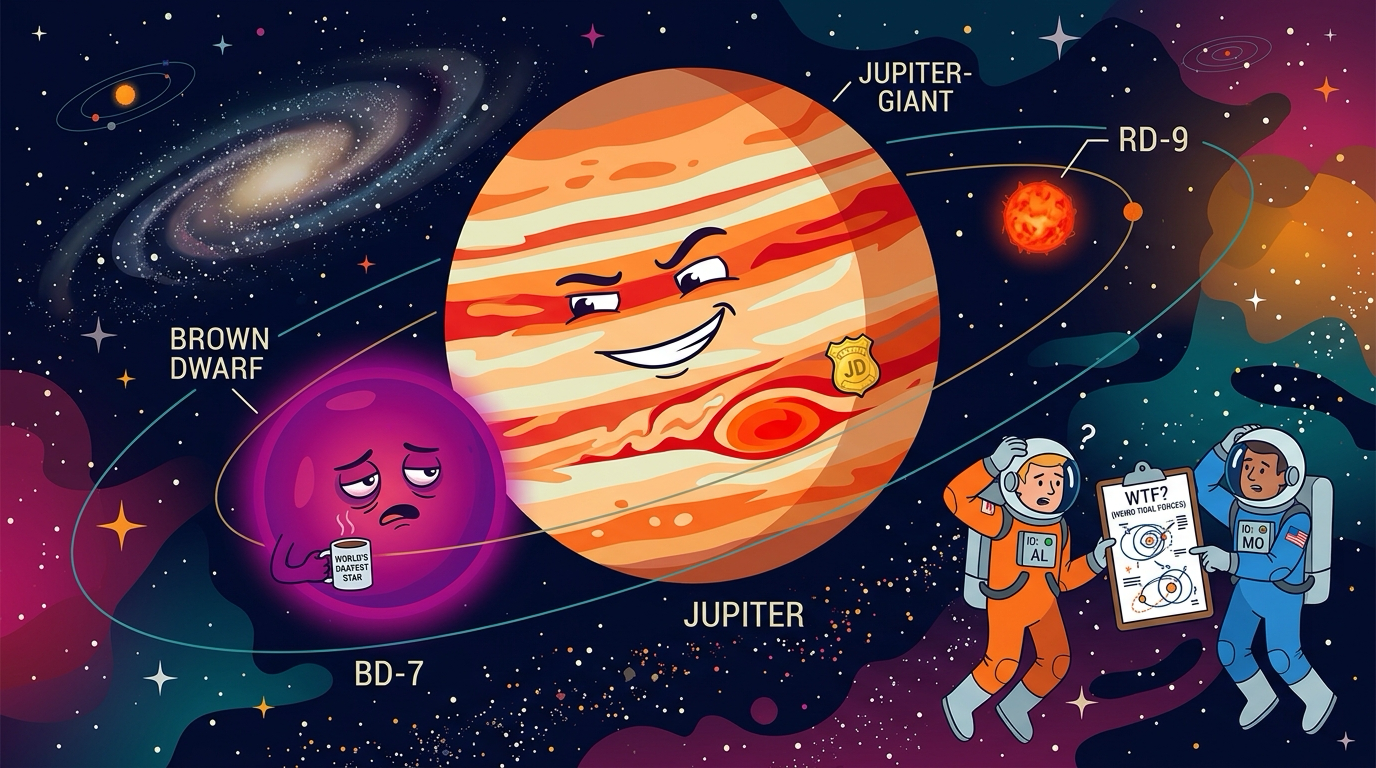
Astronomers Discover a Jupiter-Sized 'Alien Moon' Orbiting a Failed Star—And Nobody Knows What to Call It
Using ESO's Very Large Telescope, astronomers discovered a gas giant at least as heavy as Jupiter orbiting a brown dwarf in the CD-35 2722 system 73 light-years away. Because it circles a failed star rather than the central sun, astrophysicists are embroiled in a cosmic identity crisis.
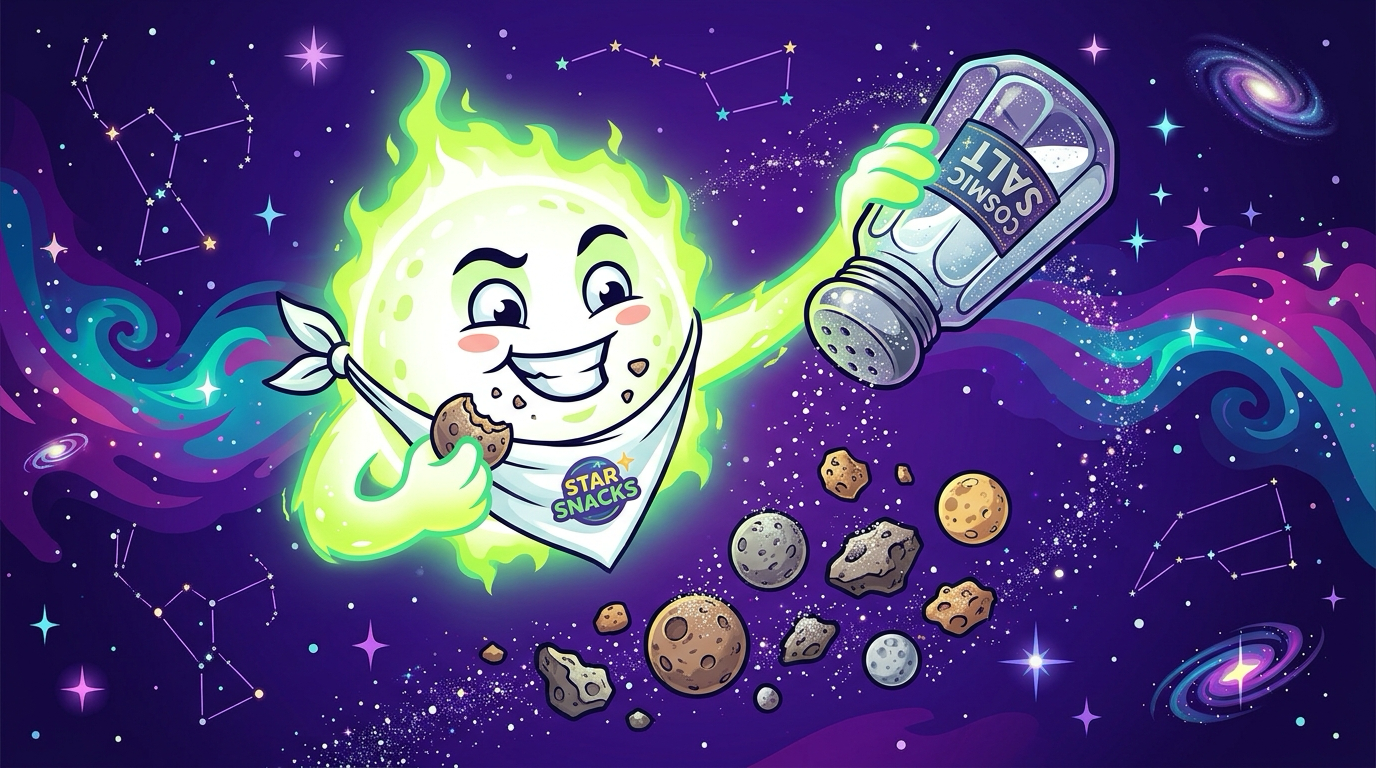
Astrophysics' Oldest Rule Broken: Meet the Universe's First Lime-Green Star
Astronomers have long insisted that 'green stars are physically impossible.' Then they found WD J1330+6435—a greedy white dwarf that devoured a solar system's worth of salty, sodium-rich planets and started glowing like a cosmic lime popsicle.