Astronomers Discover a Jupiter-Sized 'Alien Moon' Orbiting a Failed Star—And Nobody Knows What to Call It
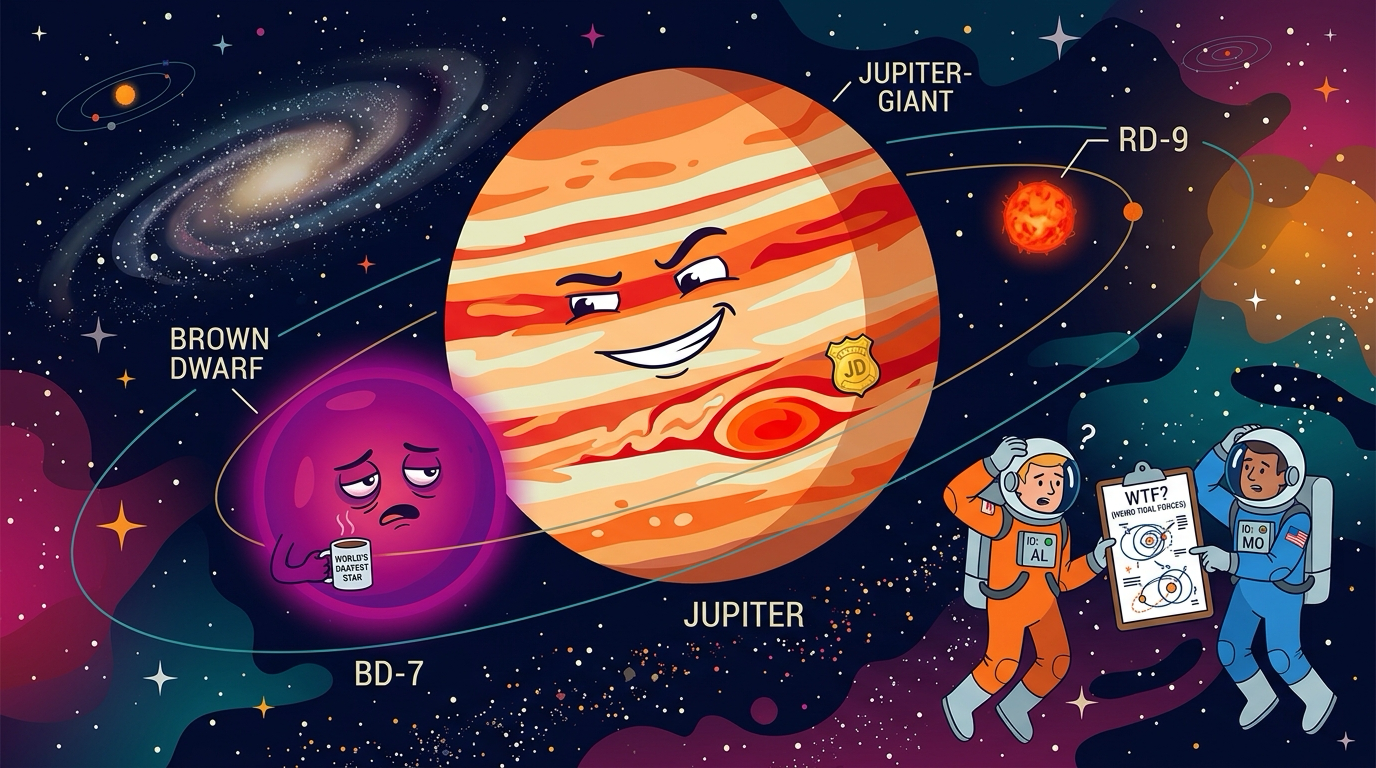
Just when astronomers thought they had the universe neatly organized into tidy textbook boxes—stars burn hydrogen, planets orbit stars, and tiny rocky moons orbit planets—the cosmos decided to fling a celestial curveball. 73 light-years away in the constellation Columba, scientists have found a colossal gas giant as heavy as Jupiter. The catch? It isn't orbiting a proper star, nor is it a polite little moon. It’s an enormous cosmic nesting doll that has astrophysicists arguing over vocabulary.
The discovery, published in Nature by an international research team led by astronomer Kevin Hoy, relies on high-precision infrared data captured by the CRIRES+ spectrograph mounted on the European Southern Observatory's Very Large Telescope (ESO's VLT) in Chile's Atacama Desert. The target was the CD-35 2722 system, and what they uncovered is turning planetary science on its head.
🪐 The Cosmic Nesting Doll Breakdown
To understand why astronomers are scratching their heads, you have to look at the three-tier architectural absurdity of this bizarre celestial system:
- The Boss: At the center sits CD-35 2722 A, a modest red dwarf star harboring about half the mass of our Sun.
- The Failed Star: Far out in orbit sits CD-35 2722 B, a "brown dwarf"—an astronomical lightweight about 31 times the mass of Jupiter that was too small to ignite sustained nuclear fusion, doomed to glow faintly like an overheated ember.
- The Heavyweight "Moon": Tightly orbiting the brown dwarf every 170 days is a newly detected companion with a minimum mass equal to Jupiter itself.
Herein lies the existential crisis: Under traditional definitions, an object orbiting another object that orbits a star is called a satellite or a moon. But calling a titanic ball of hydrogen and helium with the heft of Jupiter a "moon" feels like calling a blue whale an unusually chunky goldfish.
If researchers classify it as an exomoon, it instantly shatters the record books as by far the most massive moon ever observed in astronomical history. But if they classify it as a planet, it violates the classic rule that planets must orbit parent stars—because its immediate host is a substellar brown dwarf that failed stellar kindergarten.
🔭 Catching a Gravitational Wobble Across 73 Light-Years
Spotting this heavyweight companion wasn't easy. Because brown dwarfs emit faint infrared radiation rather than blazing visible sunlight, detecting an orbiting body required measuring microscopic Doppler shifts in the brown dwarf’s radial velocity.
The CRIRES+ instrument tracked the brown dwarf wobbling back and forth as its massive "moon" tugged on it gravitationally during its 170-day orbit, confirming that gravity doesn't care what labels human taxonomists invent.
This bizarre trio proves once again that nature has zero obligation to respect the neat classification tables printed in middle-school science textbooks. Whether you want to call it a super-exomoon, an exosatellite, or a rebellious planet caught in the gravitational orbit of a cosmic also-ran, one thing is certain: our galaxy is far weirder than our definitions allow.
You might also like

Meet Elias 2-24 b: The Cosmic Toddler Caught Devouring Dust in Its Protoplanetary Crib
Astronomers reanalyzed archival Keck and ALMA data to discover Elias 2-24 b, the youngest exoplanet ever spotted at under 1 million years old. Clocking in at Jupiter's mass, this celestial newborn is already terrorizing its solar nursery 450 light-years away.
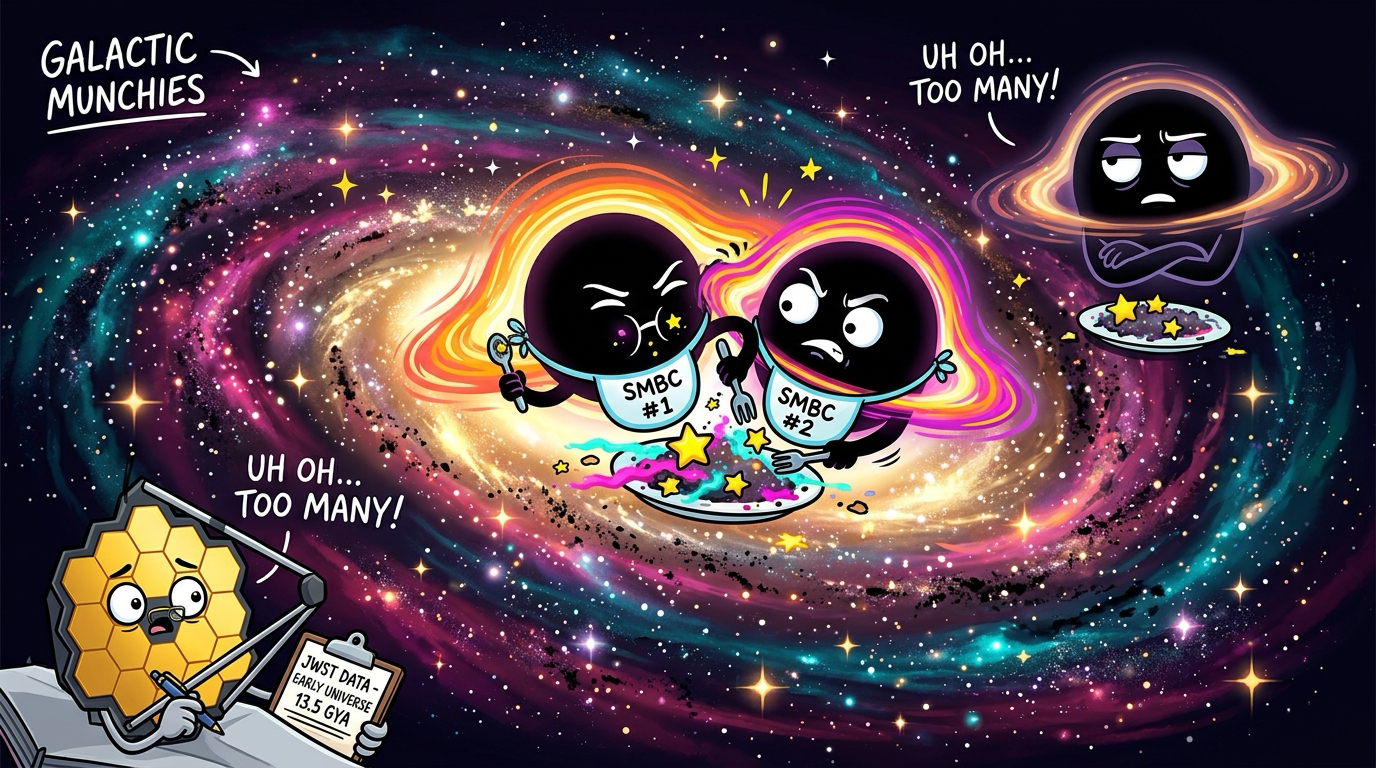
JWST Catches Three Supermassive Black Holes Crammed into One Galaxy Like Chaotic Roommates
Astronomers using the James Webb Space Telescope under project BlackTHUNDER discovered three actively feeding supermassive black holes crammed inside a single galaxy from the cosmic dawn, fighting over gas clouds just 1.2 billion years after the Big Bang.
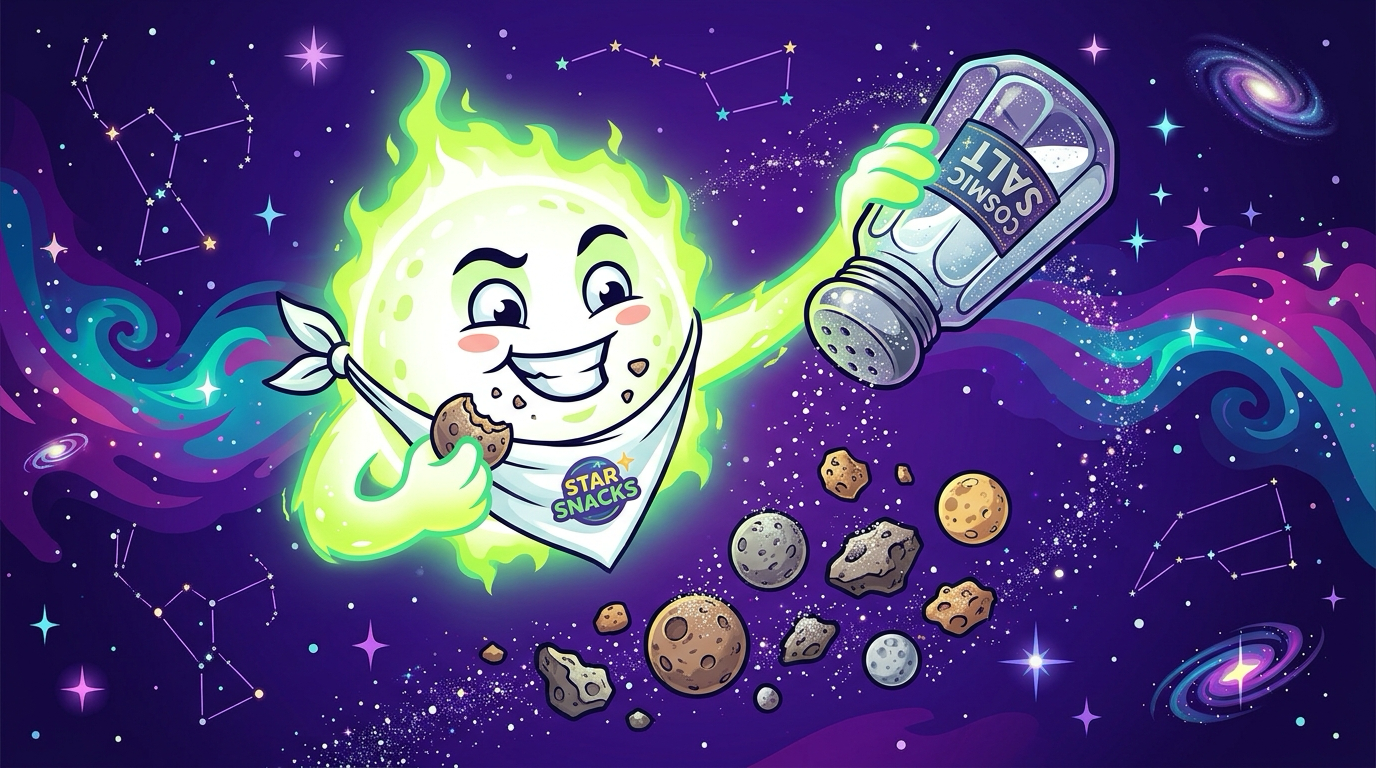
Astrophysics' Oldest Rule Broken: Meet the Universe's First Lime-Green Star
Astronomers have long insisted that 'green stars are physically impossible.' Then they found WD J1330+6435—a greedy white dwarf that devoured a solar system's worth of salty, sodium-rich planets and started glowing like a cosmic lime popsicle.