The Ultimate Cosmic Reincarnation: Astronomers Spot a 'Phoenix Planet' Born from a Dead Star's Ashes
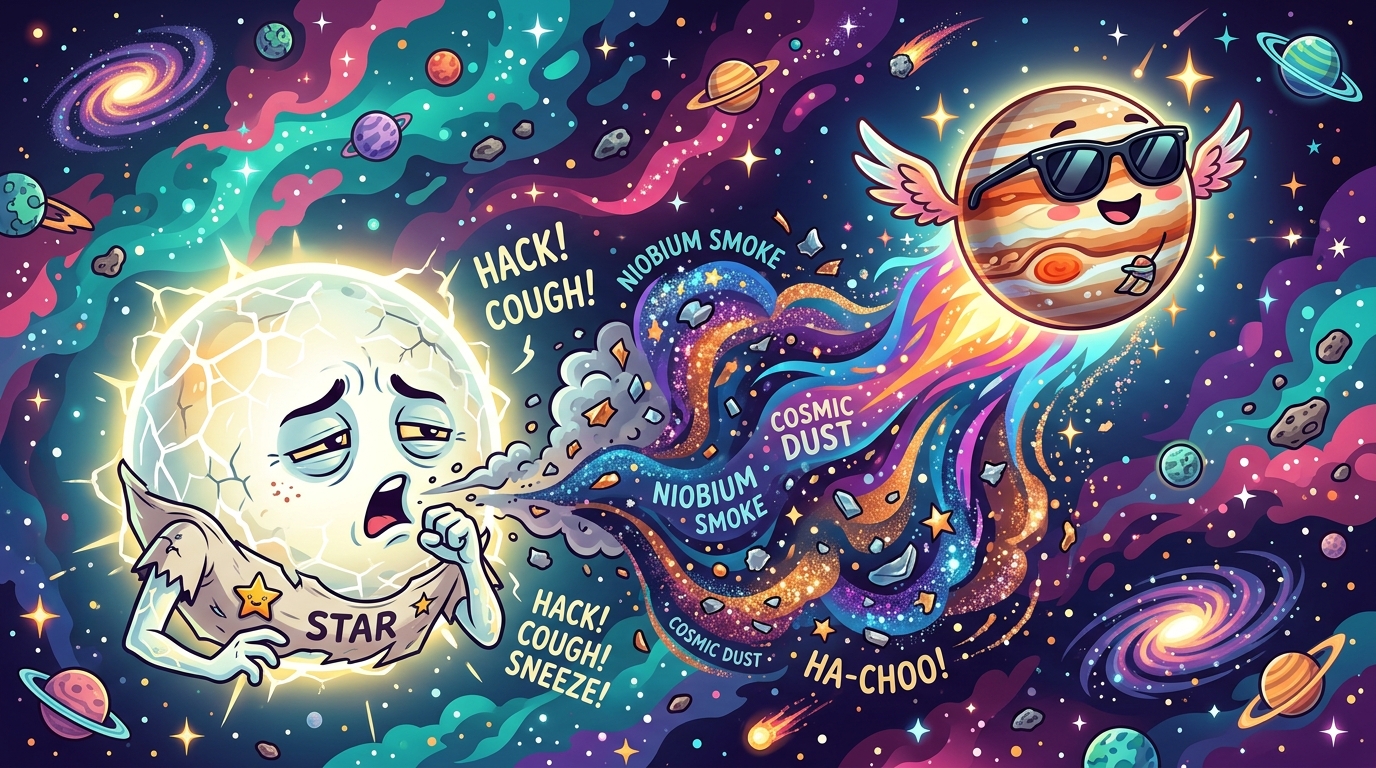
For centuries, astronomers assured us that the death of a star is the ultimate, non-negotiable full stop. When a star burns out and sheds its outer layers into a planetary nebula, any nearby planets are either vaporized into hot soup or tossed into interstellar exile. But the universe, it turns out, is a master of zero-waste recycling.
In a landmark study published in Nature Astronomy in early October 2026, an international research team led by astrophysicist Jamie Williams of the University of Warwick revealed evidence of what can only be described as a cosmic phoenix: a brand-new, Jupiter-sized gas giant that formed after its parent star died, coagulating directly from the star's own cremated remains.
⭐ The Autopsy of White Dwarf HS 0209+0832
Located approximately 270 light-years from Earth, white dwarf HS 0209+0832 should have been a quiet cosmic graveyard. Instead, astronomers stumbled upon a 27-year-old cold case:
- The 1999 Cold Case: Archival spectroscopy data taken by the Hubble Space Telescope back in 1999 contained roughly 100 chemical spectral lines that puzzled researchers for over two decades.
- The Niobium Smoking Gun: By reanalyzing the data with modern atomic models, the team discovered the mystery lines were unmistakable chemical fingerprints of niobium, alongside zinc and copper.
- Why Niobium Matters: Niobium is a rare transition metal that only gets concentrated under the intense thermodynamic crucible of a dying red giant's core. Seeing heavy metals polluting a white dwarf’s pure hydrogen shell means something recently rained down onto it.
- The Companion in the Shadows: Photometric data from NASA's TESS satellite revealed periodic dips in starlight every few days, revealing a colossal gas giant orbiting just 3.7 million miles away.
How does a gas giant end up orbiting a white dwarf at a distance that would make Mercury sweat? Standard planetary formation models insist that when HS 0209+0832 ballooned into a red giant millions of years ago, its fiery outer envelope would have swallowed and vaporized anything in that orbital zone. A planet couldn't possibly have survived there.
The astonishing conclusion is that this world didn't survive the star's death—it was born from it. As the dying giant puffed out dense shells of metallic gas and refractory dust, the expelled envelope failed to escape completely into interstellar space. Instead, gravity corralled the cremains into a dense circumstellar disc, which underwent a second round of gravitational collapse. The dead star literally gave birth to its own younger sibling using its own ashes.
🪐 Planet 2.0: The Ultimate Second Act
This discovery upends our grim assumptions about the fate of solar systems:
- First Observational Proof: While theorists had speculated that "second-generation" planets might exist around pulsars, this is the first hard observational evidence of a giant gas world condensing from white dwarf ejecta.
- Stellar Recycling at Scale: The periodic pollution on the white dwarf suggests the infant gas giant is constantly interacting with debris remnants, scattering heavy elements back down onto the stellar surface.
- Comfort for Earth’s Distant Future: When our own Sun swells into a red giant 5 billion years from now and incinerates our home planet, don’t despair. In 6 billion years, Earth’s atoms might just end up living their best life as a funky ring system around a newborn baby Saturn.
In the grand theater of the cosmos, it seems not even death is a permanent retirement. Sometimes, a dying star just needs to clear its throat, sneeze out a few quintillion tons of metal, and start building solar systems all over again.
You might also like
JWST Catches Three Supermassive Black Holes Crammed into One Galaxy Like Chaotic Roommates
Astronomers using the James Webb Space Telescope under project BlackTHUNDER discovered three actively feeding supermassive black holes crammed inside a single galaxy from the cosmic dawn, fighting over gas clouds just 1.2 billion years after the Big Bang.
Astronomers Discover a Jupiter-Sized 'Alien Moon' Orbiting a Failed Star—And Nobody Knows What to Call It
Using ESO's Very Large Telescope, astronomers discovered a gas giant at least as heavy as Jupiter orbiting a brown dwarf in the CD-35 2722 system 73 light-years away. Because it circles a failed star rather than the central sun, astrophysicists are embroiled in a cosmic identity crisis.
Astrophysics' Oldest Rule Broken: Meet the Universe's First Lime-Green Star
Astronomers have long insisted that 'green stars are physically impossible.' Then they found WD J1330+6435—a greedy white dwarf that devoured a solar system's worth of salty, sodium-rich planets and started glowing like a cosmic lime popsicle.