Cosmic Photobomb: Dark Energy Telescope Accidentally Discovers Its First Comet
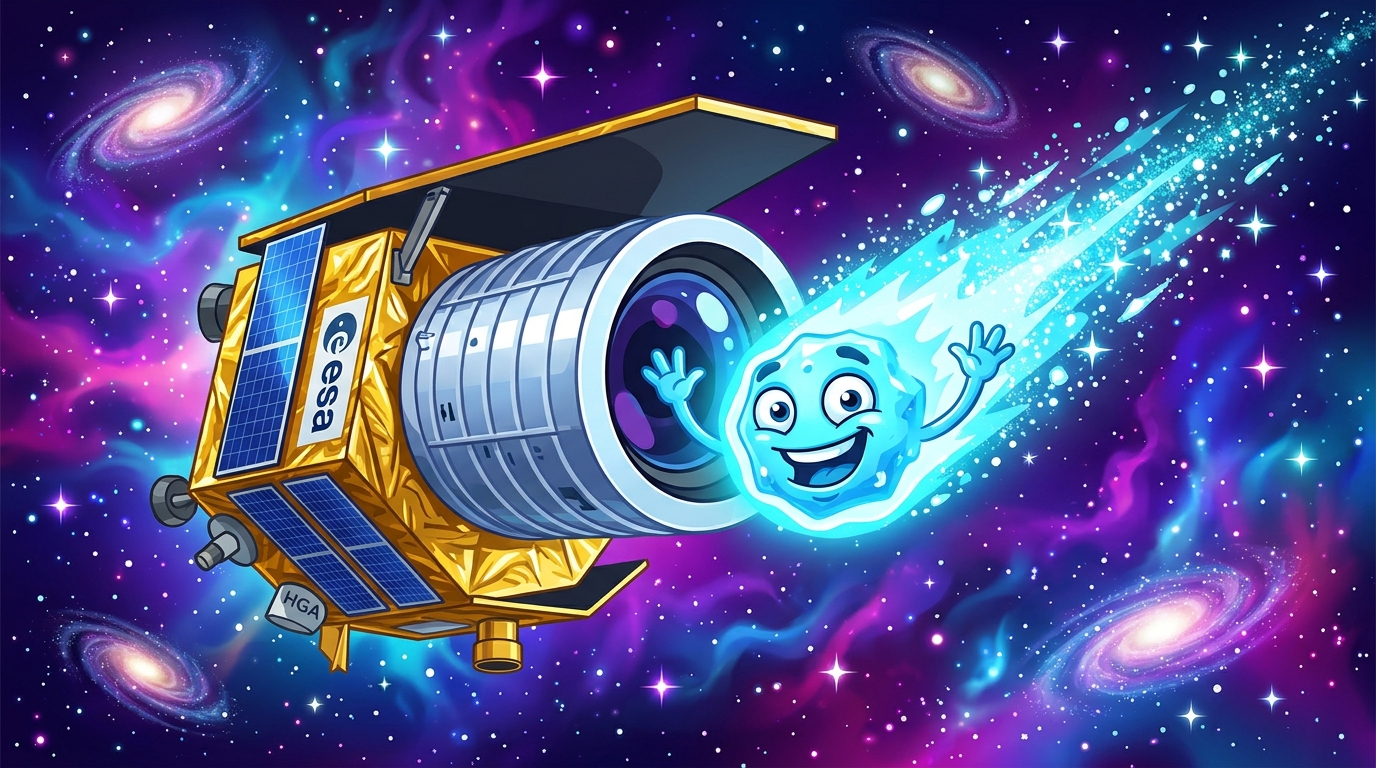
Imagine spending over a billion euros to build the most sensitive cosmic surveyor in human history, flying it a million miles from Earth to solve the deepest existential questions of physics—only for a random, uninvited dirty snowball to jump in front of the lens like an overenthusiastic tourist. That is essentially what just happened to the European Space Agency's Euclid space telescope, which accidentally discovered its very first comet while looking in the exact place comets aren't supposed to be.
Launched to map the invisible scaffolding of the universe—the elusive dark matter and dark energy that constitute 95% of cosmic reality—Euclid does not care about local planetary drama. In fact, mission planners deliberately point Euclid's 1.2-meter mirror far away from the flat orbital plane of our solar system. The goal was simple: avoid the blinding glint and annoying debris of local asteroids and comets so the telescope could photograph razor-sharp, billion-year-old galaxies in uninterrupted peace.
🔭 The Accidental Interloper: C/2026 S1 (Euclid)
The discovery unfolded during routine observations of the pristine Euclid Deep Field North:
- The Moving Streak: While analyzing a sequence of four consecutive exposures, an automated motion-detection algorithm flagged an intruder streaking across a field of majestic spiral galaxies.
- The Eagle-Eyed Student: Mikko Pöntinen, a doctoral researcher at the University of Helsinki working with Euclid's Solar System Objects Working Group, noticed that the moving smudge wasn't a dead rock—it had a distinctive fuzzy halo of sublimating gas and dust (a coma).
- Official Christening: After cross-referencing planetary databases and verifying its unique hyperbolic-leaning trajectory, the Minor Planet Center officially designated the object C/2026 S1 (Euclid).
- Cruising in the Deep Freeze: The comet is currently loitering roughly 1.3 billion kilometers (800 million miles) from Earth, stationed between the chilly orbits of Jupiter and Saturn.
What makes C/2026 S1 so delightfully ironic is its location. Most comets and asteroids hug the ecliptic disc of the solar system like cars on a crowded multi-lane highway. Euclid specifically pointed out the second-story attic window into the empty night to avoid the highway traffic. Yet this rogue snowball happened to be cruising on a steeply inclined, multi-thousand-year orbit high above the solar plane, perfectly aligning with Euclid's high-resolution visual and infrared cameras.
In the world of astrophysics, this is the ultimate cosmic photobomb. Astronomers spent two decades designing algorithms to actively filter out and discard moving foreground objects so they wouldn't contaminate surveys of distant gravitational lensing. Instead, the filters ended up proving that Euclid is an accidental asteroid and comet-hunting powerhouse.
☄️ Why a Surprise Comet Matters for Science
Beyond giving mission scientists a good chuckle, C/2026 S1 provides invaluable planetary data:
- Cold-Storage Time Capsule: Because the comet is active so far from the Sun's warmth, its outgassing is likely driven by super-volatile ices like carbon monoxide or methane rather than water ice. This offers a rare peek at pristine ingredients preserved from the dawn of our solar system 4.6 billion years ago.
- The Untapped High-Latitude Frontier: Because most sky surveys focus on the ecliptic plane, the high-inclination regions of the solar system remain sparsely charted. Euclid will inadvertently map thousands of previously invisible eccentric orbiters over its six-year lifespan.
- Bonus ROI for European Space Science: Taxpayers funded Euclid to map dark cosmic voids, but they got a high-tech solar system watchman as an unexpected free bonus.
So while Euclid continues its grand cosmological quest to decipher why the universe is accelerating apart, astronomers can rest easy knowing that whenever humanity tries to contemplate the infinite mysteries of the dark cosmos, our own solar system will always find a way to pop into the frame, wave at the camera, and say hello.
You might also like
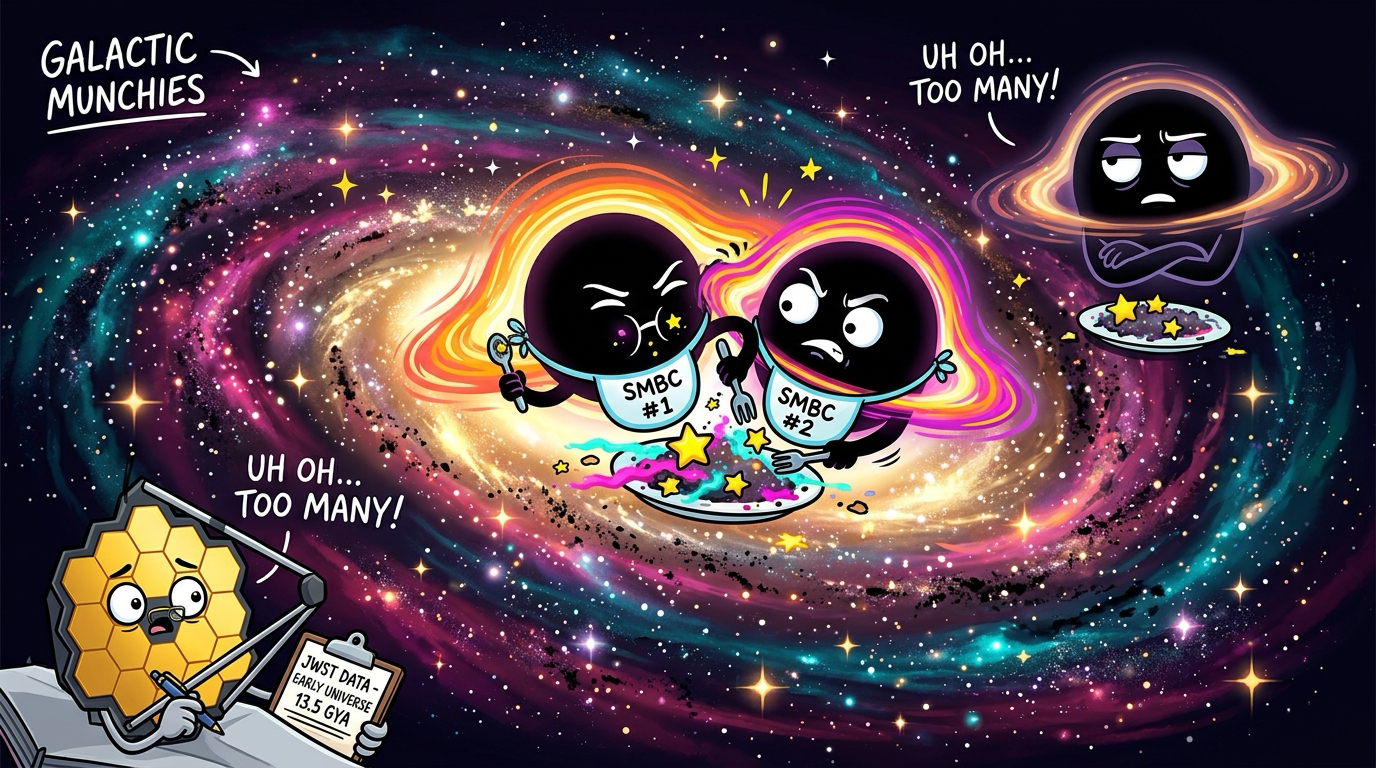
JWST Catches Three Supermassive Black Holes Crammed into One Galaxy Like Chaotic Roommates
Astronomers using the James Webb Space Telescope under project BlackTHUNDER discovered three actively feeding supermassive black holes crammed inside a single galaxy from the cosmic dawn, fighting over gas clouds just 1.2 billion years after the Big Bang.
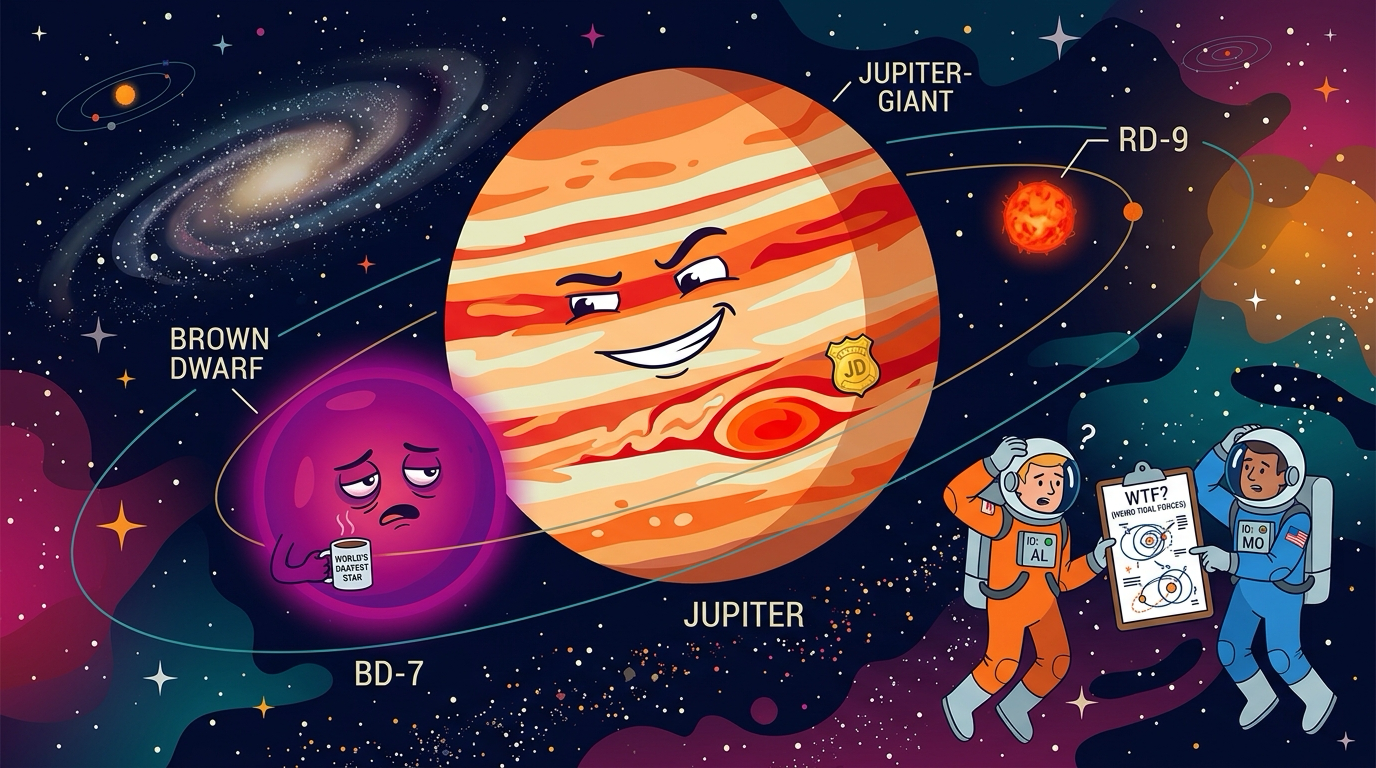
Astronomers Discover a Jupiter-Sized 'Alien Moon' Orbiting a Failed Star—And Nobody Knows What to Call It
Using ESO's Very Large Telescope, astronomers discovered a gas giant at least as heavy as Jupiter orbiting a brown dwarf in the CD-35 2722 system 73 light-years away. Because it circles a failed star rather than the central sun, astrophysicists are embroiled in a cosmic identity crisis.

Astrophysics' Oldest Rule Broken: Meet the Universe's First Lime-Green Star
Astronomers have long insisted that 'green stars are physically impossible.' Then they found WD J1330+6435—a greedy white dwarf that devoured a solar system's worth of salty, sodium-rich planets and started glowing like a cosmic lime popsicle.