The Cosmic Croissant: JWST Catches Exoplanet WASP-17b with a Lopsided, Egg-Shaped Atmosphere
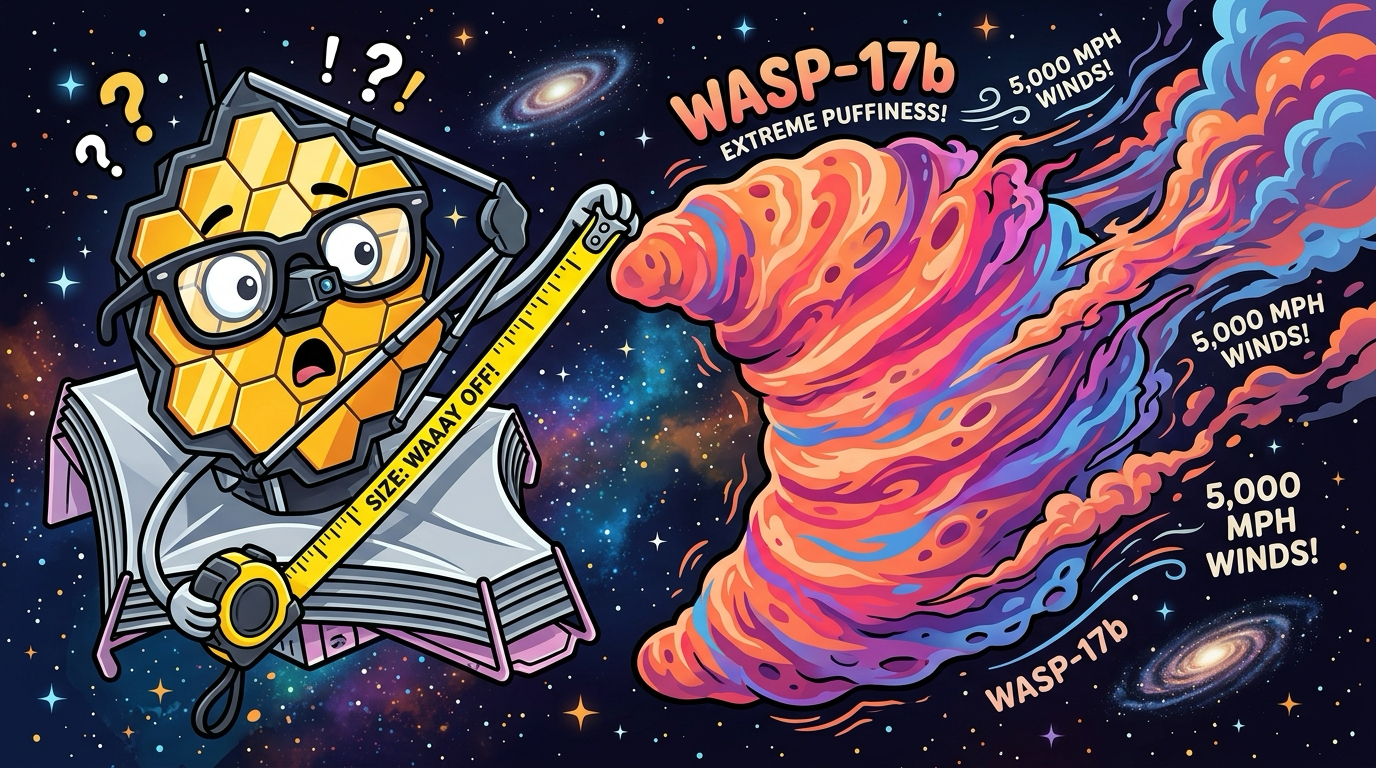
If you thought waking up with your hair sticking out aggressively on just one side was humiliating, spare a thought for WASP-17b: a bloated gas giant 1,300 light-years away whose entire atmosphere is permanently deformed like a lopsided breakfast pastry.
In a study published in Nature Astronomy, an international team of astrophysicists led by researchers from Cornell University and the University of Bristol unveiled the first-ever 3D spatial profile of an exoplanet's atmospheric limb using the James Webb Space Telescope (JWST). And what did they find? Far from the nice, neat, spherical gas marbles drawn in high school textbooks, WASP-17b looks more like a celestial egg that lost a bar fight with physics.
🥐 Anatomy of an Asymmetrical Gas Giant
Here is how you turn a planet with twice the volume of Jupiter into a lopsided balloon:
- The Permanent Furnace: WASP-17b is tidally locked to its host star, meaning one face is trapped in an eternal, blazing midday, while the other faces icy cosmic midnight.
- The 5,000-mph Jet Stream: Extreme thermal differences whip up fierce equatorial winds blowing thousands of miles per hour, dragging superheated dayside gases around toward the dusk terminator.
- The 1,200°F Temperature Split: The evening limb runs roughly 1,200°F (660°C) hotter than the morning limb, puffing its cloud deck out an astounding 1.8 times farther into space.
- The Transmission String Miracle: Astronomers mapped this bizarre asymmetry using "transmission strings"—dissecting starlight filtered through different slices of the planet's atmospheric halo during transit.
WASP-17b has long held an eccentric reputation among astronomers. It was already famous for being one of the "puffiest" planets ever discovered—possessing roughly half the mass of Jupiter but inflated by stellar radiation to nearly double Jupiter's radius. Its density is comparable to shaving cream or balsa wood. But until JWST stared down its transit, scientists had always assumed planetary atmospheric boundaries were essentially symmetrical circles.
Instead, when the team analyzed infrared transmission spectra as WASP-17b glided across its host star, the morning and evening sides refused to match. The leading edge (morning) was surprisingly cool and compact, while the trailing edge (evening) bulged outward like a balloon being squeezed in a toddler's fist. The scorching jet stream essentially turns the planet into an atmospheric conveyor belt, transporting molten heat and silicates around the equator before they have a chance to cool.
🔭 Why This Changes Exoplanet Meteorology
The findings rewrite how we interpret telescope signals from alien worlds:
- One-Dimensional Models Are Dead: Assuming exoplanet atmospheres are uniform spheres can warp measurements of chemical abundance, water vapor, and carbon ratios.
- Direct 3D Weather Mapping: The "transmission strings" technique allows astronomers to study alien jet streams and cloud microphysics across planetary horizons without having to travel 1,300 light-years.
So the next time your morning mirror reveals a face that seems slightly askew, take comfort in the cosmos. Somewhere in the constellation Scorpius, a Jupiter-sized gas giant is cruising through the galaxy with a permanent, billion-ton atmospheric cowlick.
You might also like
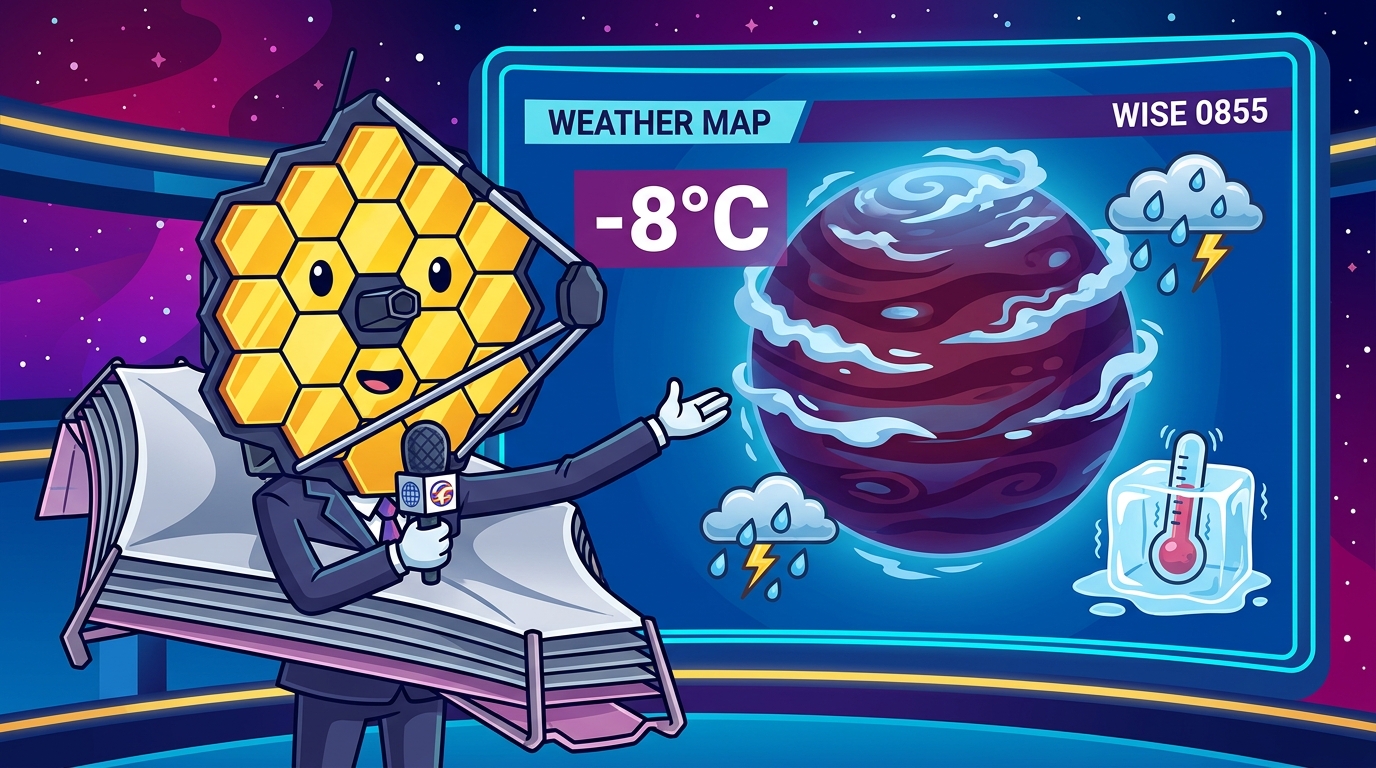
JWST Drops Humanity's First Alien Weather Report: -8°C and 100% Chance of Water Clouds on WISE 0855
Forget terrestrial rain checks. The James Webb Space Telescope spent 11 straight hours staring at WISE 0855, capturing real-time shifting water clouds and toxic updrafts on a sub-zero failed star 7.5 light-years away.
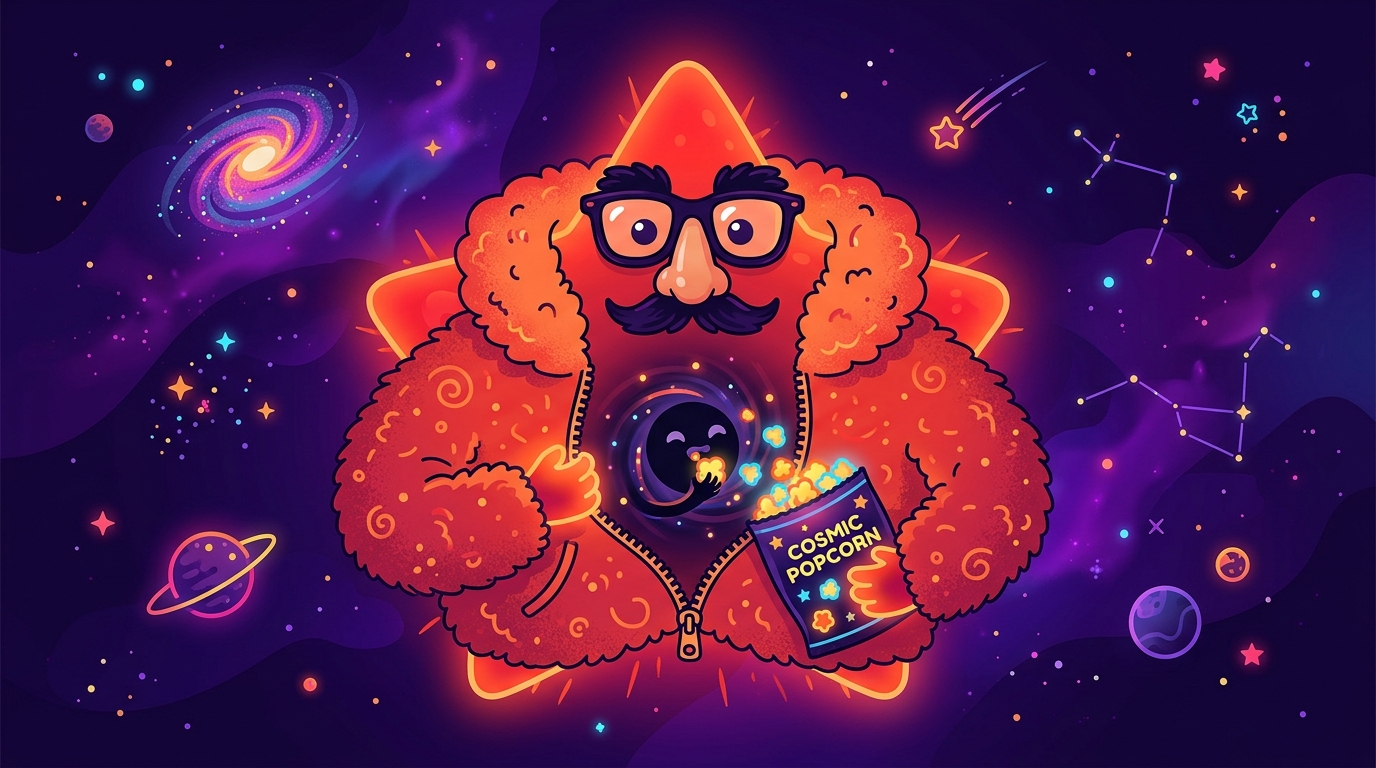
JWST Catches 'Black Hole Star': A Cosmic Monster Wearing a Giant Puffer Jacket
Astronomers find MoM-BH*-1, a solar-system-sized beast from the early universe that shines 100 billion times brighter than normal stars—powered by an enshrouded 100,000-solar-mass black hole.
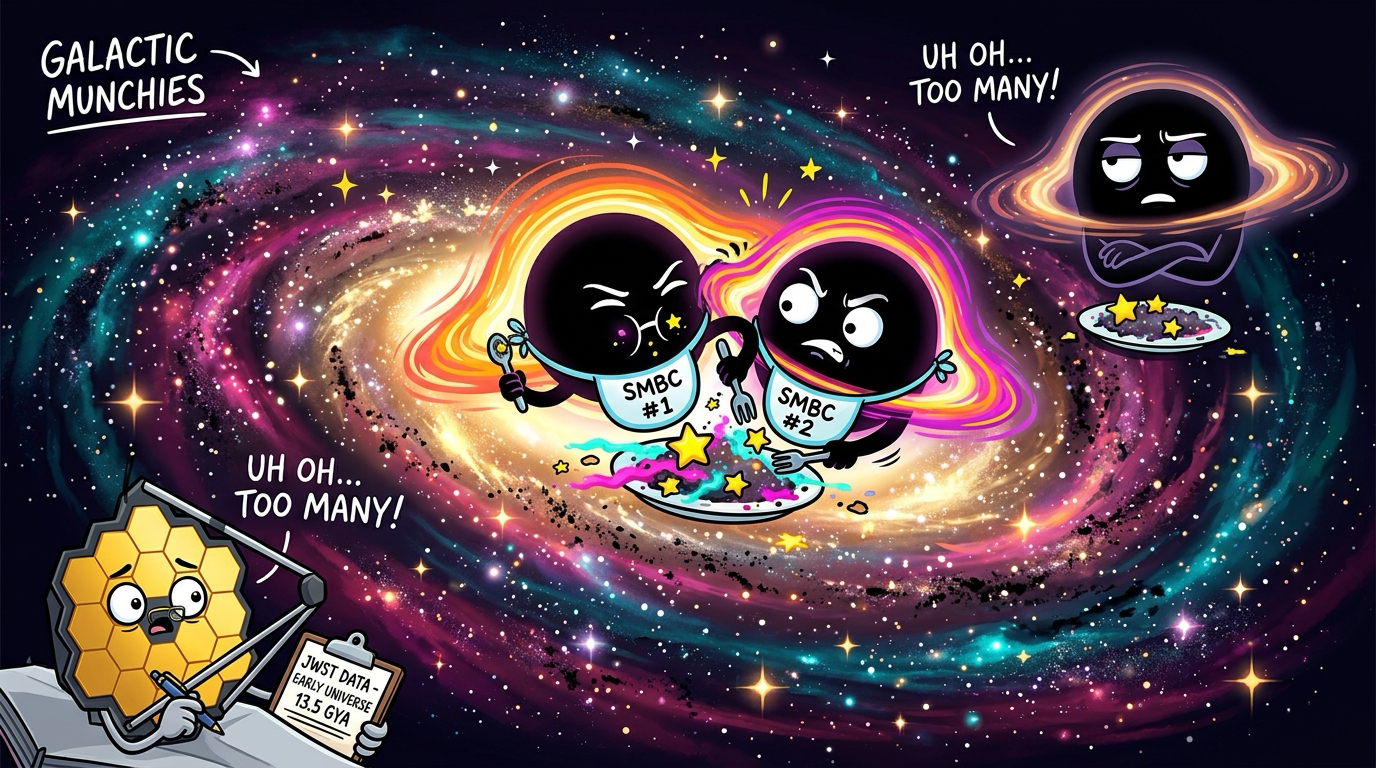
JWST Catches Three Supermassive Black Holes Crammed into One Galaxy Like Chaotic Roommates
Astronomers using the James Webb Space Telescope under project BlackTHUNDER discovered three actively feeding supermassive black holes crammed inside a single galaxy from the cosmic dawn, fighting over gas clouds just 1.2 billion years after the Big Bang.